
European rhinoceros beetle
Oryx
Description
How to identify
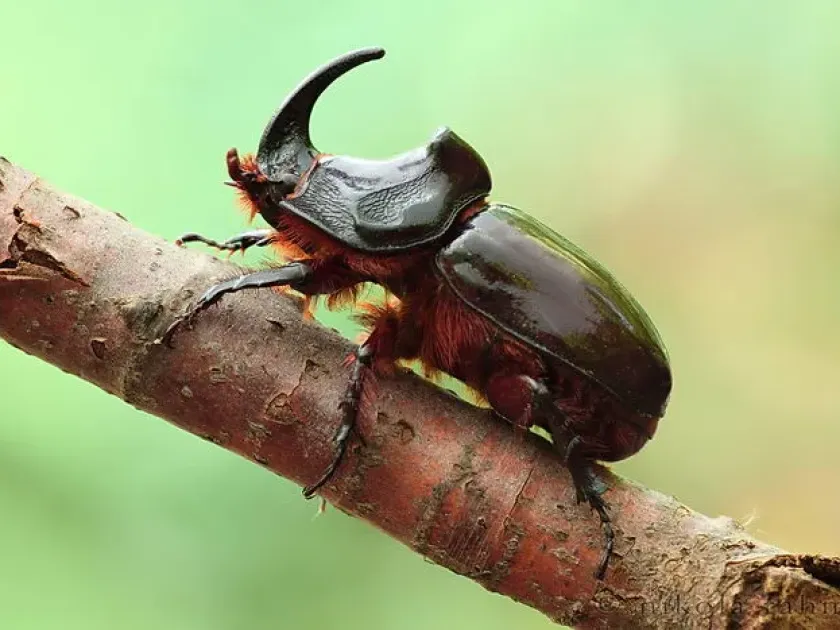
The European rhinoceros beetle (Oryctes nasicornis) is a member of the Scarabaeidae family. Males are easily recognized by the large, curved horn on their head, giving them a distinct look.
The larvae are thick, white, C-shaped grubs that can reach up to 10 cm in length. They have a brown head and strong mandibles, which they use to process woody materials.
The life cycle is long, typically spanning 3 to 4 years, depending on the environment. The larval stage is spent entirely in organic substrate, such as rotting wood or manure.
Adult beetles are nocturnal and do not feed, focusing solely on reproduction. They are strong fliers and are often attracted to artificial lights at night.
This species is widely distributed throughout Europe and parts of Asia, frequently inhabiting forests, gardens, and managed agricultural landscapes.
What it damages
While rhinoceros beetle larvae primarily feed on decaying organic matter, they can become significant pests when such resources are scarce.
They often attack the root systems of ornamental trees, fruit trees, and various vegetable crops, causing substantial physiological stress to the plants.
When young plants or seedlings have their roots gnawed by these large larvae, they often wilt and die, especially during periods of drought or high heat.
In commercial nurseries, these larvae can destroy entire batches of seedlings, leading to significant economic losses for growers and farmers.
They can also invade greenhouse soil mixtures, where they thrive in rich compost and cause hidden damage that is difficult to detect early on.
Signs of infestation
The first sign of infestation is usually the sudden wilting of previously healthy plants, suggesting root failure despite adequate irrigation.
Digging in garden beds or compost heaps often reveals the presence of large, white grubs curled in a characteristic C-shape within the soil.
A high density of larvae produces distinct soil pellets (excrement), which can be identified in the upper soil layers during regular garden maintenance.
The presence of adult beetles near outdoor lighting during late spring and summer nights confirms that the species is active and breeding in the vicinity.
Damaged roots show clear signs of chewing, which often leads to secondary infections by soil-borne pathogens, causing the roots to rot rapidly.
Control measures
Regular maintenance of the garden, including the removal of decaying stumps and large wood piles, is the best preventive measure against infestations.
Compost heaps should be turned and inspected annually to destroy larvae and pupae before they can develop into the adult stage of the pest.
For chemical-free control, the application of insect-pathogenic nematodes is highly effective for reducing the larval population in soil and compost.
Using light traps during the peak flying season can help reduce the adult population, thereby preventing the laying of new eggs in your garden soil.
When preparing soil for greenhouses or nurseries, screening the compost to remove large particles and larvae ensures that the substrate is safe for young plants.
Taxonomy
- Latin name
- Oryx
- Family
- Bovidae
- EPPO code
- ORYXSP
Discussion
No discussions yet — be the first.