
Ornithomya avicularia
Ornithomya avicularia
Description
How to identify
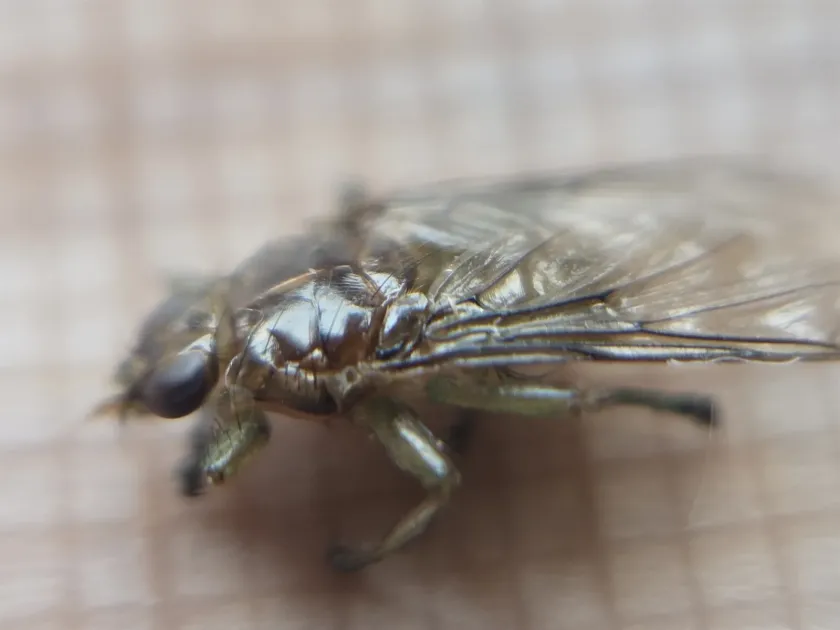
Ornithomya avicularia, commonly known as the bird louse fly, belongs to the family Hippoboscidae. It is a highly specialized ectoparasite that spends its adult life living on birds.
The insect possesses a flattened, leathery body measuring 6–8 mm in length, which allows it to crawl rapidly through feathers. It features strong legs equipped with hooked claws for firm attachment to the host.
Both males and females are winged and capable of active flight, which allows them to move between birds or infest new hosts within a poultry house or wild bird population.
The mouthparts are specially adapted for piercing skin and feeding on blood. This mode of feeding makes the fly an irritating parasite and a potential vector for blood-borne diseases.
The reproductive cycle is characterized by viviparity, where the female produces a single larva at a time. The larva pupates almost immediately after deposition, usually in the nest environment or litter.
What it damages
Infestation causes significant stress to poultry, including chickens, turkeys, and ducks. Persistent biting leads to intense itching, causing the birds to become agitated and restless.
Due to the continuous blood-sucking, heavy infestations can lead to anemia in young birds, significantly hindering their growth rates and overall health development.
Birds infected with the louse fly often exhibit reduced egg production and poor weight gain. Their focus is shifted from feeding to constant self-grooming and attempts to rid themselves of the pests.
Ornithomya avicularia acts as a vector for various avian diseases, transmitting pathogens through its bites, which can lead to larger outbreaks within a farm setting.
The damage to the feathers and skin caused by constant pecking and scratching reduces the aesthetic quality of the poultry and can lead to secondary skin infections.
When it appears
The activity of these flies is strongly correlated with warm weather, generally peaking from late spring to early autumn. This is when adult populations are most visible.
In temperate climates, the development of pupae can be interrupted by cold, but in well-insulated poultry barns, the cycle can continue throughout the year.
High humidity and temperatures around 20–25°C favor the metamorphosis of pupae into adults, leading to population explosions during the mid-summer months.
Adult flies are highly mobile during the warmer part of the day and evening, seeking new hosts to sustain their energy requirements through blood meals.
Wild birds often serve as natural reservoirs for the pest, introducing flies into domestic poultry facilities during migration or nesting seasons.
Signs of infestation
The most common sign of infestation is abnormal behavior in birds, such as excessive preening, shaking, and frequent attempts to peck at their bodies.
Visual inspection often reveals the flies themselves, particularly in areas with thinner skin or dense feather coverage like the under-wing, chest, and vent areas.
Small, red puncture marks on the skin are diagnostic of feeding activity. These marks can become inflamed if the infestation is persistent.
The presence of dark, hard pupae in the nesting boxes, litter, or cracks in the wooden structures of the poultry house is a strong indication of an established population.
A sudden decline in overall flock productivity, coupled with restlessness and feather loss, often indicates a need to check for these ectoparasites.
Control measures
Controlling Ornithomya avicularia requires an integrated approach that targets both the adult flies on the birds and the pupae hidden within the infrastructure.
The application of approved veterinary insecticides via sprays or dusts on the birds is necessary to reduce the immediate fly population.
- Deep cleaning and removal of all old litter and nesting material.
- Chemical treatment of cracks and crevices where pupae develop.
- Using fine-mesh netting on ventilation openings to exclude wild birds.
- Isolation and treatment of newly introduced birds to prevent spread.
- Regular health monitoring to catch infestations at an early stage.
Sanitation is paramount; since pupae develop in the environment, failing to clean the coop will result in rapid re-infestation shortly after treating the birds.
Combining chemical control with strict biosecurity measures ensures the most effective long-term management of the bird louse fly.
Taxonomy
- Latin name
- Ornithomya avicularia
- Order
- Diptera (flies)
- Family
- Hippoboscidae
- EPPO code
- ORNMAV
Discussion
No discussions yet — be the first.