
Bird louse fly
Ornithomya
Description
How to identify
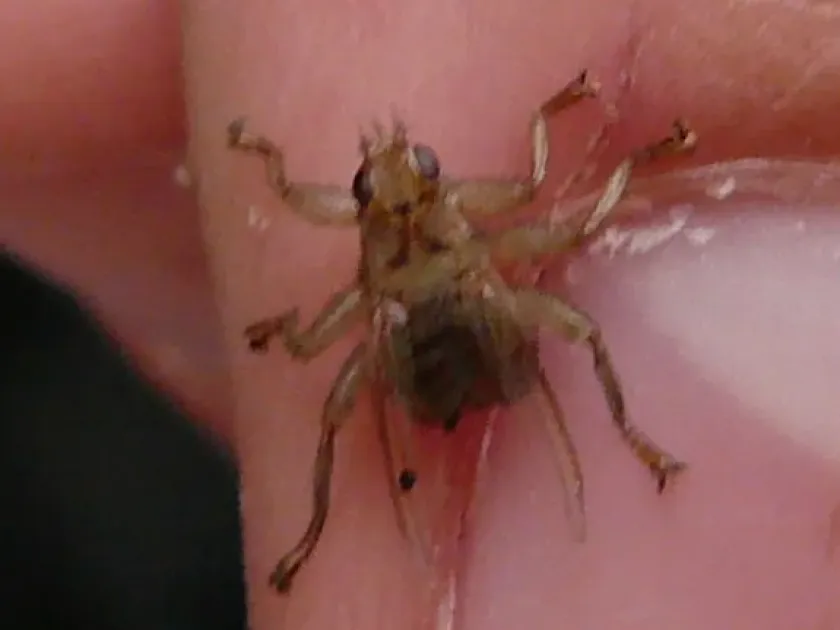
The bird louse fly (Ornithomya) belongs to the order Diptera and the family Hippoboscidae. These flies have a flattened body covered with tough chitinous plates, which makes them highly resistant to mechanical damage.
Adult flies have well-developed wings and are capable of active flight, although their main strategy is to spend most of their life cycle on the host. Their piercing-sucking mouthparts are perfectly adapted for feeding on blood.
The color of the insect ranges from yellowish-brown to dark brown, allowing it to camouflage effectively among bird feathers. Their legs are equipped with strong claws that allow them to hold onto the host even during intense movement.
The development cycle differs from standard flies. These are viviparous insects: the female produces a fully developed larva that pupates almost immediately in nests or litter.
The development of the pupa depends significantly on climatic conditions and ambient temperature, which determines the rate of population growth.
What it damages
This object is a specific ectoparasite of birds, feeding on their blood. While it does not damage crops directly, its presence in rural areas and orchards affects the productivity of agricultural sites.
The pest primarily affects wild and domestic birds. In poultry farming, parasitism by louse flies leads to reduced weight gain and lower egg production in domestic birds.
In an agronomic context, louse flies can act as vectors for various diseases that negatively impact the sanitary state of smallholdings where poultry is kept.
The constant distress caused by bites leads to stress in birds, reducing feed conversion efficiency and negatively affecting the overall effectiveness of the farm.
In cases of heavy infestation, the health of the entire poultry stock can deteriorate, necessitating veterinary intervention to maintain a healthy environment.
When it appears
The activity of adult louse flies is observed during the warm season, mainly from late spring to early autumn. Their mass appearance correlates with the nesting season of birds.
During summer months with high temperatures, pupal development accelerates, promoting a rapid increase in the parasite population in natural breeding grounds near farms.
A peak in activity occurs in late summer and early autumn when adults fly to find new hosts and may occasionally land on people's clothing.
The pest overwinters in the pupal stage, which survives in bird nests, crevices in poultry houses, or in bedding material while waiting for favorable conditions.
Agronomists and farm owners should consider this seasonal dynamic when planning sanitary treatments for poultry housing facilities.
Signs of infestation
The main sign of infestation is restless behavior in birds, constant preening, and attempts to remove the parasite with their beaks. Upon examination, one can notice flat insects moving rapidly among the feathers.
On the skin of the birds, redness, inflammation, and scratch marks can be observed at the bite sites. With high infestation levels, birds appear exhausted, and their feathers become dull and ruffled.
Inside poultry houses and nesting boxes, empty pupal shells can be found, which remain after the adults emerge, indicating the location of the breeding site.
The presence of bites on the skin of people working in poultry houses during summer is also an indicator of a high level of infestation in the area.
Decreased poultry productivity, in the absence of other infectious causes, should lead to an entomological inspection of the housing.
Control measures
Protection measures are based on regular disinsection of poultry housing using approved veterinary insecticidal products.
An important preventive element is maintaining cleanliness in nests and timely replacement of bedding materials where pupae may accumulate.
It is recommended to periodically treat the birds themselves with specialized products that provide protection against ectoparasites for a long duration.
It is necessary to prevent domestic poultry from coming into contact with wild birds, which are natural reservoirs for these parasites.
- Regular cleaning of poultry houses using disinfectants.
- Use of insecticidal aerosols in areas where insects congregate.
- Periodic inspection of birds for signs of parasites.
Taxonomy
- Latin name
- Ornithomya
- Order
- Diptera (flies)
- Family
- Hippoboscidae
- EPPO code
- ORNMSP
Discussion
No discussions yet — be the first.