
Japanese singing cricket
Ornebius kanetataki
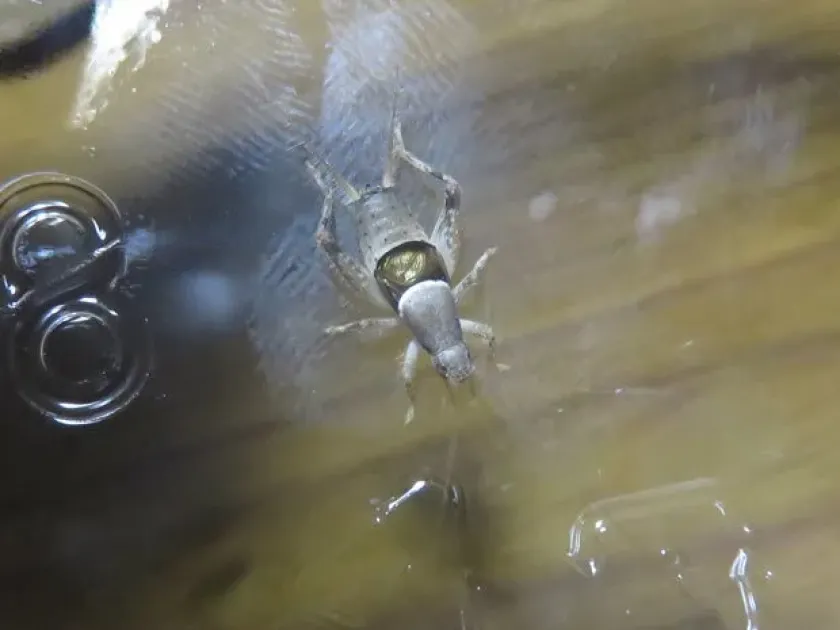
Description
How to identify
The Japanese singing cricket (Ornebius kanetataki) is an insect belonging to the order Orthoptera and the family Gryllidae, known for its distinct acoustic behavior.
Adults are small, typically measuring 10–12 mm in length, and exhibit a brownish-yellow coloration that provides excellent camouflage against tree bark and foliage.
The males produce a unique, metallic ringing sound, which is the most common way to identify the presence of this species in a garden setting.
The immature stages (nymphs) look like miniature, wingless versions of adults and are highly cryptic, often staying hidden during daylight hours.
Their anatomy includes sensitive auditory organs located on the tibiae, allowing them to communicate and detect environmental changes efficiently.
What it damages
As a phytophagous species, the Japanese singing cricket causes damage to a variety of ornamental plants, fruit trees, and various shrubs.
They feed on young shoots, tender leaves, and buds, often targeting plants like camellias, figs, and citrus species in urban and rural environments.
The feeding mechanism involves chewing on leaf edges and nibbling on soft stem tissues, which leads to ragged and unsightly foliage.
In high populations, the feeding intensity can weaken the overall vigor of the host plant, potentially stunting its growth and development.
Repeated damage to young sprouts may result in reduced leaf area, impacting the plant's ability to photosynthesize effectively.
When it appears
The life cycle of Ornebius kanetataki is synchronized with seasonal temperature shifts, which dictate its activity and reproductive phases.
Winter is typically spent in the egg stage, with eggs safely deposited in bark crevices or within decaying organic matter on the ground.
Nymphs emerge in late spring when temperatures are consistently warm enough to support their growth and the development of host plants.
The peak of adult activity occurs during the late summer months, which is when the characteristic singing is most audible and damage is most visible.
By autumn, adult activity declines as individuals complete their mating and egg-laying processes to ensure the survival of the next generation.
Signs of infestation
A primary indicator of infestation is the presence of irregular holes and chewed margins on leaves, often found in the inner canopy of shrubs.
The distinctive, high-pitched metallic sound heard in the evening is a reliable sign of a established population within your garden or landscape.
- Ragged leaf edges on young developing shoots.
- Small, dark fecal pellets scattered on leaves or under feeding sites.
- Minor surface abrasions on the bark of young twigs or branches.
Observing the plants with a flashlight at night can often reveal the crickets actively feeding or resting on the stems.
Weakened plant health, characterized by stunted branch growth and premature leaf drop, can indicate a chronic infestation over the growing season.
Control measures
Managing the Japanese singing cricket requires a combination of sanitation practices and targeted intervention to reduce their impact.
Cultural control is highly effective; removing leaf litter and garden debris eliminates the primary overwintering sites for the eggs.
Regular monitoring during the summer allows gardeners to identify localized infestations before they become widespread across the garden.
In cases of significant economic damage, application of approved contact insecticides may be necessary to lower population levels to a manageable threshold.
Always ensure that management practices minimize impact on beneficial insects, such as pollinators and natural predators, to maintain ecological balance.
Taxonomy
- Latin name
- Ornebius kanetataki
- Order
- Orthoptera (locusts)
- Family
- Gryllidae
- EPPO code
- ORNBKA
Discussion
No discussions yet — be the first.