
Ornebius cricket
Ornebius
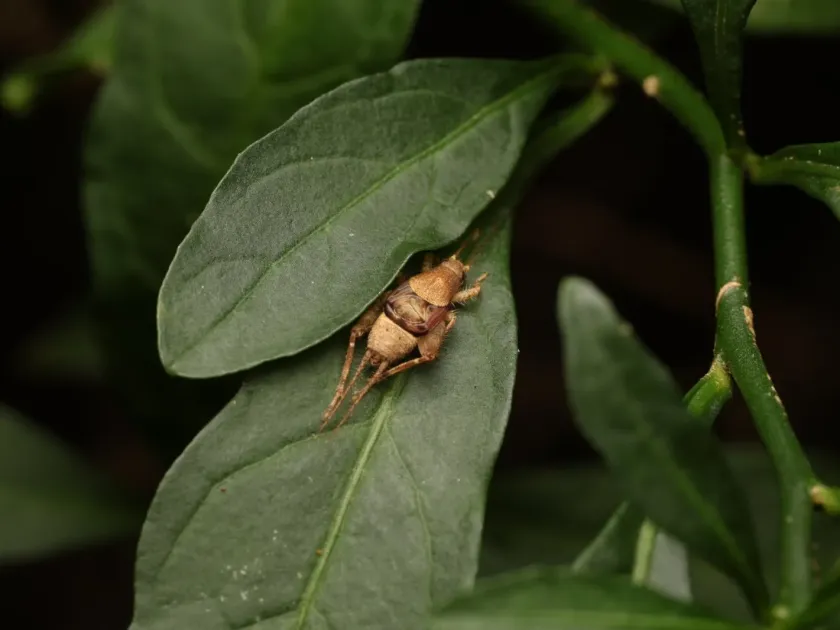
Description
How to identify
The Ornebius cricket belongs to the true cricket family (Gryllidae) within the order Orthoptera. These small insects are known for their secretive nature, making early detection in orchards and fields a significant challenge.
Physically, species of the genus Ornebius exhibit a flattened body shape and very long, thread-like antennae. Their coloration usually mimics their surroundings, such as bark or leaf litter, allowing them to remain undetected by both predators and observers.
Their life cycle involves incomplete metamorphosis: egg, nymph, and adult. Each developmental stage is highly adapted to the microclimate of their chosen habitat, typically favoring shaded and humid areas.
Adults are primarily nocturnal and possess specialized sound-producing organs. The rhythmic chirping of males is often the primary indicator for farmers and agronomists to identify their presence in an area.
Their habitat selection is precise; they prefer dense vegetation and moist environments, which provide the necessary protection from predators and desiccation during their development.
What it damages
Crickets of the genus Ornebius can cause damage to a variety of agricultural crops, including fruit trees and ornamental shrubs. They primarily feed on the tender tissues of leaves and young, developing shoots.
Nymphs are particularly destructive, as they require significant nutrition for rapid growth. They consume irregular holes in leaf blades, which disrupts the photosynthetic capacity of the plant and limits its growth potential.
In high-density cultivation areas like nurseries, these pests can be severe, feeding on fresh buds at the start of the vegetative season, which leads to stunted development and delayed maturity of the crop.
Furthermore, the physical wounds created by their feeding become entry points for secondary infections, including various bacterial and fungal pathogens that further weaken the plant tissue.
In cases of high population density, these insects can trigger premature leaf drop. This reduces the aesthetic value of ornamental plants and leads to significant yield losses in fruit-bearing trees and shrubs.
When it appears
The seasonal activity of Ornebius crickets is strongly correlated with regional temperature and humidity. Their highest activity levels are typically observed during the warm summer months, which provide ideal conditions for reproduction.
Winter is usually spent in the egg stage, deposited in soil or bark crevices, or as late-stage nymphs sheltered in debris. When the temperatures rise, the nymphs emerge to begin their feeding cycle.
Peak damage usually occurs throughout June and July, when the population density reaches its maximum. During this timeframe, regular scouting is essential to identify and mitigate early signs of infestation.
As autumn approaches, activity declines as adults seek suitable overwintering sites. In some climates, multiple generations may occur within a single year, which significantly increases the risk of persistent damage.
Wet spring conditions can foster a faster emergence of nymphs from their winter dormancy. Agronomists should observe weather patterns closely to predict early-season outbreaks and adjust their management strategies accordingly.
Signs of infestation
The first visual sign of an infestation is the presence of irregular, ragged holes on leaf blades. Unlike caterpillars, cricket feeding damage often displays a distinct, jagged edge pattern.
The presence of frass (insect excrement) in the form of small, dark, granular pellets on leaves or the ground beneath the plants is a clear indicator of active feeding by these pests.
The audible chirping of males during evening hours is a reliable acoustic marker for the presence of Ornebius. Listening for this sound is an effective non-invasive monitoring technique for fields and orchards.
Signs of bark grazing or tissue scraping on twigs can be observed when the leaf supply is limited. In severe infestations, individual insects may be found hiding under loose bark or within curled leaves.
General plant decline, yellowing of the foliage, and poor growth rates are indirect but important symptoms. These signify that the pest has already caused significant damage to the plant's overall health and vitality.
Control measures
Managing the Ornebius cricket requires a comprehensive approach that integrates cultural, biological, and chemical methods to effectively suppress population levels while minimizing environmental impact.
- Maintaining field hygiene by removing plant debris and fallen leaves to destroy potential hiding spots.
- Autumn deep tillage of the soil to expose and destroy overwintering egg clusters.
- Utilizing light traps to reduce the adult population during peak evening activity periods.
- Applying biological insecticides, such as entomopathogenic fungi or nematodes, to target the nymphal stages.
- Using contact insecticides when the pest population exceeds the economic injury threshold.
It is vital to protect natural enemies, such as insectivorous birds and predatory insects, which serve as natural controls for cricket populations, reducing the reliance on chemical interventions.
When chemical control is necessary, practitioners must strictly follow pre-harvest intervals to ensure the safety of the produce and prevent the accumulation of pesticide residues in fruits and berries.
Systematic monitoring is essential, particularly in seedling nurseries where even minor leaf damage can impact the survival and quality of the plants, requiring immediate corrective action to prevent spread.
Taxonomy
- Latin name
- Ornebius
- Order
- Orthoptera (locusts)
- Family
- Gryllidae
- EPPO code
- ORNBSP
Discussion
No discussions yet — be the first.