
Minute pirate bug
Orius tristicolor
Description
How to identify
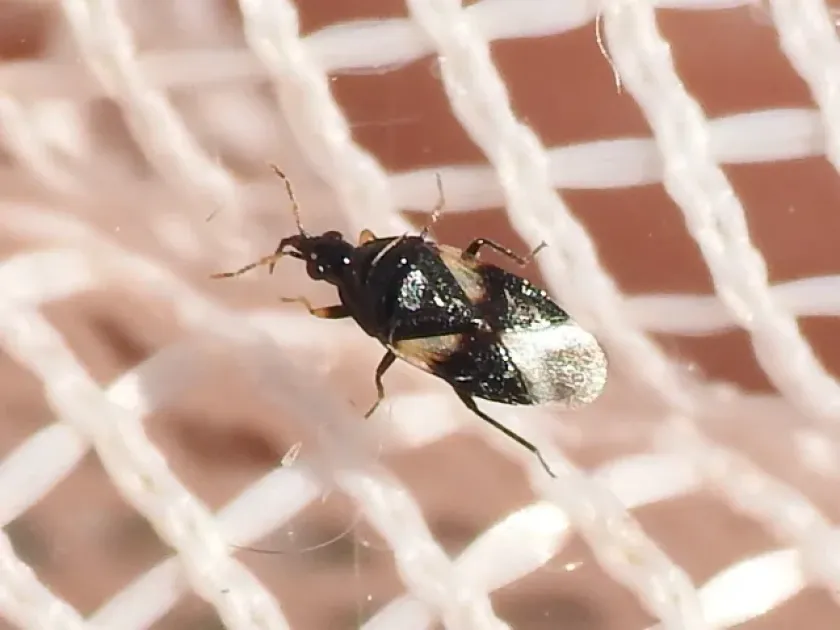
The minute pirate bug (Orius tristicolor) belongs to the Hemiptera order and the Anthocoridae family. It is an extremely small insect, with adults typically measuring between 2 and 3 millimeters in length.
The adult bugs possess an oval-shaped body, typically colored in shades ranging from dark brown to black, with distinct white markings on the wings that are easily visible.
The nymphs go through several developmental stages; they are usually yellowish-orange or brownish in color and look like smaller, wingless versions of the adults.
It is important to note that while this species is primarily known as a beneficial predator of various pests, it can exhibit phytophagous behavior when its primary prey is scarce.
Equipped with a piercing-sucking mouthpart, the insect is perfectly adapted to feeding on both the body fluids of small insects and the plant tissues of various horticultural crops.
What it damages
The minute pirate bug is commonly found on a wide variety of crops, including tomatoes, cucumbers, peppers, strawberries, and many types of ornamental plants grown in greenhouses.
They are primarily attracted to plants infested with thrips, mites, aphids, and small caterpillars, which serve as their main food source throughout the growing season.
When searching for moisture or food during prey shortages, these bugs pierce the epidermis of tender leaves, buds, and young shoots, often causing significant deformation.
In commercial agriculture, high densities of this species can cause necrotic spots on plant tissues, which may subsequently provide entry points for secondary fungal infections.
Economic damage is most notable during drought periods when natural prey populations decline, forcing the bugs to switch their diet to plant sap and tissues to survive.
When it appears
The activity of the minute pirate bug typically begins in mid-spring as temperatures consistently rise and remain above 15 degrees Celsius.
The peak of their reproductive cycle occurs during the warm summer months, coinciding with the highest density of thrips and other small insects on blooming crops.
In favorable conditions, the bug can complete several generations within a single season, allowing for a rapid increase in the local population.
As autumn approaches and temperatures drop, the bugs enter a state of diapause, seeking shelter in plant debris, under tree bark, or in the upper soil layers to overwinter.
In controlled environment agriculture like greenhouses, the lifecycle can continue year-round if the temperature remains favorable for their development and reproduction.
Signs of infestation
A primary visual indicator of their presence is the appearance of tiny, light-colored spots on leaves, which may eventually coalesce and lead to overall leaf chlorosis.
Severe infestations often result in stunted growth, twisted shoots, and premature flower bud drop, which significantly affect the overall plant health.
The presence of nymphs at various developmental stages on the undersides of leaves or within flower clusters confirms active breeding within the crop canopy.
- Small pin-prick marks on leaves caused by the bug's mouthparts during feeding.
- Dark, clustered excrement spots left on the surface of damaged plant organs.
- Microscopic blemishes on fruits that can negatively impact their market value.
Yellow sticky traps are considered the most effective tool for monitoring adult populations, helping farmers decide when intervention is strictly necessary.
Control measures
Since Orius tristicolor is frequently a valuable biological control agent for thrips and mites, the use of broad-spectrum chemical insecticides should be strictly avoided.
The best control strategy is to manage the populations of its prey: keeping thrips and mite levels low naturally reduces the bug's attraction to the crop.
Integrating biological control programs, such as releasing specialized predators, can help stabilize the ecosystem and keep the pirate bug population in check.
Implementing proper cultural practices, such as rigorous weed control and the immediate removal of crop residues, helps eliminate potential overwintering sites.
If intervention is required to address extreme outbreaks, preference should be given to selective biopesticides that minimize impact on beneficial insects within the agroecosystem.
Taxonomy
- Latin name
- Orius tristicolor
- Order
- Hemiptera (bugs, aphids, leafhoppers)
- Family
- Anthocoridae
- EPPO code
- ORIUTR
Discussion
No discussions yet — be the first.