
Orius thripoborus
Orius thripoborus
Description
How to identify
Orius thripoborus is a species within the Anthocoridae family, commonly known as pirate bugs. In modern agronomy, it is primarily recognized as a highly efficient predatory insect rather than a traditional pest of crops.
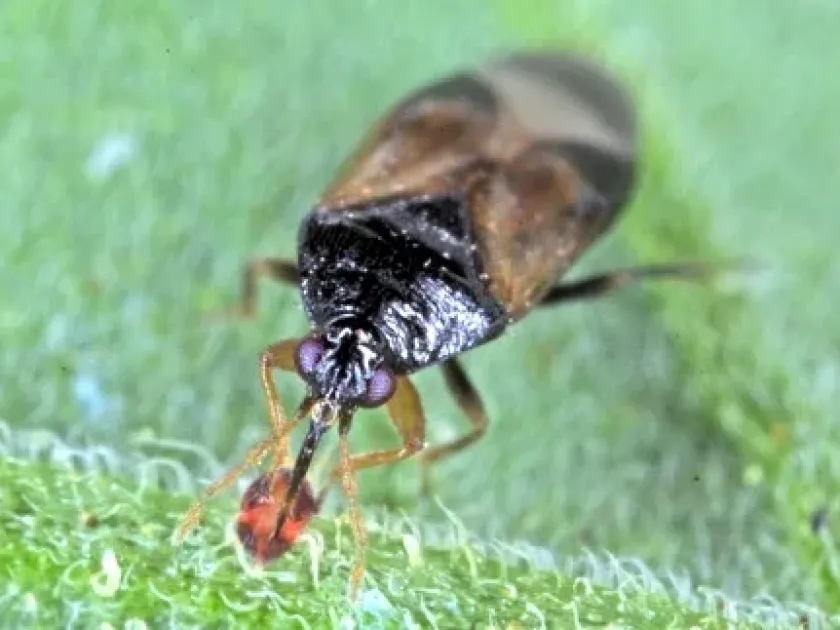
The adult bug is small, measuring 2–3 mm in length, with a dark brown to black body and distinctive translucent wings. Their movement is rapid, allowing them to traverse leaves and flowers efficiently in search of prey.
The life cycle stages include egg, nymph, and adult. They deposit eggs inside the plant tissue, which is a specialized behavior that often causes confusion among growers who may mistake it for phytophagous damage.
Development is highly temperature-dependent, with the population expanding rapidly during warm weather. In greenhouse environments, they can complete multiple generations within a single growing season.
To identify them, look for small, oval-shaped bugs on the undersides of leaves or within floral clusters. Their presence is usually an indicator of an existing thrips population, as they are obligate predators of these pests.
What it damages
While Orius thripoborus is a predator, it may engage in facultative phytophagy. When prey availability is extremely low, these bugs might puncture plant cells to extract moisture, leading to minor cosmetic damage.
Target crops include greenhouse-grown vegetables such as peppers and cucumbers, as well as various ornamental species. Observed symptoms are typically limited to microscopic tissue wounds or very slight leaf deformation.
It is crucial to emphasize that the damage caused by Orius thripoborus is negligible compared to the economic benefit of its predatory activities. They are often deliberately introduced as biological control agents.
Most "damage" attributed to this species is actually caused by the primary prey (thrips) that the bug was intended to control. Misidentifying the bug as the primary culprit often leads to unnecessary chemical spraying.
Growers should maintain a balanced perspective: the presence of these bugs suggests a robust biological control system. The rare instances of feeding on plant tissue do not pose a threat to crop yield or plant health.
Control measures
Management of Orius thripoborus should focus on conservation rather than elimination. Because it provides free biological control services, removing it is counterproductive to integrated pest management (IPM).
If population levels reach an point where feeding on plants becomes noticeable, environmental adjustments such as regulating humidity can naturally lower their activity levels without the need for chemicals.
Avoid the use of broad-spectrum insecticides. Such products are non-selective and will kill the beneficial bug population, leaving the crop vulnerable to future infestations by aphids, mites, or thrips.
Professional agronomic practice involves monitoring the prey-predator ratio. As long as there is sufficient prey for the bugs, they will prioritize hunting over damaging the plant tissues.
- Prioritize biological control over chemical applications.
- Ensure natural habitats or refugia for predatory bugs.
- Perform regular monitoring to distinguish between predators and pests.
- Avoid broad-spectrum pesticide use in the greenhouse environment.
Taxonomy
- Latin name
- Orius thripoborus
- Order
- Hemiptera (bugs, aphids, leafhoppers)
- Family
- Anthocoridae
- EPPO code
- ORIUTH
Discussion
No discussions yet — be the first.