
Orius bug
Orius strigicollis
Description
How to identify
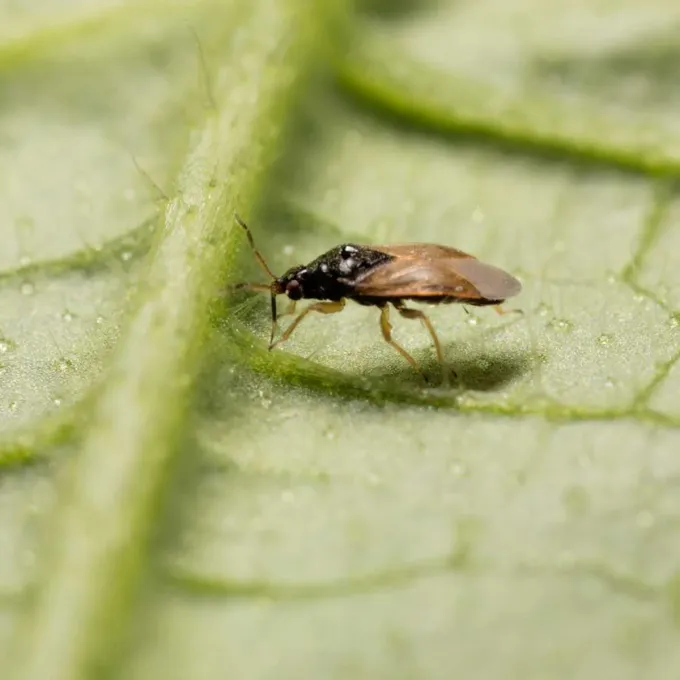
Orius strigicollis is a small predatory insect belonging to the family Anthocoridae within the order Hemiptera, typically measuring 2 to 3 mm in length.
These bugs possess an oval-shaped body with a dark brown to black coloration and functional wings that allow them to fly between host plants.
The nymphs resemble the adults but are smaller, lack wings, and have a distinct yellowish or orange-brown hue during their initial development stages.
Due to their tiny size and similarity to other species in the Anthocoridae family, precise identification often requires professional entomological assessment.
They are well-known for their agility and highly developed sensory organs, which enable them to locate food sources and mates efficiently in dense vegetation.
What it damages
While primarily predators of thrips and mites, Orius species may exhibit phytophagous behavior, feeding on plant sap when their preferred prey is scarce.
This feeding behavior is particularly damaging to greenhouse crops such as peppers, cucumbers, and tomatoes, especially during the sensitive flowering stage.
The damage caused by probing leads to tissue necrosis, deformation of buds, and distorted fruit development, significantly reducing overall harvest quality.
High infestations can result in stunted plant growth and the premature drop of flowers or fruit, leading to substantial economic losses in commercial farming.
The severity of the damage is often exacerbated by the bug's mechanical wounding of the plant tissue while searching for sap or prey.
When it appears
The life cycle of the Orius bug is highly temperature-dependent, with developmental stages completing in approximately 2-3 weeks under warm conditions.
These insects are most active during the warmer months of the year, with peak populations usually observed when temperatures exceed 20°C.
In greenhouses, they can maintain continuous generations throughout the year, provided that the microclimate remains stable and food sources are available.
Adult females typically overwinter in sheltered locations, such as under plant debris or in the crevices of tree bark, emerging in the early spring.
As temperatures rise, the population rapidly increases, synchronizing with the flowering periods of both weeds and cultivated crops.
Signs of infestation
Visible signs of infestation include tiny punctures on leaves and buds, which appear as small chlorotic or necrotic spots as the tissue dies back.
Deformed or curled leaves and twisted shoots are strong indicators of feeding activity, which interrupts the normal transport of nutrients in the plant.
One may notice the presence of small black fecal droplets on the underside of the leaves, indicating the active presence of a bug population.
Buds that fail to develop properly or appear wilty are common sights in heavily infested areas, as the bugs probe the tender plant tissues.
Direct observation of the insects, which scurry away quickly when disturbed, remains the most reliable way to confirm an infestation in the field.
Control measures
Cultural control, such as strict weed management around the perimeter of fields or greenhouses, is essential to remove alternative food sources for the bugs.
Monitoring using yellow sticky traps is a standard practice to detect initial migration and assess population density before taking drastic actions.
Biological control methods, including the introduction of specific natural predators or the use of biopesticides, are preferred to maintain ecological balance.
If chemical intervention is necessary, selective insecticides must be used to minimize harm to beneficial insects and prevent potential pest resurgences.
Proper sanitation of greenhouse structures after the harvest cycle helps to eliminate overwintering adults and reduce the initial population for the next season.
Taxonomy
- Latin name
- Orius strigicollis
- Order
- Hemiptera (bugs, aphids, leafhoppers)
- Family
- Anthocoridae
- EPPO code
- ORIUST
Discussion
No discussions yet — be the first.