
Orius majusculus
Orius majusculus
Description
How to identify
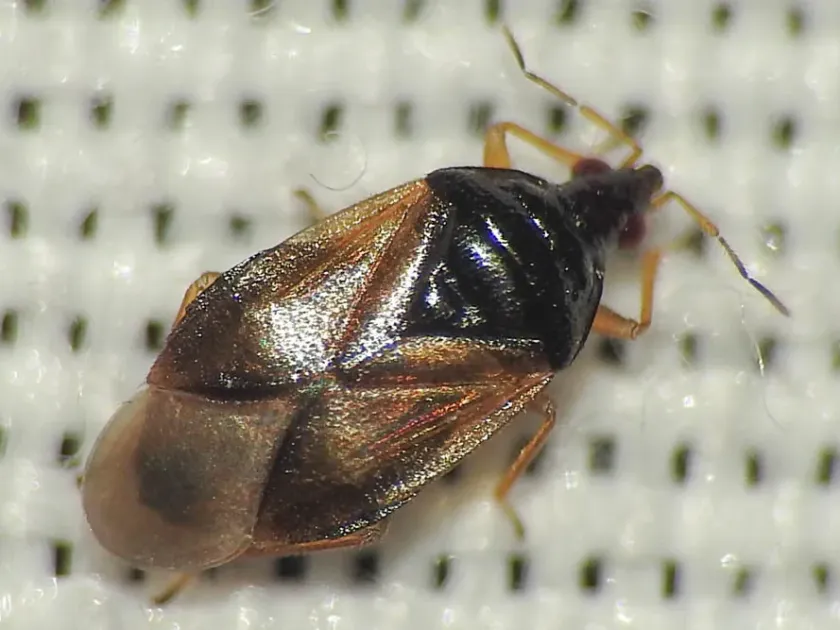
Orius majusculus is a small predatory bug belonging to the family Anthocoridae, commonly known as minute pirate bugs. Adults measure approximately 2.5 to 3 millimeters in length.
The body is oval-shaped and slightly flattened, with a color pattern ranging from dark brown to black, which helps them blend into foliage.
They possess well-developed wings and a piercing-sucking mouthpart, which is highly adapted for grasping and feeding on small prey items.
Nymphs undergo five developmental stages (instars) and are typically yellowish-orange or reddish in color, becoming more distinct as they approach maturity.
Developmental rate is heavily influenced by ambient temperature and the availability of high-quality prey, such as thrips, mites, or aphids.
What it damages
While Orius majusculus is primarily a beneficial predator, it may occasionally exhibit phytophagous behavior when its primary prey is scarce.
In such instances, adults or nymphs might probe plant tissues like flower petals or young leaves to extract sap, leading to small, harmless necrotic spots.
These minor symptoms are generally insignificant in terms of crop yield reduction and do not warrant any specific intervention against the bug itself.
The ecological value of this predator in suppressing serious pest populations far outweighs the negligible damage caused by occasional plant tissue feeding.
Farmers should be careful not to mistake these minor markings for symptoms of viral diseases or primary pests, ensuring proper identification is made.
When it appears
Activity generally begins in the spring as temperatures rise, signaling the end of the overwintering period for the adult population.
Population density typically peaks during the summer months when their preferred prey sources (thrips, aphids, mites) are most abundant on crops.
Throughout the season, adults demonstrate high mobility, actively searching for new colonization sites or areas with high pest concentrations.
As autumn approaches and temperatures drop, they seek sheltered environments like forest litter or plant debris to enter diapause for the winter.
In greenhouses, if temperature and light are managed, Orius majusculus can maintain year-round activity to provide continuous pest suppression.
Signs of infestation
Observing the presence of this insect requires careful inspection of flower heads, buds, and terminal shoots where they hunt for prey.
Sticky traps, particularly yellow ones used for monitoring, are an effective way to detect the presence of mobile adult bugs within a cropping area.
A reduction in the population density of small pests like thrips is often the most reliable sign that Orius majusculus is actively working.
Finding egg clusters requires a microscope, as they are laid inside the plant tissue and only appear as small, slightly elevated bumps on the surface.
The absence of major pest outbreaks on plants despite high pressure in neighboring areas is a strong indicator of successful biological control.
Control measures
There is no need for control measures against Orius majusculus, as it is a vital ally in Integrated Pest Management (IPM) programs.
The primary management strategy is to avoid broad-spectrum insecticides that are toxic to this predator and disrupt natural control cycles.
When chemical applications are absolutely necessary, selective products that spare beneficial insects should be the preferred choice for growers.
Maintaining floral strips or hedgerows nearby can provide supplemental food and overwintering sites, helping to sustain local populations.
- Use of selective pesticides to preserve beneficial fauna.
- Regular field scouting to monitor predator-prey ratios.
- Promotion of biological habitats within the farm ecosystem.
Taxonomy
- Latin name
- Orius majusculus
- Order
- Hemiptera (bugs, aphids, leafhoppers)
- Family
- Anthocoridae
- EPPO code
- ORIUMU
Discussion
No discussions yet — be the first.