
Winter moth
Operophtera brumata
Description
How to identify
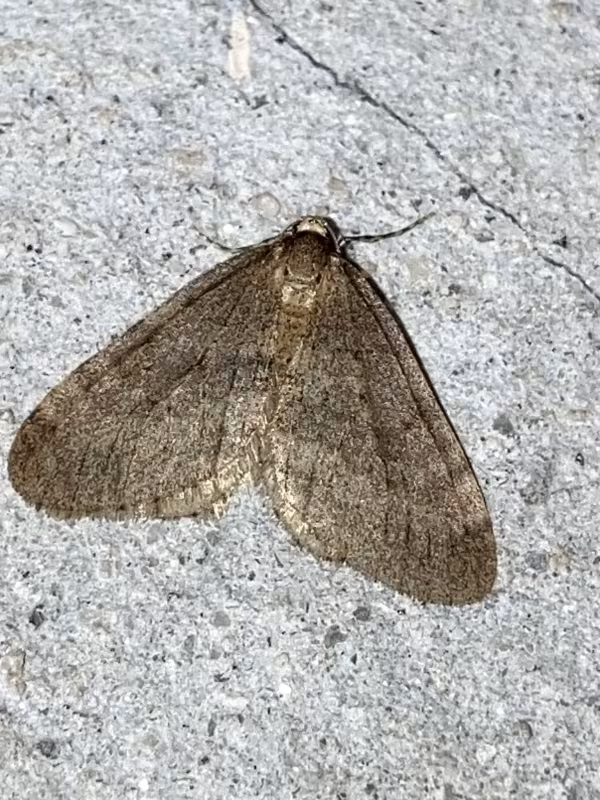
The Winter moth (Operophtera brumata) is a member of the Geometridae family. The species displays significant sexual dimorphism: males are winged with a span of 30–35 mm, while females have vestigial wings and are flightless.
Adult females are grayish-brown and must crawl up tree trunks to reach the canopy. The larvae, commonly known as inchworms, move by looping their bodies, which is a characteristic feature of the geometer family.
The larvae are typically pale green with white longitudinal stripes and a light brown head. They reach a length of approximately 20–25 mm when fully grown, blending in well with the spring foliage.
The biological cycle is unique as the species is active during late autumn and early winter. Eggs are laid in bark crevices and remain dormant throughout the winter, surviving freezing temperatures.
The pupal stage occurs in the soil. After completing their feeding in late spring, the larvae drop to the ground, burrow into the soil, and remain there as pupae until the next adult flight cycle begins in autumn.
What it damages
This pest is highly polyphagous, attacking a wide range of deciduous trees. It is particularly destructive to fruit-bearing orchards, including apples, pears, cherries, and plums.
Larvae cause primary damage in early spring by feeding on swelling buds. By consuming the inner parts of the buds, they destroy potential flowers and fruit sets before the trees even bloom.
As the season progresses, the larvae consume leaves, often causing heavy defoliation. In severe infestations, trees may lose nearly all their foliage, leading to weakened tree vigor and reduced yield.
Frequent defoliation reduces the tree's ability to store energy, making it more susceptible to environmental stress, frost damage, and secondary infections or other pest attacks.
The cumulative effect of bud destruction and leaf loss significantly impacts the economic performance of fruit orchards, requiring targeted intervention to prevent long-term damage.
When it appears
The flight period for adult moths typically occurs from late October through December. They are exceptionally hardy and can remain active even when temperatures drop near freezing.
Wintering as eggs on the bark, the larvae hatch in early spring. This event is carefully synchronized with the phenological stage of bud burst in fruit trees, ensuring an immediate food source.
Larval feeding is most intense from April to May. During this window, the caterpillars grow rapidly and cause the majority of visible damage to the orchard canopy.
By late May or early June, the larvae descend to the soil for pupation. The pupae stay in the ground throughout the summer, undergoing development in preparation for the autumn emergence.
Understanding this calendar of activity is essential for timing the application of control measures, ensuring they coincide with the most vulnerable phases of the pest's life cycle.
Signs of infestation
Webbing on young leaves is one of the first signs of an infestation. Larvae often draw leaves together using silk threads to create protective retreats where they feed undisturbed.
Leaves that are skeletonized or have large, ragged holes along the edges indicate the presence of feeding larvae. At higher populations, the trees may look thin and prematurely defoliated.
During the late autumn months, observe the tree trunks for the small, flightless females crawling upward. This is a critical sign for monitoring and initiating preventative measures.
In spring, shriveled or hollowed-out buds are indicators of internal larval feeding. This is an early warning sign that the population is already active in the tree canopy.
The presence of larvae suspended from silk threads during windy days is a clear indicator of a high infestation level, signaling the need for immediate orchard inspection.
Control measures
Sticky traps placed around tree trunks in late autumn are highly effective. They prevent the flightless females from climbing into the canopy, thereby stopping them from laying eggs on the branches.
Biological control using Bacillus thuringiensis (Bt) is an effective and environmentally friendly way to target young larvae without harming beneficial pollinators or natural predators.
Chemical treatments may be applied during the bud-burst or immediate post-bloom stages if the pest population exceeds established economic thresholds, using selective insecticides.
Cultivating the soil beneath the trees in summer or autumn can destroy the pupae resting in the ground, significantly reducing the emergence of adult moths for the following season.
Encouraging natural predators such as birds and beneficial insects within the orchard helps maintain a balance and suppresses pest numbers throughout the growing season.
Taxonomy
- Latin name
- Operophtera brumata
- Order
- Lepidoptera (butterflies)
- Family
- Geometridae
- EPPO code
- CHEIBR
Discussion
No discussions yet — be the first.