
Winter moth
Operophtera
Description
How to identify
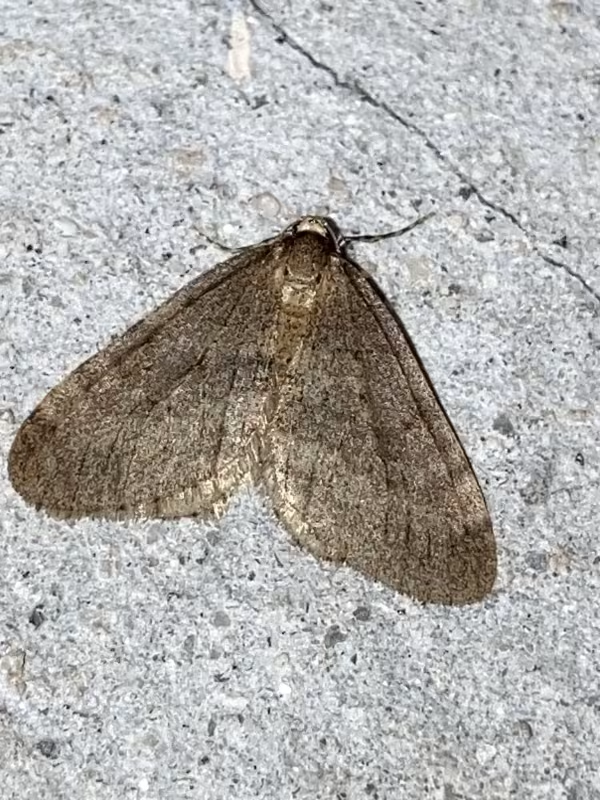
The Winter moth (Latin: Operophtera brumata) is a member of the Geometridae family in the order Lepidoptera. This species exhibits distinct sexual dimorphism, making males and females appear entirely different.
Adult males have fully developed wings with a span of 30–35 mm. They are generally brownish-yellow with darker wavy bands and are known for their strong flight capability during the late autumn months.
Females, in contrast, have vestigial, non-functional wings, rendering them flightless. They are smaller and rely on crawling up the trunks of trees to lay their eggs.
The larvae, known as "loopers" or inchworms, have a characteristic movement pattern, arching their bodies as they crawl. This is due to the lack of abdominal prolegs compared to other caterpillars.
Fully grown larvae are usually pale green with several longitudinal white lines along their bodies, measuring approximately 20–25 mm in length.
What it damages
The Winter moth is a highly polyphagous species that affects a wide variety of deciduous trees, with a strong preference for members of the Rosaceae family.
Apple, pear, plum, and cherry trees are primary targets in commercial orchards and home gardens. The larvae are notorious for their aggressive feeding behavior in early spring.
Initially, the larvae feed on opening buds, often destroying them before the leaves have even fully unfurled. This causes significant stress to the tree's development.
As the season progresses, they consume foliage, leading to skeletonized or ragged leaves. In severe infestations, trees can be completely defoliated, which severely impacts fruit yield.
Repeated yearly defoliation weakens the trees, making them more susceptible to drought, fungal diseases, and secondary infestations from other pests.
When it appears
The adult flight season for the Winter moth is unique; it typically occurs in late autumn, from October through December, often continuing after the first frosts.
After mating, the flightless females crawl up the tree trunks to find suitable crevices in the bark or near buds to deposit their eggs.
The eggs undergo overwintering on the tree and serve as the dormant stage of the life cycle until early spring, when warmer temperatures stimulate hatching.
Larval emergence coincides precisely with the bud-burst phenology of their host plants, ensuring that the neonate larvae have immediate access to soft, nutritious plant tissue.
After completing their development by late spring, the larvae descend to the soil to pupate. The pupal stage lasts throughout the summer months until the cycle begins again in autumn.
Signs of infestation
The most visible sign of an infestation in early spring is the presence of "looper" caterpillars feeding on buds and young, developing leaves.
Larvae often tie leaves together with fine silk threads, creating small shelters that protect them from predators and environmental stressors during their feeding activity.
A common diagnostic sign is the appearance of holes in the leaves or missing leaf margins, which become more pronounced as the caterpillars grow in size.
When disturbed, the caterpillars often drop from the branches on silk threads, hanging in the air, which is a classic behavior easily observed by gardeners.
During late autumn, the presence of small, wingless female moths crawling up the bark of fruit trees is a definitive indicator of a potential infestation for the following year.
Control measures
The most effective physical control method involves the application of sticky or grease bands around the trunks of trees in October to trap the flightless females as they climb.
Cultivating the soil beneath the canopy in late summer or autumn can help destroy the pupae buried in the ground, significantly reducing the next season's population.
Monitoring using pheromone traps is recommended to determine the timing and necessity of chemical or biological interventions based on adult flight activity.
If chemical control is required, it should be applied during the early larval stages when they are most vulnerable to contact insecticides or biological agents like Bacillus thuringiensis.
- Encouraging natural predators such as birds, particularly tits and nuthatches.
- Regular inspection of bark and branches for signs of egg-laying.
- Using horticultural oils during the dormant season to target overwintering eggs.
Taxonomy
- Latin name
- Operophtera
- Order
- Lepidoptera (butterflies)
- Family
- Geometridae
- EPPO code
- OPERSP
Discussion
No discussions yet — be the first.