
Large milkweed bug
Oncopeltus fasciatus
Description
How to identify
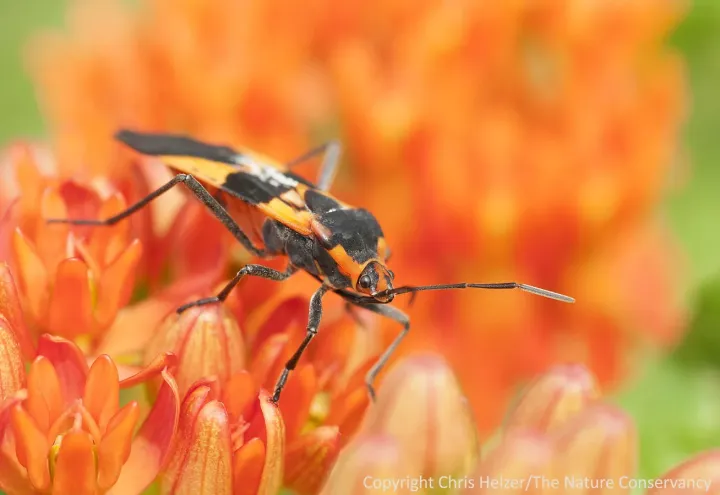
The large milkweed bug (Oncopeltus fasciatus) is a distinct insect from the Lygaeidae family. Adult bugs are approximately 10 to 18 mm long and display a striking orange and black pattern on their backs.
They possess specialized mouthparts for piercing and sucking fluids, which they use to exploit various plant sources. Nymphs pass through five stages of development, with each instar becoming larger and more colorful as they approach adulthood.
These insects are highly mobile and gravitate toward warm, sunny environments, where they are often found in large, active aggregations on host plants.
Their bold coloration serves as a warning signal to predators, as many individuals in this family store chemical defenses acquired from their diet of milkweed species.
Identifying this species is straightforward due to the specific arrangement of the black bands and spots on their orange dorsal surface, which differentiates them from other similar-looking hemipterans.
What it damages
The primary damage occurs when these bugs pierce seeds, fruits, or stems to feed on plant sap. While they prefer milkweed, they readily attack vegetable crops like carrots, fennel, and other umbelliferous plants when natural food sources become scarce.
Feeding creates unsightly puncture marks that can lead to the malformation of fruits and seeds. Furthermore, the bugs may introduce pathogens into the plant tissues during the feeding process.
Affected seeds often suffer from reduced viability, posing a major risk for seed production areas. The quality of market-ready fruits is significantly compromised by these feeding activities.
In addition to direct damage, the excretion of waste products on the foliage may encourage the growth of sooty mold, further hindering the plant's ability to photosynthesize effectively.
Young plants are particularly vulnerable; severe infestations can lead to stunted growth and a substantial reduction in the overall yield of the crop if left unchecked.
When it appears
The activity of the large milkweed bug is heavily temperature-dependent. They typically emerge from hibernation as soon as spring temperatures allow for the resumption of metabolic processes.
The first generation usually reaches peak activity in mid-summer. In regions with longer, warmer growing seasons, multiple overlapping generations can occur, extending the period of potential damage.
As daylight hours decrease and temperatures drop in autumn, these bugs seek out sheltered locations such as leaf litter, old stalks, or crevices in structures to prepare for winter dormancy.
Seasonal population surges are often influenced by the abundance of suitable host plants in the vicinity and the success of the over-wintering adult population.
Weather patterns during the early spring directly determine the initial population size, as cold, wet conditions can significantly increase mortality among the emerging adult population.
Signs of infestation
The most evident sign of infestation is the presence of adult bugs congregating on leaves and developing seeds. Their bright colors make them easily visible during routine field inspections.
Look for small, discolored punctures on the surface of pods or stems. These marks are clear indicators that the bug has been feeding on the sap beneath the plant surface.
Plants may show signs of premature wilting, yellowing of the leaves, or the abortion of developing fruit. In more severe cases, entire flower heads or fruit clusters may fail to reach maturity.
A distinct, pungent odor may be detected near infested plants, as these bugs release defensive chemicals when disturbed or gathered in large numbers.
Checking the ground beneath host plants for exuviae (shed skins) from nymphs can also provide evidence of successful breeding cycles occurring within your garden or field.
Control measures
Effective management begins with strict sanitation practices, such as clearing away debris and removing weeds that could harbor the bugs during their overwintering stage.
Crop rotation is an essential strategy to disrupt the life cycle of the pest, making it harder for localized populations to establish themselves permanently in the same area.
If population thresholds are exceeded, the application of appropriate insecticides is an option, though it must be carefully timed to target the more vulnerable nymph stages.
Promoting natural predators, such as birds or predatory insects, can help keep bug populations in check, reducing the need for chemical intervention in balanced ecosystems.
- Remove overwintering sites like plant debris.
- Monitor crops regularly for early signs of infestation.
- Use physical barriers to protect highly susceptible plants.
- Implement crop rotation programs.
Taxonomy
- Latin name
- Oncopeltus fasciatus
- Order
- Hemiptera (bugs, aphids, leafhoppers)
- Family
- Lygaeidae
- EPPO code
- ONCPFS
Discussion
No discussions yet — be the first.