
Oncopeltus famelicus
Oncopeltus famelicus
Description
How to identify
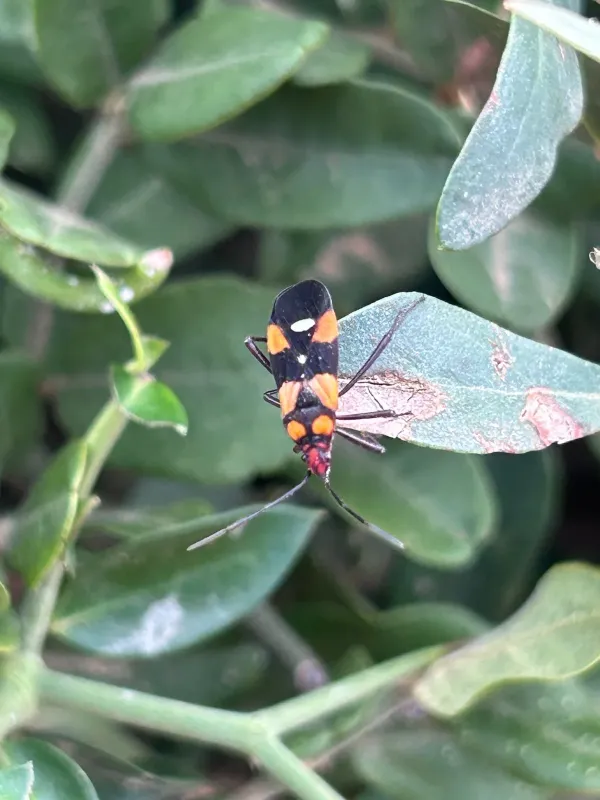
Oncopeltus famelicus is a member of the Lygaeidae family within the Hemiptera order. The adult insect features a vibrant coloration pattern, mixing red-orange and black tones, which serves as an aposematic warning to potential predators.
The adult body is elongated, measuring approximately 10–12 mm in length. Its head, pronotum, and hemelytra are adorned with a distinct pattern, where the black triangular scutellum remains a key diagnostic feature for species identification.
The nymphs go through several developmental instars, gradually acquiring coloration similar to the adults. In their early stages, they appear as small, reddish, wingless insects that are often found in clusters.
These bugs are diurnal, preferring sunny and warm sections of the field. Like many other true bugs, they possess scent glands that release a characteristic pungent odor when the insect feels threatened.
The species is thermophilic and thrives in hot, dry summer conditions. In temperate regions, its distribution is localized, concentrating in open fields where food sources are readily available.
What it damages
This pest is a polyphage, but it causes the most significant damage to cereal crops, oilseeds, and some vegetable plants. Fields of sunflowers and various cereal grains are particularly susceptible to heavy infestation.
The bugs feed on plant sap by piercing the tissues with their proboscis. Primarily, the seeds are affected during the milk and dough stages, leading to reduced grain weight and poor seed viability for future sowing.
Damaged plant tissues become entry points for secondary infections, including fungal and bacterial diseases. This significantly weakens the crop's immune system and results in substantial harvest losses.
Damage is caused by both adults and nymphs, which live in groups and can collectively attack individual plants. At high population densities, severe stunting of plant growth can occur throughout the field.
The pest poses a major risk to seed production areas, as piercings in the germinal part of the seed render it incapable of proper germination in the following season.
When it appears
The life cycle of O. famelicus is closely tied to local temperature regimes. In spring, as stable warm temperatures arrive, overwintered adults emerge from their shelters, often found in dry plant debris or field margins.
The peak breeding period occurs during mid-summer. Females deposit eggs directly onto host plants or in the soil nearby, ensuring that the offspring have immediate access to food upon hatching.
Nymphs feed actively throughout the summer, undergoing several molts. Depending on regional climate and the length of the warm season, the species can complete one or two generations per year.
In autumn, as temperatures drop, the insects prepare for diapause. They seek protected locations in forest belts, under tree bark, or in piles of organic matter at the edges of agricultural fields.
Population dynamics are highly correlated with weather patterns; hot and arid years often trigger massive outbreaks, whereas rainy summers tend to suppress the population growth significantly.
Signs of infestation
The first visual sign of infestation is the presence of the bugs themselves on sunflower heads or cereal ears. Adults are frequently found sitting in groups, making them easy to spot upon inspection.
Small dark spots appear on seeds and grains, representing the probe sites of the bug's mouthparts. In these areas, the plant tissue often loses color or begins to wilt due to vascular system damage.
During field surveys, one may notice characteristic mottling on the leaves where nymphs have fed. Leaves often turn yellow, curl, and eventually die, losing their ability to perform photosynthesis.
Infested areas of the field may display uneven growth and premature wilting of the stems. Large amounts of excrement can often be found near the base of affected plants.
The presence of a distinct unpleasant odor while working in the field or touching the plants is an indirect but reliable sign of a high density of these bugs in the area.
Control measures
Preventing the spread of this pest relies heavily on proper agronomic practices, such as the removal of weeds along field borders, which act as primary reservoirs for the bugs.
- Deep autumn plowing to destroy overwintering sites.
- Timely harvesting to minimize grain losses in the field.
- Crop rotation to break the life cycle of the pest.
In cases of high infestation, the use of systemic insecticides is recommended. Treatments are most effective when applied during the early morning or evening hours when the insects are most vulnerable.
Biological control methods involve promoting the populations of natural enemies, such as entomophagous insects and parasitic Hymenoptera, which help regulate the pest population in natural ecosystems.
Monitoring population levels using pheromone or light traps allows for the early detection of field colonization, enabling swift intervention before the economic threshold of damage is reached.
Taxonomy
- Latin name
- Oncopeltus famelicus
- Order
- Hemiptera (bugs, aphids, leafhoppers)
- Family
- Lygaeidae
- EPPO code
- ONCPFM
Discussion
No discussions yet — be the first.