
Oncopeltus aulicus seed bug
Oncopeltus aulicus
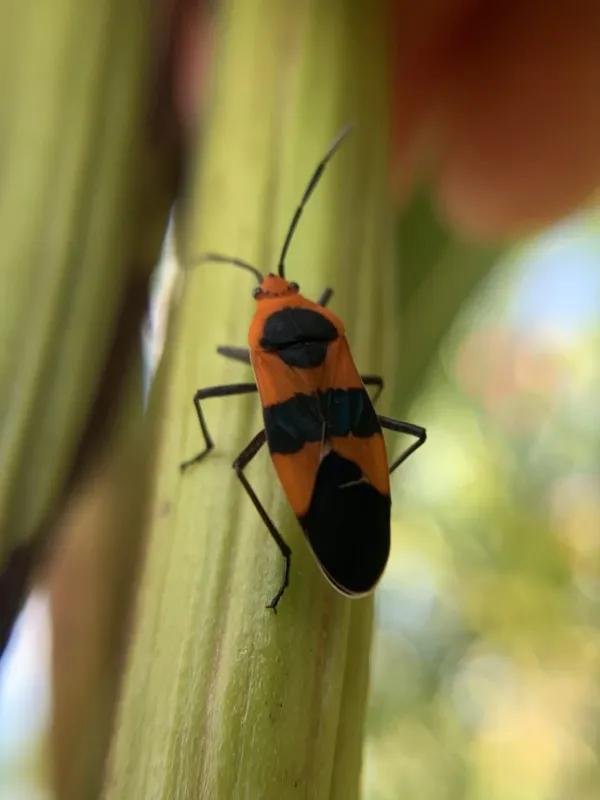
Description
How to identify
The Oncopeltus aulicus is a member of the Lygaeidae family, known generally as seed bugs. These insects are easily recognized by their striking, aposematic coloration, which typically features bold patterns of red, orange, and black, signaling toxicity or distastefulness to potential predators.
The adult bugs are elongate and oval-shaped, typically measuring between 10 and 15 millimeters in length. Their head is equipped with a distinctively long rostrum (proboscis), which is used to pierce plant tissues and extract vital fluids.
Nymphs, the immature stages of the bug, closely resemble the adults in body shape but are smaller and lack fully developed wings. They undergo incomplete metamorphosis, passing through several instars before reaching the adult stage.
These bugs prefer sunny, open habitats and are frequently found on various agricultural fields, meadows, and forest edges. Their vibrant colors make them highly visible on host plants during the day as they forage for seeds and stems.
Oncopeltus species are active during the day, utilizing their sensory organs to locate the most nutrient-rich parts of the plants, often aggregating in clusters on pods or flowers to feed collectively.
What it damages
The primary damage caused by Oncopeltus aulicus involves the extraction of plant sap from seeds, fruits, and buds. This feeding behavior directly reduces the yield and quality of agricultural crops, particularly those grown for seed or fruit production.
They are known to feed on a variety of hosts, including members of the Asteraceae, Fabaceae, and Brassicaceae families. In years of high infestation, they can cause substantial economic losses by ruining developing seeds and pods.
Feeding often results in plant physiological stress, leading to stunted growth, wilting, and deformation of the affected parts. Furthermore, the punctures made by their rostra serve as entry points for pathogens, triggering secondary fungal or bacterial infections.
Young plants are particularly vulnerable; attacks on growing tips can cause permanent damage, leading to arrested development or total plant mortality if the feeding intensity is high enough.
The economic impact of this pest is often magnified during periods of drought, as these bugs congregate on irrigated crops in search of moisture, resulting in severe localized damage across the field.
When it appears
The life cycle of Oncopeltus aulicus is closely linked to seasonal temperature variations. They emerge from hibernation in the spring, once temperatures become consistently warm, to seek out fresh vegetation for feeding and reproduction.
Population peaks generally occur in mid-summer, when environmental conditions are optimal for the development of successive generations. During this time, they are most active and can be easily monitored in fields.
As autumn approaches, the bugs begin to search for suitable overwintering sites. They typically hide in crop residues, leaf litter, cracks in tree bark, or just beneath the soil surface to survive the harsh winter conditions.
Their activity is highly synchronized with the phenology of their host plants. By emerging and breeding at the same time their primary food sources are available, they ensure the survival and growth of their offspring.
Depending on the latitude and climate, this pest may complete one or more generations per season. In warmer regions, continuous breeding can lead to a sustained presence of the bug throughout the entire growing cycle.
Signs of infestation
Infestations of Oncopeltus aulicus can be identified by careful visual inspections. The bugs are usually found in groups on flowers, pods, or developing fruits where they can easily feed on concentrated plant juices.
Small, chlorotic spots or necrotic punctures on the surface of leaves and stems are early signs of feeding activity. Over time, these areas may turn yellow, wither, and potentially cause the premature shedding of leaves or seeds.
A key indicator of an infestation is the premature drop of pods or seeds, which have been drained of their contents. Affected plants often appear weak, stunted, or otherwise developmentally compromised.
- Chlorotic spotting and localized necrosis on leaves;
- Premature shriveling and dropping of seeds and pods;
- Presence of insect frass on plant surfaces;
- Wilting of terminal shoots and flowers;
- Visible aggregations of adult bugs and nymphs on host plants.
Early detection through field monitoring is crucial. Finding these signs early allows for more precise and effective intervention before the population reaches an uncontrollable level.
Control measures
Managing Oncopeltus aulicus requires an integrated pest management (IPM) approach that focuses on preventative measures and, if necessary, targeted chemical treatments to minimize crop damage.
The most effective strategy involves rigorous weed control, particularly around field margins, as these areas often serve as initial reservoirs for the bugs before they spread into the main crop area.
Post-harvest agricultural practices are also vital. Deep plowing and the destruction of crop residues help eliminate the overwintering population, significantly reducing the pest pressure for the following growing season.
Biological control, by preserving natural predators such as predatory insects and birds, plays a significant role in keeping populations in check. Selective biopesticides may also be used in areas where environmental sensitivity is a concern.
When infestation levels exceed the economic threshold, chemical intervention with suitable insecticides is required. Treatments should be applied during periods of the day when bugs are most active to ensure optimal efficacy while minimizing harm to beneficial insects.
Taxonomy
- Latin name
- Oncopeltus aulicus
- Order
- Hemiptera (bugs, aphids, leafhoppers)
- Family
- Lygaeidae
- EPPO code
- ONCPAN
Discussion
No discussions yet — be the first.