
Oncopeltus milkweed bug
Oncopeltus
Description
How to identify
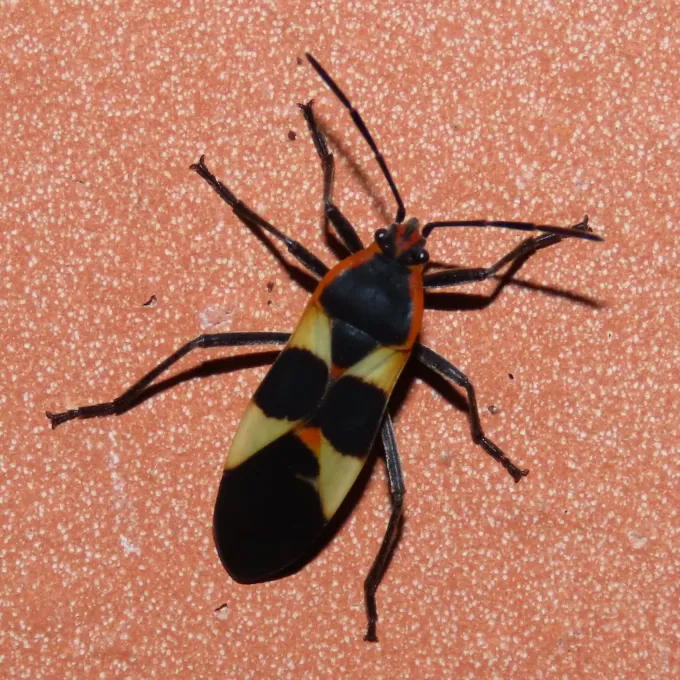
The Oncopeltus genus belongs to the Lygaeidae family, commonly known as seed bugs. Its most recognizable member, the large milkweed bug (Oncopeltus fasciatus), is identified by its striking orange and black pattern, which acts as an aposematic warning signal to predators.
Adults typically measure 10–12 mm in length with an elongated, oval body shape. They possess long antennae composed of four segments and distinct black markings across their thorax and wings that vary by specific species.
Nymphs go through several developmental instars, transitioning from light red to a darker coloration as they mature. Lacking fully developed wings during these early stages, they remain localized near their host plants.
These insects thrive in warm climates and are frequently found in areas where their preferred host plants, particularly those in the Apocynaceae family, grow in abundance.
In agricultural settings, they are considered specialized pests that focus their feeding activity primarily on seeds, though they can exhibit opportunistic sap-feeding behavior under certain conditions.
##damage##The primary damage is inflicted upon the seeds of the host plant. Both adults and nymphs use their piercing-sucking mouthparts to penetrate the seed coat and extract essential nutrients, effectively destroying the seed embryo and rendering it non-viable.
While often associated with ornamental milkweed, these bugs can impact various agricultural and industrial crops. Plants with protein-rich seeds or specific cardiac glycosides are particularly susceptible to infestation.
Feeding on seed pods results in premature pod drop, shriveled seeds, and overall yield reduction. In scenarios with high pest pressure, significant portions of the seed harvest can be rendered useless.
Furthermore, the physical punctures created by the bugs' mouthparts serve as entry points for secondary infections, including fungal and bacterial pathogens, leading to pod rot and systemic plant disease.
High population mobility allows these insects to spread rapidly across fields, making them a persistent threat once they have successfully established a presence in a farming area.
##season##Activity typically begins in the spring as temperatures rise, signaling the emergence of overwintering adults from sheltered sites. Multiple generations can occur within a single growing season, depending on the length of the warm period.
Peak damage coincides with the seed-setting phase of host plants. During this period, the availability of high-quality food sources triggers an intensive reproductive cycle and rapid population growth.
As autumn approaches and temperatures drop, the bugs seek protected overwintering sites, such as thick layers of leaf litter, debris, or deep crevices in the soil, to survive the winter months.
The duration of the life cycle is highly temperature-dependent; in tropical or hot temperate zones, development from egg to adult is significantly accelerated compared to cooler regions.
Migratory behavior within the population continues until the onset of hard frosts, which can complicate management strategies aimed at suppressing the pest's spread.
##signs##The most visible sign of infestation is the congregation of brightly colored adults and nymphs on the reproductive structures, specifically flowers and maturing seed pods of the host plants.
Close inspection of the seeds often reveals tiny, darkened puncture marks where the bug's proboscis has penetrated. Dissected pods frequently contain hollowed-out or underdeveloped seeds.
Leaves and stems may show localized necrosis or discoloration where bugs have fed. In extreme cases, severe infestations cause wilting and stunted growth of the plant's apical portions.
The accumulation of cast skins (exuviae) left behind after each molt on the surface of stems and foliage provides clear evidence of active development and breeding populations in the field.
A distinctive, pungent odor is often emitted by the bugs' scent glands when they are disturbed, serving as a reliable indicator of high-density populations in the vicinity.
##control##Integrated pest management begins with cultural practices, such as the removal of plant debris and weeds that serve as overwintering sites. Deep tilling of the soil helps destroy pupal or overwintering stages.
Eliminating alternative host weeds is essential to reduce the population's baseline and prevent them from migrating into the primary crop at the beginning of the season.
Chemical control involving contact-action insecticides can be effective if applied during the early nymphal stages. Proper timing is critical to ensure high efficacy before significant seed damage occurs.
- Utilizing light traps to monitor adult population levels.
- Employing biological control agents, such as entomopathogenic fungi.
- Regular scouting of fields, particularly during the seed development phase.
The application of bio-insecticides based on avermectins has shown promising results in managing these pests, provided that application frequency and safety intervals are strictly observed.
[SOURCE] ->Taxonomy
- Latin name
- Oncopeltus
- Order
- Hemiptera (bugs, aphids, leafhoppers)
- Family
- Lygaeidae
- EPPO code
- ONCPSP
Discussion
No discussions yet — be the first.