
Sand millipede
Ommatoiulus sabulosus
Description
How to identify
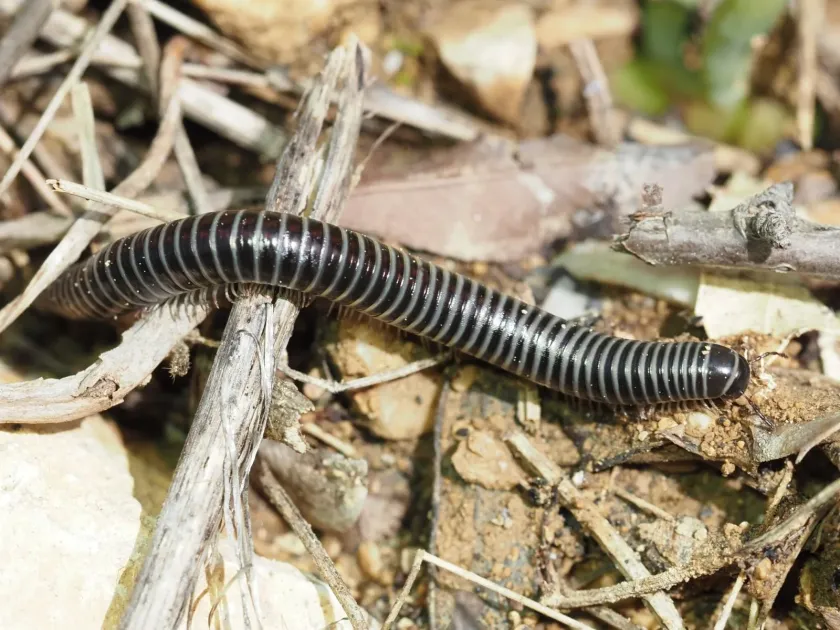
The sand millipede (Ommatoiulus sabulosus) is a member of the Julida order and is easily identified by its cylindrical, dark body featuring two distinct orange or yellow longitudinal stripes along the sides.
Adult specimens typically measure between 30 and 45 mm in length. Like other millipedes, they have a high number of body segments, with each segment bearing two pairs of legs, allowing them to move efficiently through soil.
These invertebrates are highly sensitive to desiccation and prefer moist habitats such as decaying leaf litter, compost heaps, and damp soil, where they spend most of their time sheltered from sunlight.
When threatened, they characteristically curl into a tight spiral, a defensive posture that protects their soft underbelly and allows them to release chemical compounds to deter predators.
They are generalist feeders and opportunistic pests. While their primary role in nature is as decomposers, they readily shift to feeding on living plant tissues when organic matter is scarce or populations are high.
What it damages
Millipedes primarily attack the subterranean parts of crops. Their feeding causes significant economic damage to potatoes, carrots, beets, and other root vegetables by creating deep, hollow galleries.
Seedlings are particularly vulnerable; millipedes often chew through tender stems near the soil surface, leading to plant collapse and reduced stand density in agricultural fields.
Damage to mature root crops is not only cosmetic. The wounds created by millipedes serve as entry points for various soil-borne pathogens, leading to fungal infections and rapid rot in storage.
In greenhouses and nurseries, they can cause substantial losses by consuming the roots of young transplants, which halts growth and makes the plants susceptible to further stress.
The extent of the damage is often correlated with soil moisture; irrigation can inadvertently attract large numbers of millipedes to the root zones of valuable crops.
When it appears
Activity is most pronounced during the spring when the soil is cool and moist, coinciding with the germination and early development stages of most vegetable crops.
During hot and dry summer months, millipedes usually retreat to deeper, cooler soil layers, although they may remain active in irrigated fields or areas with heavy mulch cover.
A second period of increased surface activity often occurs in the autumn as temperatures drop and rainfall increases, which is a critical time for maturing root crops.
They overwinter as adults or late-stage larvae deep in the soil profile, beneath stones, or inside large organic piles that provide thermal insulation against freezing temperatures.
Because their life cycle is long and stages overlap, a single population can contain individuals of various ages, making consistent management difficult throughout the growing season.
Signs of infestation
Visible signs of infestation include small, pitted excavations on the surfaces of root vegetables, which often develop into larger, darkened craters due to secondary microbial growth.
Unexplained wilting of seedlings, especially those that appear perfectly healthy above ground but have damaged stems at the soil interface, is a common indicator.
Searching the soil surface or moving debris around the base of damaged plants during dawn or dusk often reveals the presence of the millipedes themselves.
In potato fields, internal tunneling or hollowed-out sections of tubers are hallmark signs of millipede feeding, often distinguished by the presence of small, dark fecal pellets inside the tunnels.
Soil disturbances around newly planted seeds or young roots may suggest the presence of subterranean feeding activity by this pest.
Control measures
Cultural practices, such as thorough field sanitation and the removal of decaying organic material, are essential to reduce local population density and harborage sites.
Deep autumn plowing exposes overwintering millipedes to avian predators and harsh winter conditions, which significantly reduces the survival rate of the population.
Using bait traps, such as burying pieces of potato or carrot, can help monitor activity levels and physically remove individuals before they cause widespread crop damage.
Soil management, including the adjustment of pH levels, can discourage millipedes, as they typically prefer neutral to slightly alkaline conditions over acidic environments.
When chemical control is necessary, granular insecticides applied at the time of sowing can provide a protective barrier for emerging seedlings against early-season attacks.
Taxonomy
- Latin name
- Ommatoiulus sabulosus
- Family
- Julidae
- EPPO code
- IULSSA
Discussion
No discussions yet — be the first.