
Millipede
Cylindroiulus
Description
How to identify
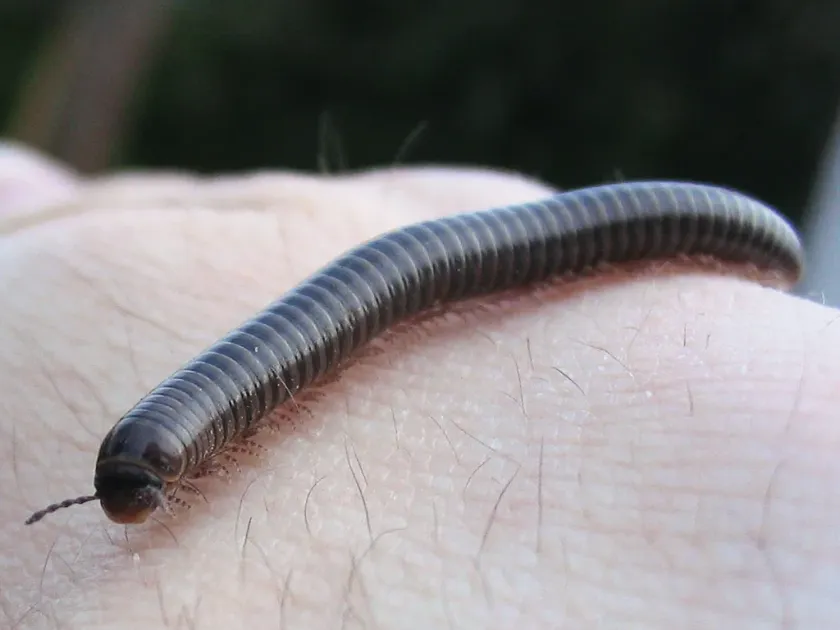
Millipedes (Cylindroiulus) belong to the class Diplopoda. They are easily recognizable by their elongated, cylindrical bodies consisting of numerous segments. Each body segment typically bears two pairs of legs, which allows them to burrow through soil effectively.
Adult millipedes generally measure between 2 and 5 cm in length and exhibit colors ranging from light brown to dark gray or black. A defining defensive behavior is their tendency to curl into a tight spiral when disturbed or threatened.
These organisms prefer dark, moist environments rich in organic matter. They are primarily nocturnal or active during periods of high soil moisture, avoiding direct sunlight and dry conditions whenever possible.
The life cycle begins with eggs laid in clusters within the soil. As juveniles develop, they go through several molts, gradually increasing the number of segments, which is characteristic of their growth process until reaching maturity.
Millipedes possess defensive glands that release irritating chemicals, serving as a deterrent against most natural predators. This biological trait makes them resilient and requires targeted efforts for effective management in cultivated areas.
What it damages
Millipedes are opportunistic omnivores that can cause significant damage to a variety of horticultural and agricultural crops. They are particularly destructive to plants where fruits, stems, or roots remain in constant contact with damp soil.
Crops frequently targeted include strawberries, potatoes, carrots, beets, and tender vegetable seedlings. In protected environments like greenhouses, they are known to graze on the stems of young plants just at the soil surface.
The damage manifests as small, deep, irregular holes or craters in roots and tubers. These wounds not only physically destroy plant tissue but also serve as entry points for secondary fungal and bacterial infections, leading to rapid rot.
Severe infestations can result in the complete destruction of crops, particularly in wet seasons. The damage reduces the marketability of produce and significantly weakens the vigor of the remaining plants by disrupting their root systems.
Furthermore, because millipedes feed on decaying organic material, they often inhabit composting areas and then migrate to living plants. This makes them a persistent threat in garden beds with high organic content.
When it appears
Millipede activity is highly dependent on environmental humidity and soil temperature. The early spring season, marked by sowing and transplanting, is when they are most likely to target young, vulnerable seedlings.
Throughout the summer, especially during rainy periods or when frequent irrigation is employed, millipedes remain active near the soil surface. This is when they cause the most damage to ripening fruits such as strawberries.
Autumn brings continued pressure as they feed on mature tubers and roots left in the ground. Careful monitoring during this time is essential to prevent significant harvest losses, as damage can escalate quickly before the final harvest.
During the winter months, millipedes retreat to deeper soil layers, compost heaps, or sheltered areas near structures to survive the cold. They become active again as soon as soil temperatures rise in the following spring.
The severity of their presence in any given season is largely influenced by the amount of rainfall and the presence of decomposing plant material, which acts as a primary food source for their populations.
Signs of infestation
A primary sign of a millipede infestation is the appearance of tiny, deep pits or hollows in root vegetables and fruits that touch the ground. These wounds are typically localized and may show signs of early decay.
Observing the garden in the early morning or after heavy rain often reveals millipedes on the surface of the soil. Finding them curled up under mulch, boards, or debris is a clear confirmation of their presence.
Unexplained wilting of plants is another indicator. When such plants are unearthed, one can often find evidence of root damage or even the millipedes themselves feeding on the underground portions of the plant.
The presence of abundant decaying organic matter, such as thick layers of uncomposted mulch or garden waste, provides a strong hint that the environment is highly conducive to a millipede population buildup.
In greenhouse settings, sudden gaps in rows of seedlings are a common sign. Close inspection of the soil base around these gaps often reveals the culprit, as they are rarely far from their most recent feeding site.
Control measures
Cultural control is the most effective approach. Regular soil cultivation and hoeing disrupt millipede habitats, causing the upper soil layer to dry out and reducing the survival rate of both adults and juveniles.
Removing potential food sources and hiding spots, such as debris, fallen leaves, and decaying plant material, significantly lowers the population levels within a garden plot.
Trap crops or bait traps (such as half-buried pieces of potato or carrot) can be used to attract and aggregate millipedes. These traps can then be collected and disposed of, which is a useful non-chemical intervention.
In cases of severe infestation where other methods fail, specialized soil-applied insecticides may be necessary. These should be applied according to local agricultural regulations to minimize environmental impact.
- Maintain proper soil drainage;
- Rotate crops to minimize food stability;
- Keep garden areas clean from debris;
- Apply biological controls using entomopathogenic nematodes or fungi.
Taxonomy
- Latin name
- Cylindroiulus
- Family
- Julidae
- EPPO code
- CYLISP
Discussion
No discussions yet — be the first.