
Millipede
Iulus
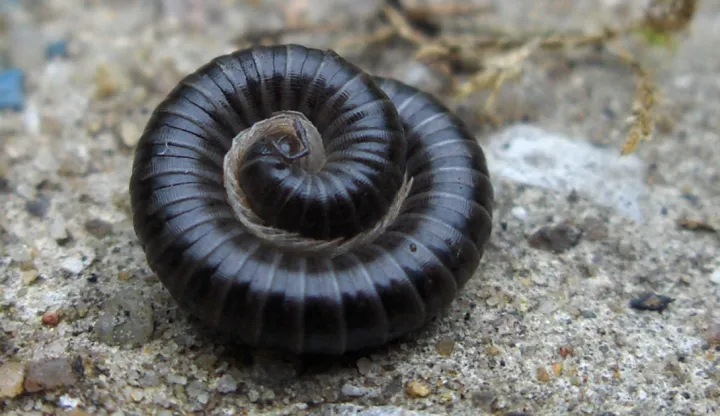
Description
How to identify
Millipedes (class Diplopoda, order Julida) are soil-dwelling arthropods characterized by a cylindrical body composed of numerous segments, each bearing two pairs of legs.
These organisms are generally slow-moving. When threatened, they often curl into a tight spiral or ball, a defensive behavior that protects their soft underbelly and legs.
Their cuticle is typically hard and ranges in color from brownish-gray to black, sometimes displaying warning colors or longitudinal stripes depending on the specific species.
Millipedes thrive in environments with high moisture and high organic matter content. They are nocturnal by nature, spending their days hidden beneath the soil surface or under debris.
The life cycle involves egg-laying in the soil. Upon hatching, the juveniles are smaller and have fewer segments, gradually growing and adding more body segments through subsequent molts.
What it damages
Millipedes are opportunistic feeders. They primarily consume decaying plant material, but when such resources are limited, they readily attack healthy plant tissues, including roots and tubers.
Root crops like potatoes, carrots, and beets are particularly vulnerable. Millipedes bore deep, hollowed-out cavities into these vegetables, making them unmarketable and susceptible to rot.
Seedlings and young transplants are frequently destroyed when millipedes gnaw through the tender stems and root systems at the soil line, causing the plants to collapse.
In strawberry patches, millipedes feed on the fruit that touches the ground, creating unsightly holes that are quickly colonized by fungi, leading to rapid decay of the entire berry.
While they are considered decomposers in nature, their presence in high densities in agricultural fields turns them into serious pests that compromise both yield quality and plant health.
When it appears
Millipede activity is strongly correlated with soil moisture and temperature. They become most active during the wet spring months when the soil warms up after the winter.
Late summer and autumn, often marked by increased precipitation, represent a second peak in activity as they forage for food and prepare for the upcoming wintering period.
During the winter, they migrate deeper into the soil profile, often reaching depths of several dozen centimeters, where they enter a state of dormancy until conditions improve.
In temperate zones, they can remain active year-round within the protected environment of greenhouses or polytunnels, provided the irrigation is frequent and organic mulch is present.
Periods of extreme drought are usually spent in deep, moisture-retaining soil layers, limiting the damage they cause to surface crops during the peak of the dry summer season.
Signs of infestation
The most common sign of a millipede infestation is the presence of small, deep pits or circular holes in root crops, often accompanied by soft, decaying tissue.
Wilting of seedlings without apparent surface damage is a classic indicator that the root system has been severed by millipedes hiding just beneath the soil surface.
Direct sightings of curled-up millipedes under bricks, garden pots, or mulch are reliable indicators of their presence and high population density on the site.
Tiny black fecal pellets deposited on the surface of berries or vegetables are another clear sign of millipede activity during the nocturnal feeding hours.
Large aggregations of these multi-legged arthropods appearing immediately after irrigation or rain are strong evidence of a colony residing within the vegetable beds.
Control measures
Cultural control is the primary defense. Removing organic debris, fallen leaves, and decaying mulch from the garden significantly reduces the availability of shelter and food.
Deep autumn tillage disrupts their overwintering sites, bringing them to the surface where they are exposed to harsh weather conditions and natural predators.
Using physical traps is a highly effective non-chemical approach. Placing moistened wooden boards or pieces of potato on the ground attracts them, allowing for daily collection and disposal.
Improving soil drainage and reducing excessive surface moisture through frequent shallow cultivation helps to dry out the top layer, making it inhospitable for millipedes.
Chemical control should be considered a last resort, involving the targeted application of soil-active insecticides in the planting rows, strictly adhering to safety intervals and usage guidelines.
Taxonomy
- Latin name
- Iulus
- Family
- Julidae
- EPPO code
- IULSSP
Discussion
No discussions yet — be the first.