
London millipede
Cylindroiulus londinensis
Description
How to identify
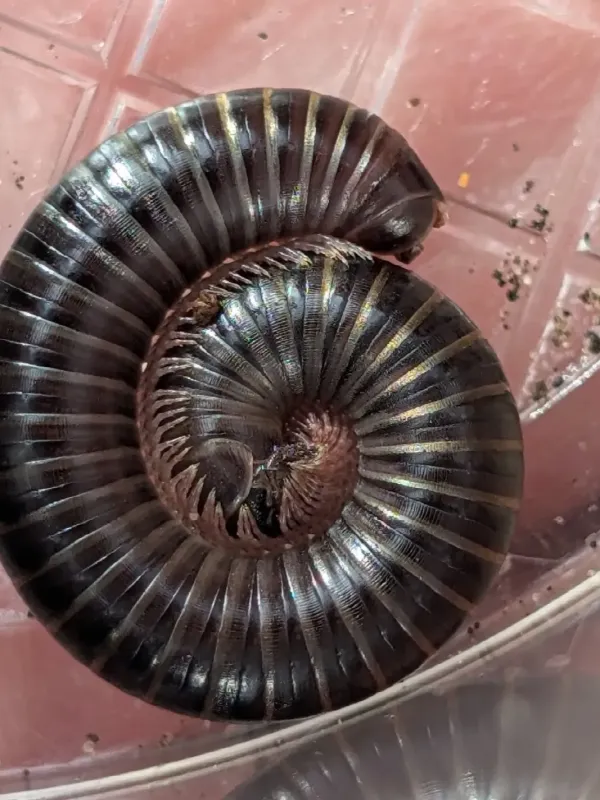
The London millipede (Cylindroiulus londinensis) is a member of the Julidae family. It is a cylindrical millipede characterized by a hard exoskeleton composed of numerous body segments, each featuring two pairs of legs.
Adult specimens typically reach lengths of 15 to 25 mm. Their coloration ranges from dark brown to black, allowing them to remain well-hidden within the leaf litter and soil matrix where they spend the majority of their lifecycle.
The life cycle of this species is tied to high soil moisture levels. Females deposit eggs in the soil, and the development process involves several molting stages, with the millipede adding more body segments after each molt.
They are nocturnal creatures that avoid dry, sunny conditions. During the day, they remain deep in the soil or under protective covers such as rocks, compost piles, or dense vegetation.
Their presence is often correlated with high levels of organic matter. They thrive in environments where decaying plant material is abundant, which often draws them toward cultivated garden beds.
What it damages
London millipedes are generalist feeders. They primarily damage subterranean parts of plants, including potato tubers, carrot roots, beets, and the bulbs of various ornamental and vegetable crops.
When populations are high, they often feed on newly germinated seeds and delicate seedlings, which can destroy an entire planting row and significantly reduce crop stand density.
Strawberries and other fruits that touch the moist soil surface are highly susceptible. Millipedes create deep feeding pits in the fruit, which often leads to secondary rot and complete crop loss.
The damage caused by these pests is distinct due to the scale of the feeding lesions; they often excavate larger cavities compared to the narrow, singular tunnels caused by wireworms.
Increased humidity, especially in rainy seasons, facilitates their movement to the soil surface, leading to intensified feeding activity on both underground structures and low-hanging fruits.
Signs of infestation
The most evident sign of infestation is the appearance of hollowed-out areas or jagged holes in root vegetables, which often become infected with secondary fungi or bacterial soft rot.
Finding dark, cylindrical organisms coiled into a spiral when digging in the soil near damaged plants is a definitive indicator of their presence.
Young plants that suddenly wilt and topple over often show signs of having their root systems or hypocotyls chewed through at the soil line.
A foul, pungent odor may be detected near infested soil, as these millipedes release chemical secretions from their defense glands when disturbed or present in high concentrations.
Evidence of frass (small, pellet-like excrement) inside the feeding cavities of roots or tubers further confirms that millipedes are the cause of the observed plant damage.
Control measures
Effective management begins with improving soil drainage, as London millipedes thrive in constantly damp, anaerobic environments where they can easily penetrate plant tissues.
Regular cultivation and hoeing of the soil surface help expose millipedes to predators and dry them out, significantly reducing their ability to thrive in the topsoil layer.
Trapping is a successful non-chemical control method; burying hollowed-out potatoes or carrot slices acts as a bait, which can be checked daily to manually remove and destroy the accumulated pests.
Sanitation practices such as removing excessive plant debris and old mulch from around vegetable beds are essential to eliminate the primary food source and shelter for these millipedes.
If chemical control becomes necessary, use appropriate soil-applied insecticides following the label guidelines, specifically targeting the period before planting or early in the growing season.
Taxonomy
- Latin name
- Cylindroiulus londinensis
- Family
- Julidae
- EPPO code
- CYLILO
Discussion
No discussions yet — be the first.