
Cylindroiulus latestriatus
Cylindroiulus latestriatus
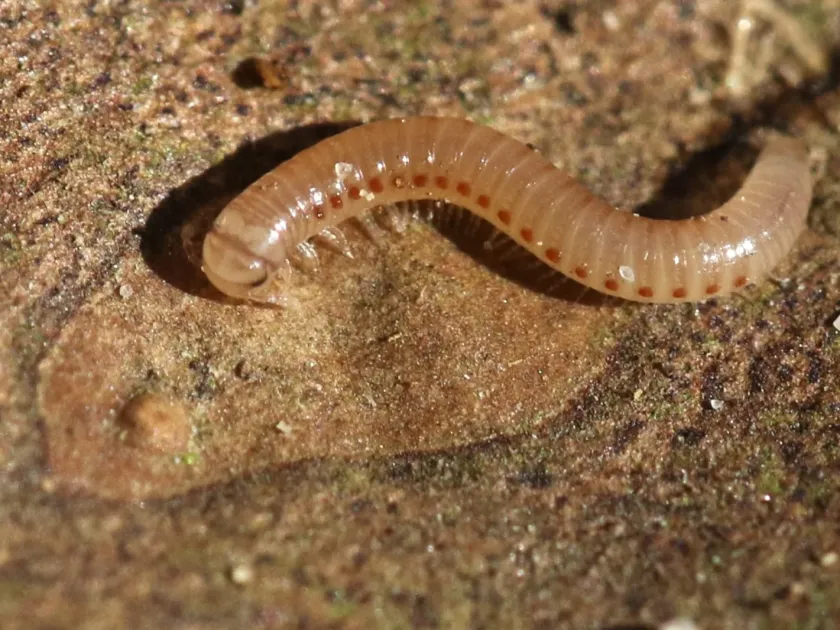
Description
How to identify
The sandy millipede (Cylindroiulus latestriatus) is a small invertebrate belonging to the class Diplopoda. Adults are typically 10-15 mm long and possess a cylindrical, segmented body.
Their exoskeleton is tough, providing protection in the soil environment. The coloration ranges from light brown to greyish, allowing them to blend into the soil texture.
Each body segment bears two pairs of legs, a diagnostic feature of this order, enabling efficient navigation through the soil profile and decomposing organic matter.
When disturbed, they exhibit a characteristic defense mechanism by coiling tightly into a spiral, which protects their softer underbelly and legs from predators.
The life cycle involves multiple molts. Juveniles are similar to adults but smaller and paler, and they require high moisture levels for successful development.
What it damages
This species is a significant pest for crops with high water content in their subterranean parts, particularly potatoes, carrots, parsnips, and sugar beets.
They feed by gnawing holes and deep cavities into the roots and tubers. These wounds serve as entry points for fungal and bacterial pathogens, leading to secondary rotting.
Seedlings and young plants are particularly vulnerable. The millipedes can sever the main taproot, causing the plant to wither and die rapidly under moisture stress.
In strawberry cultivation, they can damage ripening berries resting on the damp soil, reducing yield quality and making the fruits unmarketable.
In ornamental gardens, they are known to attack bulbs and tubers, sometimes causing significant damage to planting stocks before they even emerge in spring.
When it appears
Activity begins in early spring as soil temperatures rise, with peak feeding periods occurring during damp and rainy weather throughout the growing season.
Mid-to-late summer is the most critical period, as the development of succulent storage organs coincides with the high metabolic activity of the millipede population.
Autumn brings continued activity until the soil begins to freeze. During this time, individuals may migrate into deeper soil layers or compost heaps to survive winter.
Greenhouse environments provide ideal conditions for Cylindroiulus latestriatus, as consistent moisture and temperature allow for year-round reproduction and feeding.
During periods of drought, these millipedes are forced to move into the roots of plants to extract moisture, which significantly increases the severity of damage to the crops.
Signs of infestation
The primary visual sign is the presence of small, circular holes on the surface of tubers or roots. Internal examination often reveals complex tunnels and hollowed tissues.
Unexpected wilting and uneven crop stands are common indicators of root system disturbance caused by millipede feeding activity below the surface.
Physical evidence of the pest can be found by inspecting moist areas under mulch, debris, or near the base of the plant where they congregate in high numbers.
A peculiar, pungent odor sometimes accompanies large infestations, which is a defensive chemical emission produced by the millipedes when they are disturbed.
Affected tissues often show signs of decay or localized brown rot surrounding the feeding punctures, which distinguishes this damage from other soil insect pests.
Control measures
Cultural control is the most effective approach. Deep plowing in autumn helps destroy overwintering sites and exposes the pests to cold and predators.
Avoid excessive application of raw, uncomposted manure, as this provides a rich food source and an attractive breeding habitat for the millipedes.
- Trapping with halved potatoes or carrots buried near susceptible crops is a simple way to monitor and reduce local populations.
- Maintaining good soil drainage reduces the attractiveness of the area to these moisture-loving pests.
- Chemical options include soil-applied granular insecticides, which should be used strictly according to local regulatory guidelines.
Regular weeding and the removal of plant debris from the field significantly reduce the favorable conditions required for millipede survival and reproduction.
Biological controls, specifically entomopathogenic nematodes (such as Phasmarhabditis spp.), can be applied to the soil to infect and suppress millipede numbers.
Taxonomy
- Latin name
- Cylindroiulus latestriatus
- Family
- Julidae
- EPPO code
- CYLILA
Discussion
No discussions yet — be the first.