
Cylindronotus
Cylindronotus
Description
How to identify
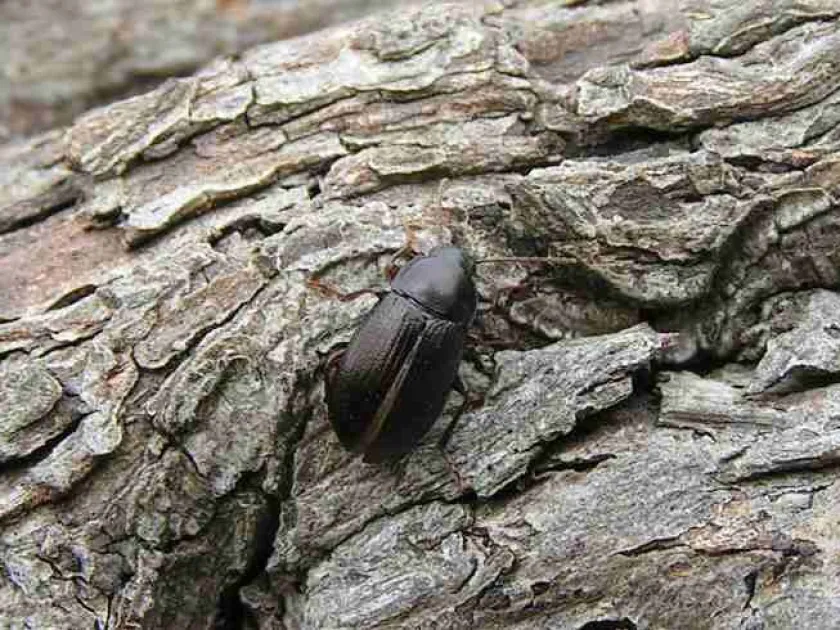
Cylindronotus is a genus belonging to the Tenebrionidae family, commonly known as darkling beetles. These insects are small, elongated beetles often dark brown or black in color, highly adapted to various soil environments.
Adult beetles feature a cylindrical body shape. Their larvae, often referred to as false wireworms, resemble click beetle larvae but can be distinguished by their specific head structure and lack of caudal processes.
The life cycle undergoes complete metamorphosis, consisting of egg, larva, pupa, and adult stages. Adult beetles typically remain hidden during the day under plant debris or in the topsoil to avoid desiccation.
These pests prefer moist areas within fields where plant residues accumulate. They exhibit moderate mobility, allowing them to relocate to areas with more favorable microclimatic conditions if necessary.
Found primarily in steppe and forest-steppe regions, Cylindronotus populations can reach pest status when agricultural practices favor their survival and reproduction, particularly in fields with poor soil management.
What it damages
The primary damage is caused by larvae that dwell in the soil and feed on underground plant parts. They consume seeds, emerging seedlings, and roots, leading to significant thinning of crop stands.
Host crops include various cereals like wheat and barley, as well as corn, sunflowers, and vegetable crops. In drought conditions, larvae actively seek moisture within root systems, increasing their destructive impact.
Adult beetles may occasionally consume vegetative parts of plants, creating small holes in leaves, but this feeding habit is generally of minor economic importance compared to larval damage.
Economic damage is most severe during the germination and seedling stages. Damage to the root system or the tillering node often results in plant death or stunted growth.
In modern intensive farming, Cylindronotus often acts as a secondary pest, appearing alongside wireworms and other soil-dwelling insects, complicating the overall phytosanitary status of the field.
When it appears
The biological cycle of Cylindronotus is closely synchronized with seasonal temperature and soil moisture levels. Larval feeding activity peaks in the spring during seed germination.
During the hot summer months, larvae move deeper into the soil to escape heat and dryness. This period often coincides with the pupation phase of the insect life cycle.
Activity may increase again in the autumn, especially if winter crops are present. Beetles and larvae prepare for overwintering by sheltering in soil or dense plant residues.
The insect overwinters in both adult and larval stages. High levels of post-harvest crop residues provide the necessary protection for the population to survive the winter months.
Mass emergence of adult beetles typically occurs in late spring, aligning with rising temperatures that trigger mating and egg-laying in the upper soil layers.
Signs of infestation
A primary indicator of infestation is the appearance of bare patches or gaps in the field during the seedling stage. Affected plants often appear wilted or fail to emerge entirely.
Inspecting the roots of suspicious plants usually reveals characteristic feeding marks. In cereals, one may observe damaged tillering nodes or partially eaten root systems.
Digging into the soil around damaged seedlings typically reveals the presence of larvae. Using pitfall traps to capture adult beetles is also an effective way to confirm their presence.
Wilted plants despite adequate soil moisture suggest root damage by subterranean pests rather than water stress, which is a hallmark sign of soil-dwelling larvae.
Areas with high concentrations of crop residues and weeds act as reservoirs for these pests and are usually the first places where damage becomes evident during the growing season.
Control measures
Crop rotation is the most effective long-term management strategy. Avoiding continuous monoculture prevents the buildup of larval populations to economically damaging levels in the soil.
Thorough soil tillage, including deep plowing, disrupts larval habitats and exposes them to the surface, where they become susceptible to natural predators like birds.
The use of insecticidal seed treatments is crucial for protecting young seedlings from soil-dwelling larvae during the most vulnerable early development stage.
Sanitary measures, such as weed control and the removal or incorporation of post-harvest residues, significantly reduce the available habitat and food sources for the pest.
- Application of seed-applied insecticides.
- Implementation of diverse crop rotation schemes.
- Deep plowing to reduce larval population density.
- Regular field monitoring using soil sampling and traps.
Taxonomy
- Latin name
- Cylindronotus
- Family
- Julidae
- EPPO code
- CYLNSP
Discussion
No discussions yet — be the first.