
British millipede
Cylindroiulus britannicus
Description
How to identify
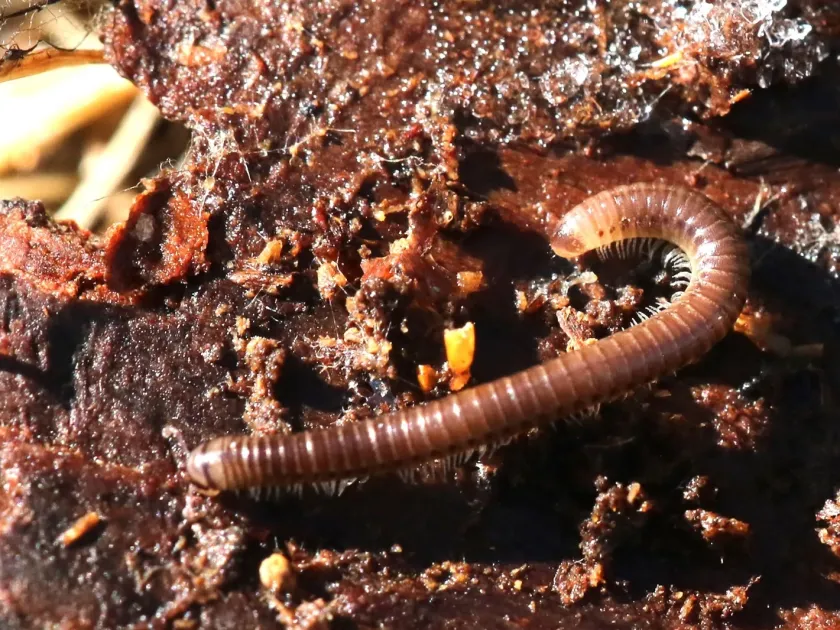
The British millipede (Cylindroiulus britannicus) is a small millipede belonging to the order Julida and the family Julidae. These creatures are typically 10–15 mm long and possess a cylindrical, multi-segmented body.
The coloration of adults ranges from light brown to yellowish, often featuring a faint dark stripe along the dorsal side. Each body segment bears two pairs of legs, allowing them to move efficiently through soil pores and organic matter.
They are moisture-loving organisms that thrive in damp environments. Due to their biology, they remain hidden in the soil, under plant debris, or in potting compost during the day to avoid desiccation.
Their life cycle consists of egg, larval, and adult stages. Females lay eggs in clusters within the soil or decaying plant material, where larvae find immediate access to food upon hatching.
In greenhouses and indoor planting environments, these millipedes can reproduce year-round if humidity remains high, leading to rapid population growth and potential infestation.
What it damages
This pest is a significant threat to a wide range of horticultural crops, including greenhouse vegetables, ornamental plants, and seedling beds. They primarily attack the subterranean parts of plants.
The British millipede feeds on roots, tubers, and the base of stems. By chewing through these structures, they disrupt the vascular flow of nutrients, leading to stunted growth, wilting, and often plant death.
Seeds are frequently attacked immediately after sowing. The millipedes excavate the inner tissues of the seeds, which significantly reduces germination rates and results in patchy, thin crops.
A critical aspect of their damage is the facilitation of secondary infections. The wounds created by millipedes serve as entry points for soil-borne pathogens like bacteria and fungi, causing rot.
In containerized plants, where the root volume is restricted, the feeding activity of these millipedes can be catastrophic, destroying the entire root system in a short period of time.
Signs of infestation
One of the most obvious signs of an infestation is the sudden wilting of young plants, despite adequate soil moisture, indicating compromised roots.
Upon examination of the roots, you may find irregular gouges, pitted areas, or hollowed-out sections. The crown of the plant may also show signs of boring activity.
The physical presence of small, curled, brown millipedes in the soil or at the base of pots is a clear indicator that your plants are under attack.
The presence of fine, granular fecal pellets near the plant base is another symptom of their feeding activity within the potting medium or soil.
Affected tissues often show signs of dark decay or necrotic lesions, which are often compounded by the secondary fungal rot associated with millipede feeding.
Control measures
Preventive measures are key, including the sterilization of potting soil and the use of compost-free growing media to eliminate eggs and juvenile millipedes before planting.
Proper sanitation is essential; remove decaying plant debris from greenhouses regularly, as these areas serve as primary breeding and feeding sites for the millipede population.
Adjusting the moisture levels in the greenhouse helps suppress population growth, as these pests require consistently high humidity to thrive and survive the larval stages.
In severe infestations, the application of targeted soil insecticides or granular bait treatments may be necessary to reduce the number of millipedes in the growing medium.
Simple trap-based control is highly effective for monitoring and management: place slices of potato or carrot just below the soil surface, check them every few days, and dispose of the captured millipedes.
Taxonomy
- Latin name
- Cylindroiulus britannicus
- Family
- Julidae
- EPPO code
- CYLIBR
Discussion
No discussions yet — be the first.