
Portuguese millipede
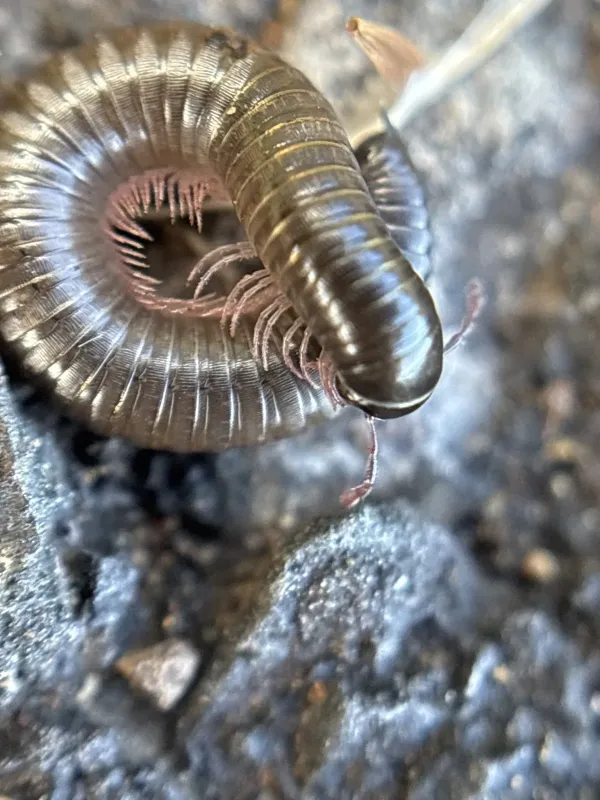
Ommatoiulus moreleti
Description
How to identify
The Portuguese millipede (Ommatoiulus moreleti) is a member of the Diplopoda class, order Julida, and family Julidae, commonly found in damp environments.
Adult millipedes are cylindrical in shape, typically measuring between 20 and 45 mm in length, and possess a shiny, dark grey or black exoskeleton.
They are characterized by their slow movement and a large number of legs, with two pairs per body segment, which distinguishes them from faster-moving centipedes.
These pests are primarily nocturnal, spending daylight hours hidden within soil crevices, under rocks, or beneath moist leaf litter and garden debris.
The life cycle involves multiple molting stages, and they tend to aggregate in large numbers in habitats that provide sufficient organic matter for feeding.
What it damages
Portuguese millipedes are generalist feeders, causing significant damage to a wide range of horticultural, vegetable, and ornamental crops.
They frequently target germinating seeds, young seedlings, and the roots of tender plants, often causing plants to collapse due to severed root systems.
Fruit and vegetables that grow close to the ground, such as strawberries, potatoes, and tomatoes, are particularly susceptible to deep, circular pitting.
Beyond direct feeding damage, the wounds created by millipedes facilitate the entry of secondary pathogens, leading to rot and disease in the crop.
In greenhouses, where high humidity levels are maintained, these millipedes can reach infestation levels that result in total crop failure if left unmanaged.
When it appears
Millipede activity is heavily dictated by moisture levels and temperature, with peak activity typically observed during the damp spring and autumn seasons.
During dry summer months, they migrate deeper into the soil profile to avoid desiccation, becoming less visible on the surface but remaining a latent threat.
Winter is spent in a dormant state deep in the soil or protected areas like compost heaps, where temperatures remain relatively stable and above freezing.
Mass migrations can occur following heavy rainfall, when soil saturation forces millipedes to the surface to avoid drowning in their burrows.
Spring coincides with the primary breeding season, as favorable soil conditions encourage egg-laying and the emergence of younger, smaller life stages.
Signs of infestation
The most distinctive sign of infestation is small, round, pit-like holes found in tubers, root vegetables, and ripening fruit near the soil surface.
Plants suddenly wilting or toppling over for no apparent reason, often easily pulled from the soil, indicates that the root system has been consumed.
Large numbers of the millipedes themselves may be seen congregating on walls, paving, or near irrigation points, especially after wet weather events.
Slimy trails left on leaves or fruit are another indicator, though these can sometimes be confused with trails left by slugs and snails.
The presence of a foul or pungent chemical smell when a millipede is disturbed or crushed is a defensive mechanism used by the species.
Control measures
Cultural control is the most effective strategy, focusing on removing harborages like piles of wood, garden waste, and excessive mulch from the garden.
- Regular soil cultivation to encourage the drying of the top surface layers.
- Using trap crops or potato baits buried slightly in the soil to attract and subsequently dispose of millipedes.
- Encouraging natural predators such as ground beetles, birds, and frogs in the garden ecosystem.
- Ensuring proper drainage around vegetable beds to prevent excessive soil saturation.
Chemical control should be a last resort, utilizing soil-applied insecticides registered for use against ground-dwelling pests in food production areas.
Taxonomy
- Latin name
- Ommatoiulus moreleti
- Family
- Julidae
- EPPO code
- OMMTMA
Discussion
No discussions yet — be the first.