
Ommatoiulus
Ommatoiulus
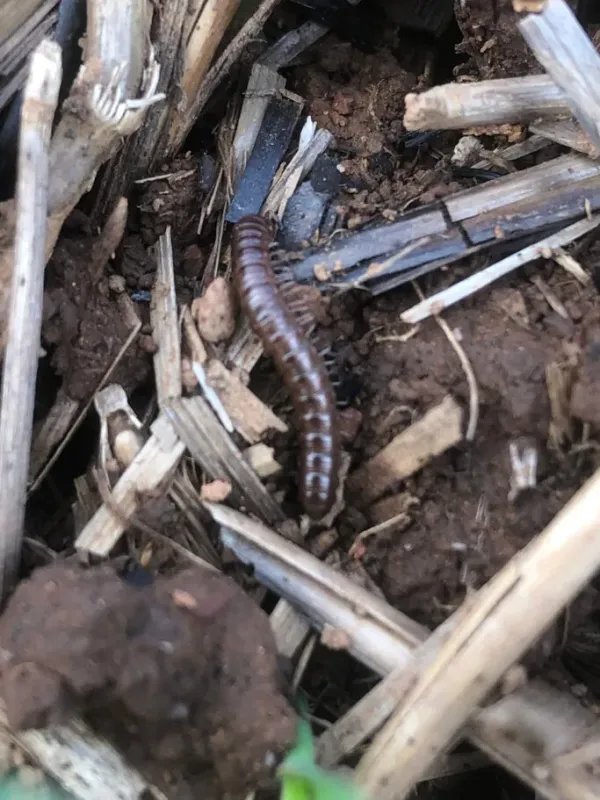
Description
How to identify
Ommatoiulus belongs to the class Diplopoda, family Julidae. These millipedes are characterized by their elongated, worm-like bodies consisting of numerous segments, with each segment carrying two pairs of legs.
Adult millipedes typically measure between 20 and 50 mm in length. Their bodies are protected by a hard chitinous exoskeleton, which ranges in color from dark gray to brown or black, often featuring a lighter longitudinal stripe along the sides.
They are primarily nocturnal creatures, active in moist environments and avoiding direct sunlight. During the day, they remain hidden in the soil, under plant debris, or in soil crevices to maintain moisture levels.
The lifecycle is strictly tied to soil humidity. Females lay their eggs in the soil, and the resulting larvae undergo several molts before reaching maturity, with development highly dependent on favorable moisture conditions.
These pests thrive in areas with high organic matter content and humidity. During periods of drought, their activity significantly decreases, as they are physiologically dependent on moisture to survive and remain mobile.
What it damages
Ommatoiulus can cause severe damage to a wide range of agricultural crops, including cereals, vegetables, and technical crops. They are especially destructive to young seedlings, feeding on the roots and the base of the stems.
Crops such as sugar beets, sunflowers, and maize are at highest risk during the germination phase. In high-density populations, these millipedes can completely destroy crop stands in specific areas of the field.
They also damage root vegetables and tubers by boring deep tunnels into the flesh. This not only reduces the market value of the crop but also serves as an entry point for secondary fungal or bacterial infections.
Damage caused by millipedes is sometimes confused with that of wireworms, but Ommatoiulus tunnels are generally wider and exhibit a more random, disorganized pattern within the affected plant tissues.
The economic impact of these millipedes is closely correlated with their soil population density. Damage is most severe when cool, wet spring weather delays seedling growth, keeping plants vulnerable for longer periods.
When it appears
The primary peak of activity occurs in the spring, as soil temperatures rise and moisture remains adequate for the millipedes to emerge from their overwintering sites in the soil.
A second, minor activity peak often occurs in autumn as millipedes prepare for winter. During this time, they may feed on newly sown winter crops, damaging germinating seeds and young shoots before they establish.
Overwintering occurs in deeper soil layers, often 20–30 cm underground, where temperatures remain relatively stable. They are generally hardy and can survive cold periods if there is sufficient soil protection.
Mass outbreaks are most common following seasons with high rainfall. Increased soil moisture supports egg survival and larval development, leading to significantly higher population numbers in subsequent growing seasons.
During dry summer months, millipedes migrate deeper into the soil or toward areas with higher moisture retention, effectively pausing their damaging activities until the autumn rain returns.
Signs of infestation
Evidence of infestation includes patchy stands and "gaps" in the field where seeds were destroyed before emergence or shortly after germination, leading to poor plant establishment.
Upon closer inspection, plants show characteristic damage to the hypocotyl and cotyledons, appearing as chewed edges or deep cavities. Millipedes can often be found near the damaged plants during daytime digging.
The use of soil traps, such as buried containers with moist bait like seeds or vegetable scraps, is an effective way to monitor the presence and density of these millipedes before planting.
The development of secondary rot in root crops is a tell-tale sign that the tissue was previously injured by millipedes. Fecal pellets left by the millipedes near the feeding site are also diagnostic indicators.
Agronomists should conduct soil sampling and inspect for the presence of the pests prior to sowing to determine if protective treatments are necessary to ensure a successful crop stand.
Control measures
Effective management begins with robust crop rotation. Avoid planting susceptible crops after previous crops that leave large amounts of organic debris, as these provide an ideal food source for millipedes.
Proper soil tillage is crucial for breaking up millipede habitats and reducing their numbers. Regular cultivation disrupts their tunnels and exposes them to environmental stressors, lowering the overall population density.
Seed treatment with systemic insecticides is the most effective chemical method for protecting crops during the critical germination phase. Neonicotinoids are frequently used to provide a barrier against soil pests.
- Remove excess plant debris after harvest to reduce food sources.
- Optimize sowing dates to ensure rapid germination and seedling growth.
- Apply granular soil insecticides at planting if high infestation levels are detected.
- Maintain high soil fertility to encourage vigorous plant health.
An integrated approach is best, combining cultural practices with targeted insecticide use based on proactive monitoring and accurate economic threshold assessment for each specific field.
Taxonomy
- Latin name
- Ommatoiulus
- Family
- Julidae
- EPPO code
- OMMTSP
Discussion
No discussions yet — be the first.