
Oecophora bractella
Oecophora bractella
Description
How to identify
Oecophora bractella is a species of moth belonging to the Oecophoridae family, which is part of the Lepidoptera order.
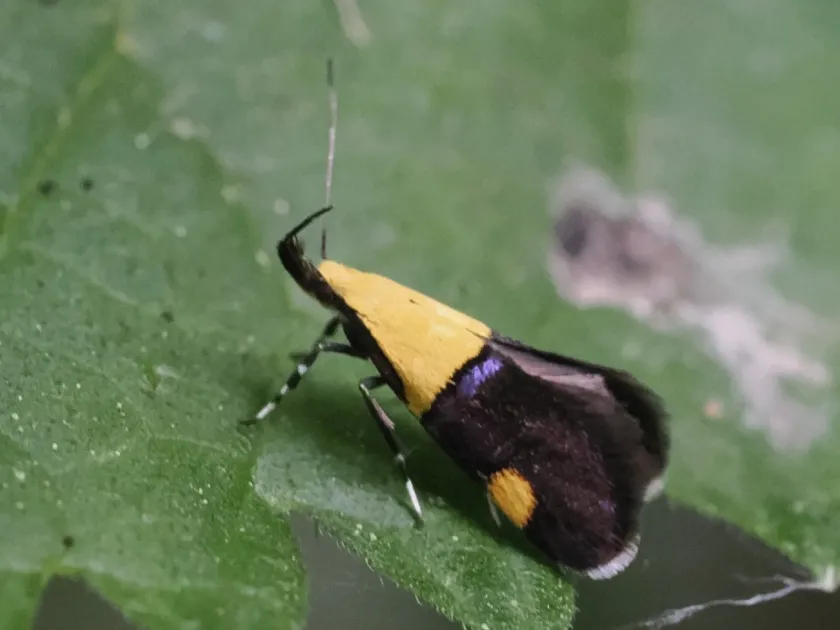
The adult moth is easily identified by its distinctive and bright coloration, featuring a combination of yellow and dark brownish-black patches on its wings.
Typically, the wingspan of this moth ranges between 14 and 18 millimeters, allowing it to hide effectively within forest habitats.
The larvae are small, caterpillar-like insects, usually exhibiting a greyish or yellowish tint, which helps them blend into their surroundings.
These insects are primarily associated with dead wood and decaying organic matter, which characterizes their specific ecological niche.
What it damages
This species is not considered a primary agricultural pest; however, it can be a nuisance in forestry and wood storage facilities.
The larvae primarily feed on decaying wood and fungi growing on dead or dying deciduous trees, such as oak, birch, and beech.
In nursery settings, they may potentially affect weakened saplings if the bark has reached a stage of early decomposition.
While their impact on healthy living trees is minimal, their feeding habits contribute to the breakdown of woody material.
Significant economic damage is rare, though their presence in lumber yards can lead to the degradation of poorly stored timber products.
When it appears
The flight period for adult Oecophora bractella moths typically occurs during the summer months, specifically June and July.
During this time, the moths are active, primarily at dusk and night, seeking suitable sites to deposit their eggs.
Larvae overwinter inside the wood or under the bark of trees, providing them with protection against harsh winter temperatures.
The life cycle is generally completed in one year, which limits the potential for rapid population explosions in forest environments.
Development resumes in the spring, with larvae continuing to feed until they reach the pupal stage later in the season.
Signs of infestation
The most common sign of infestation is the appearance of small, winding galleries or tunnels carved into decaying wood.
Frass, which consists of wood dust and larval excrement, often accumulates around the entrance to these tunnels, signalling active feeding.
Silken webbing spun by the larvae across the surface of the bark or inside cracks is a clear indicator of their presence.
The bark of affected trees may appear loose or show signs of premature cracking due to the larvae undermining its structure.
Direct observation of the colourful adult moths in the vicinity of wood stacks during their flight period is also a reliable indicator.
Control measures
Large-scale control measures are rarely necessary, as this moth generally does not pose a threat to healthy forestry or agricultural crops.
- Implement regular sanitation of forest areas by removing deadwood and decaying debris.
- Store lumber and timber in dry, well-ventilated areas to prevent moisture accumulation.
- Conduct periodic inspections of nursery stock to detect early signs of larval activity.
- Promote biological control by encouraging natural predators that feed on moth larvae.
If chemical intervention is required, it should be limited to targeted application on stored timber products to prevent further degradation.
Focusing on preventive forestry management and proper wood storage techniques is the most effective way to keep populations under control.
Taxonomy
- Latin name
- Oecophora bractella
- Order
- Lepidoptera (butterflies)
- Family
- Oecophoridae
- EPPO code
- OECPBR
Discussion
No discussions yet — be the first.