
Oecophora
Oecophora
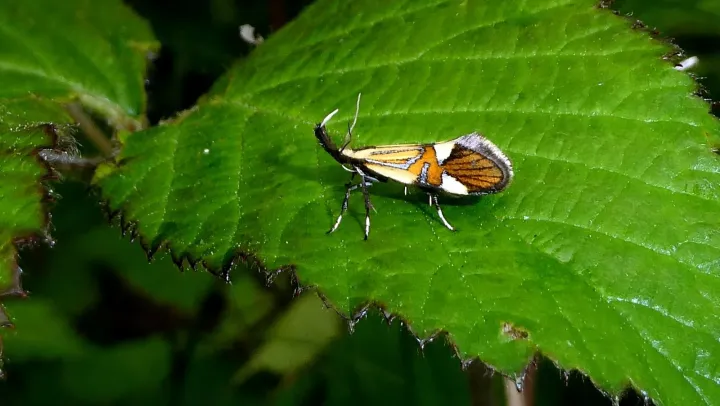
Description
How to identify
Oecophora is a genus of moths belonging to the family Oecophoridae within the order Lepidoptera. These small moths are characterized by their resting posture, where the wings are folded in a roof-like shape over the body.
Adult moths feature narrow forewings, often adorned with distinct patterns or spots that provide excellent camouflage against tree bark. The head is covered with dense scales, and their antennae are of medium length, serving as a key diagnostic feature.
The larvae are cylindrical with well-developed chewing mouthparts. Their coloration ranges from light beige to brownish, allowing them to remain concealed within their feeding sites.
The life cycle involves complete metamorphosis: egg, larva, pupa, and adult. Due to their cryptic nature, detecting these pests in the early stages of development can be quite challenging.
Accurate species identification often requires professional analysis of wing venation or genital structures, as many members of this family share similar morphological traits.
What it damages
These pests primarily target fruit trees and shrubs, feeding on bark, phloem, and occasionally woody tissues. Weakened or stressed trees are the most susceptible to infestation.
Larvae create galleries under the bark, which disrupts the tree's nutrient transport system. This can lead to the gradual dieback of individual branches or the entire tree in cases of heavy infestation.
Beyond fruit trees, some species of Oecophora can thrive in dry wood or plant debris, provided the environmental conditions favor fungal growth which the larvae may also interact with.
Signs of damage include slowed growth, yellowing foliage, and premature fruit drop. Damaged bark also creates an entry point for secondary pathogens like fungi and bacteria.
The economic impact is significant, as it involves both immediate crop loss and long-term damage to the structure and health of the orchard trees.
When it appears
Moth flight typically occurs at dusk or night, starting in late spring and continuing through mid-summer. Depending on the climate, one or two generations may occur annually.
The insects usually overwinter in the larval stage, hiding in protected spots such as bark crevices, inside hollow stems, or within cracks in garden structures.
Larval activity begins in early spring when temperatures become consistently warm. This is a critical window for monitoring and initiating pest management interventions.
Pupation occurs within silken cocoons spun by the larvae, usually located near their feeding sites or in hidden crevices under the bark before the adults emerge.
Keeping track of phenological development stages in the orchard helps agronomists time their monitoring efforts effectively using pheromone or light traps.
Signs of infestation
A primary indicator of infestation is the presence of entry holes in the bark, often accompanied by frass—a mixture of larval excrement and bark particles.
Silken webbing is frequently visible on trunks and twigs, as larvae use it to stabilize their damaged environment or build protective retreats.
The bark at infestation sites may show signs of cracking, peeling, or brittleness. Closer inspection often reveals galleries extending deep into the woody tissues.
The localized dying back of branches during the growing season is a serious warning sign that the tree's vascular system has been compromised by larval activity.
- Frass piles on the tree trunk.
- Webbing on young shoots.
- Premature leaf yellowing and branch dieback.
- Visible galleries upon bark removal.
Control measures
Sanitary pruning and the proper disposal of infested wood are essential to eliminate breeding grounds and reduce the pest population.
Scrubbing loose bark from trunks during early spring can destroy overwintering larvae and significantly decrease the number of pests present at the start of the season.
Biological insecticides containing entomopathogenic bacteria are highly effective during the early larval stages before they burrow deep into the tree tissues.
Chemical control should be targeted at the period when larvae emerge to feed, utilizing systemic insecticides to ensure deeper protection within the bark.
Maintaining orchard health through optimal irrigation and balanced fertilization strengthens the trees' natural defenses, making them less attractive to Oecophora infestation.
Taxonomy
- Latin name
- Oecophora
- Order
- Lepidoptera (butterflies)
- Family
- Oecophoridae
- EPPO code
- OECPSP
Discussion
No discussions yet — be the first.