
Turanian tree cricket
Oecanthus turanicus
Description
How to identify
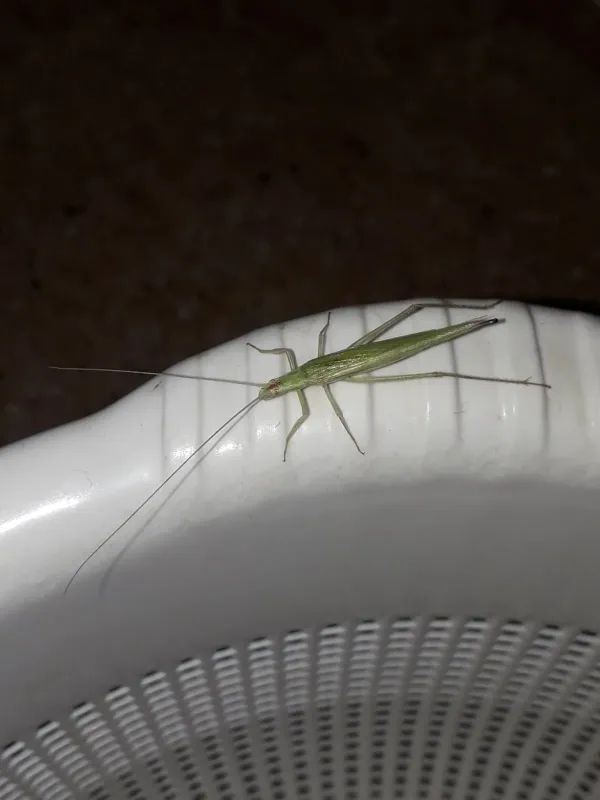
The Turanian tree cricket (Oecanthus turanicus) is a member of the insect order Orthoptera. These insects are known for their slender, light green bodies, usually measuring about 15–20 mm in length.
They possess well-developed, transparent wings that are longer than their abdomen, allowing them to remain active and mobile within the plant canopy.
Females are equipped with a specialized ovipositor designed to penetrate plant stems, which is their primary method for laying eggs inside host plants.
Nymphs, while resembling miniature adults, lack fully developed wings and undergo several molting stages before reaching their final mature form.
Due to their nocturnal habits and camouflage, these insects are difficult to detect during daylight hours, often remaining hidden in dense foliage.
What it damages
The primary damage is caused by females during the egg-laying process. They carve deep slits into plant stems to deposit their eggs, which causes structural damage to the plant.
Crops frequently targeted by this pest include grapevines, various berry-bearing shrubs, medicinal herbs, and industrial crops like cotton and sunflowers.
The stems, weakened by these punctures, become fragile and are prone to breaking under the influence of wind or the weight of the plant's own canopy.
Furthermore, these punctures create entry points for various pathogens, potentially leading to bacterial or fungal infections that result in necrosis.
Severe infestations can lead to stunted growth, reduced yields, and the premature death of entire branches or young stems, impacting overall crop health.
When it appears
The life cycle begins in spring when nymphs hatch from eggs that successfully overwintered inside plant stems.
Adults emerge during the mid-summer period, characterized by high activity levels and reproductive behavior, as they disperse across the landscape.
The period of greatest agricultural concern occurs in the second half of summer, coinciding with the female's peak egg-laying activity.
Adult crickets typically perish with the onset of autumn frosts, leaving their eggs safely tucked away within the stems to endure the winter months.
Environmental factors, particularly humidity levels during the spring and summer, play a significant role in the survival rate of the nymphs.
Signs of infestation
The most visible sign of an infestation is a longitudinal row of small, regular punctures on the stems, which resemble a dashed line or stitching.
One may notice darkened or cracked bark in specific areas, indicating where the female has successfully inserted her ovipositor.
Affected stems often show signs of deformation or irregular bending, which significantly slows down the healthy growth of the plant shoot.
When a stem is broken open at the site of damage, it is possible to find the internal cavity where the elongated eggs are deposited in a dense row.
Consistent nocturnal chirping sounds emanating from garden foliage can serve as a strong indicator that the crickets have established a population.
Control measures
The most effective cultural practice is the early identification and physical removal of infected stems containing egg-laying clusters.
Effective weed management is crucial, as wild plants serve as primary shelters and breeding grounds for these crickets outside of commercial crops.
In cases of severe infestation, targeted insecticide applications may be necessary, strictly following local agricultural safety regulations and timing requirements.
- Apply treatments during the evening hours when crickets are most active.
- Respect pre-harvest intervals when applying chemicals to food crops.
- Promote biodiversity to encourage natural predators like birds and predatory insects.
Biological control, by creating a habitat for natural insectivores, can help maintain population levels below the threshold of economic damage.
Taxonomy
- Latin name
- Oecanthus turanicus
- Order
- Orthoptera (locusts)
- Family
- Gryllidae
- EPPO code
- OECAPT
Discussion
No discussions yet — be the first.