
Snowy tree cricket
Oecanthus niveus
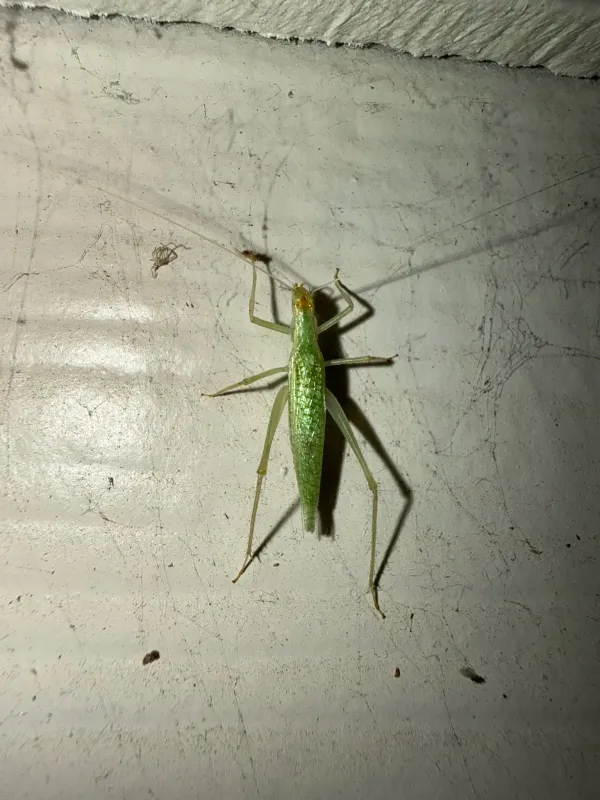
Description
How to identify
The snowy tree cricket (Oecanthus niveus) is a member of the Gryllidae family. It is recognized by its slender, pale green or whitish body, which provides excellent camouflage among foliage.
Adult insects typically measure between 12 and 15 millimeters in length. One of their most prominent features is their extremely long, thread-like antennae that extend far beyond their body length.
Their wings are well-developed, transparent, and have a net-like pattern. Males produce a distinctive chirping sound, usually heard in the evening, which is used to attract mates.
Nymphs resemble smaller versions of the adults but lack developed wings. They are agile and actively forage on the branches of trees and shrubs throughout their growth stages.
The life cycle involves incomplete metamorphosis, progressing through egg, nymph, and adult stages within a single season.
What it damages
Damage is primarily caused during the egg-laying process, when females create deep, longitudinal punctures in the stems of various fruit-bearing plants.
They commonly affect apple, pear, peach, and plum trees, as well as cane fruits like raspberries and blackberries. Preferring succulent, non-woody stems for oviposition is their signature trait.
These puncture wounds compromise the bark's integrity, creating entry points for opportunistic fungal pathogens and bacteria that lead to cankers and rot.
Affected stems often break under wind pressure or the weight of the fruit. Growers frequently observe the wilting and death of shoot tips located above the oviposition site.
While the crickets themselves may feed on some plant matter and other small insects, the structural damage to the tree's growth points is the most significant economic concern.
When it appears
The snowy tree cricket is most active during the summer months. Adults reach peak activity levels in late summer, which is the prime time for mating and egg-laying.
Eggs overwinter inside the stems of the host plants. With the arrival of consistent spring warmth, the eggs hatch into nymphs, which immediately begin to forage.
The nymphal stage undergoes multiple molts throughout the summer, gradually increasing in size until they reach maturity by late summer or early autumn.
Warm and moderately humid summer weather supports optimal population growth. Conversely, extreme spring temperature fluctuations can lead to higher nymphal mortality.
With the onset of autumn frost, adults die off, leaving the next generation secured within the plant stems until the following spring cycle begins.
Signs of infestation
The most telltale sign of an infestation is a neat, linear row of puncture marks on young shoots. These holes are the result of the female's ovipositor insertion.
Upon closer inspection, longitudinal scars or elongated slits may be visible on the stems, which can cause the bark to split as the wood grows.
- Visible rows of small, round puncture holes on current-season growth.
- Wilting or yellowing of foliage on shoot tips without an apparent pathogen source.
- Brittleness of stems leading to easy snapping during light pruning or wind.
- Consistent evening chirping sounds near the orchard canopy during August and September.
The dying back of branch tips beyond the puncture zone is a classic diagnostic symptom that indicates where the female has deposited her eggs.
Control measures
The most effective cultural control is the manual removal and destruction of infested stems. This should be done during autumn or early spring before the eggs hatch.
Maintaining a clean orchard floor by removing weeds and leaf litter helps eliminate secondary hiding spots for nymphs, reducing the overall pressure on the trees.
If populations exceed economic thresholds, applying selective insecticides during the nymphal emergence phase can significantly mitigate potential damage.
Promoting a healthy population of natural predators, such as birds, spiders, and predatory insects, can help keep tree cricket numbers in check naturally.
Ensuring trees receive proper nutrition and pruning promotes robust growth, which helps plants recover faster from minor mechanical injuries caused by these crickets.
Taxonomy
- Latin name
- Oecanthus niveus
- Order
- Orthoptera (locusts)
- Family
- Gryllidae
- EPPO code
- OECANV
Discussion
No discussions yet — be the first.