
Black-horned tree cricket
Oecanthus nigricornis
Description
How to identify
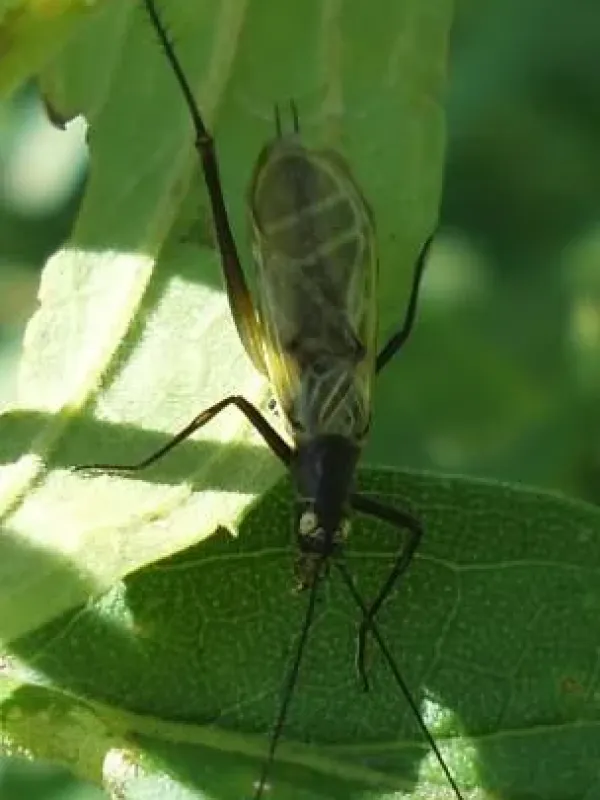
The black-horned tree cricket (lat. Oecanthus nigricornis) belongs to the order Orthoptera, family Gryllidae. This slender insect is pale green or yellowish-green, typically reaching 15–18 mm in length.
It is easily identified by the presence of black or dark markings on its antennae, which distinguishes it from other related species. The insect has long legs suitable for jumping and transparent wings.
Males possess a specialized stridulatory organ on their forewings, producing a rhythmic, persistent chirping sound during late summer and autumn evenings to attract mates.
Females are equipped with a sharp ovipositor, which they use to pierce plant tissues and deposit eggs deep within the stems of various plants.
Nymphs resemble smaller versions of adults but lack fully developed wings. They remain on their host plants throughout their development, feeding on soft plant tissues.
What it damages
This pest affects a wide range of plants, including fruit bushes such as raspberries and blackberries, as well as various herbaceous crops and weeds.
The primary damage occurs during the egg-laying process. Females drill a series of punctures in the stems, which compromises the structural integrity of the plant and disrupts vascular transport.
By interfering with the flow of nutrients and water, these wounds cause the upper portions of the damaged stems to wilt and eventually die off, reducing plant productivity.
Furthermore, the physical wounds created by the females serve as entry points for secondary pathogens, such as fungi and bacteria, which can lead to stem rot.
In cases of high infestation, the cumulative damage leads to significant yield losses and reduces the plant's ability to survive winter due to weakened stems.
When it appears
The lifecycle of the black-horned tree cricket is synchronized with the seasons. Adult activity and mating peak during the late summer months.
The species overwinters in the egg stage, which are laid inside the pith of host stems. This provides the eggs with protection against harsh winter temperatures.
In late spring, usually May or June, nymphs hatch from the overwintered eggs. They spend the summer months feeding and growing, gradually reaching maturity.
By late August, the adults are active and begin their reproductive phase. The sound of their chirping is a clear sign that they are active in the environment.
The cycle is annual; therefore, monitoring for signs of damage should begin from mid-summer onwards when the adults become highly active and initiate egg-laying.
Signs of infestation
The most visible indicator of an infestation is a series of small, dark punctures aligned in a row along the stems of affected plants.
Stems in the areas of oviposition may show signs of splitting, drying, or discoloration, indicating that the plant tissue has been compromised.
Wilted or yellowing tips of branches and stems often indicate that an infestation is present above the site of the damage, as sap flow has been disrupted.
Evening chirping in gardens or fields is an acoustic sign of their presence, which can help gardeners locate potential problem areas before severe damage occurs.
Close inspection of the stems during the day often reveals the insects themselves, which can be elusive but are easily spotted if the plant foliage is gently disturbed.
Control measures
The most effective management strategy is sanitation. Pruning and destroying infested stems before the eggs hatch in the spring is essential to break the lifecycle.
Managing weed populations is critical because these insects often use wild plants as hosts before moving onto commercially grown fruit bushes or garden crops.
Insecticides can be used if the population levels become unsustainable, targeting the nymphs during their active feeding stages in early summer.
- Regular pruning of damaged shoots during winter and early spring.
- Elimination of nearby weed hosts to reduce breeding grounds.
- Application of appropriate insecticides during the nymph stage.
- Encouraging natural predators like birds and parasitic wasps in the garden.
Biological controls such as fostering a healthy population of beneficial insects and birds can help keep the cricket population below the economic threshold without resorting to chemical interventions.
Taxonomy
- Latin name
- Oecanthus nigricornis
- Order
- Orthoptera (locusts)
- Family
- Gryllidae
- EPPO code
- OECANA
Discussion
No discussions yet — be the first.