
Fulton's tree cricket
Oecanthus fultoni
Description
How to identify
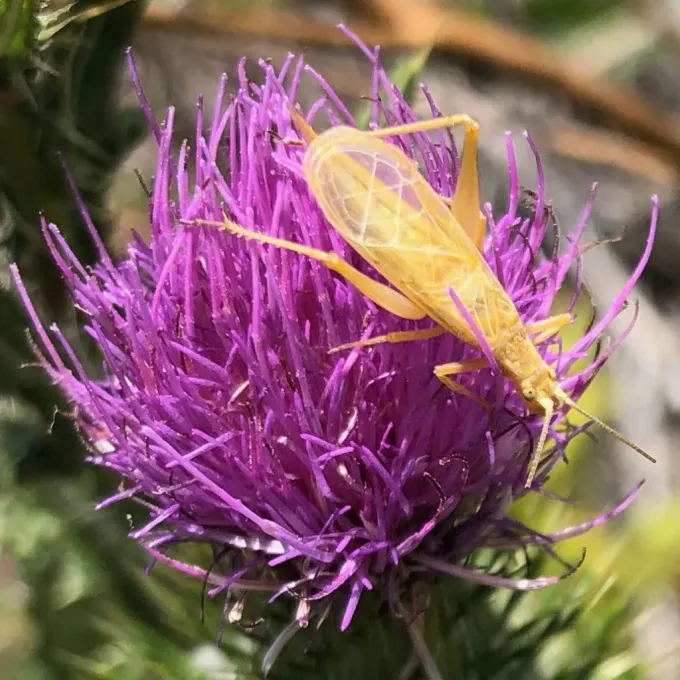
Fulton's tree cricket (Oecanthus fultoni) is a member of the insect order Orthoptera and the Gryllidae family. These insects are characterized by a slender, pale green or yellowish body, measuring about 15–20 mm in length.
They possess transparent wings with a delicate, net-like venation. Their slender shape and color allow them to camouflage perfectly against the foliage of trees and shrubs throughout the growing season.
The males are particularly well-known for their distinct, rhythmic chirping songs, which are often the primary way gardeners detect their presence in the landscape during summer evenings.
The life cycle involves an egg stage, which overwinters inside woody plant tissues. Nymphs, which resemble smaller, wingless versions of adults, emerge in the spring to feed on various plant parts.
Being primarily nocturnal, they are rarely seen during the day. They prefer to hide in dense foliage or deep within the crevices of tree bark to avoid avian predators.
What it damages
The primary damage is caused by the female cricket during the oviposition process. She uses a needle-like ovipositor to drill deep holes into the stems of young, woody plants to deposit her eggs.
Common hosts include raspberries, blackberries, grapes, and various fruit trees. This drilling disrupts the xylem and phloem, effectively interfering with the plant's nutrient transport system.
The stems become structurally weakened at the site of the oviposition punctures. This makes them highly susceptible to snapping under the weight of ripening fruit or during heavy wind gusts.
Furthermore, these punctures serve as entry points for secondary pathogens. Fungi and bacteria can easily invade the wounded tissue, leading to localized decay, necrosis, and branch death.
In severe infestations, the cumulative damage can lead to the death of entire branches. This significantly reduces the overall yield and vigor of affected berry crops and fruit trees.
Signs of infestation
The most visible sign of infestation is a series of small, uniform punctures arranged in a linear pattern along the young shoots. These look remarkably like a stitch line.
Affected stems may show minor swelling or discoloration around the puncture sites. Often, these segments of the plant appear slightly deformed compared to healthy branches.
During the dormant season, gardeners may notice dead terminal ends on shoots. These tips are brittle and tend to break off easily, revealing the internal scarring caused by the cricket.
The high-pitched, steady chirping of males during late summer evenings is a strong indicator of a substantial local population that may require monitoring and management.
Carefully splitting an infested stem will reveal a row of elongated, yellowish eggs embedded within the woody tissue. This is the definitive diagnostic feature of an active infestation.
Control measures
The most effective management strategy is sanitation through pruning. Infested shoots should be clipped off and destroyed (preferably burned) to eliminate eggs before they hatch in spring.
Timing is critical: pruning must be completed in late winter or early spring before temperatures rise sufficiently to trigger the hatching of nymphs from the stems.
In smaller gardens, hand-picking the adult crickets at night using a flashlight can help reduce the population. However, this is labor-intensive and mostly suitable for light infestations.
Chemical control with insecticides is generally reserved for severe outbreaks. Products should be applied when nymphs are active, adhering strictly to pre-harvest interval guidelines.
Maintaining vigorous plant health through balanced fertilization and proper irrigation helps plants recover from minor injuries and withstand the presence of these insects more effectively.
Taxonomy
- Latin name
- Oecanthus fultoni
- Order
- Orthoptera (locusts)
- Family
- Gryllidae
- EPPO code
- OECAFU
Discussion
No discussions yet — be the first.