
Striped tree cricket
Oecanthus fasciatus
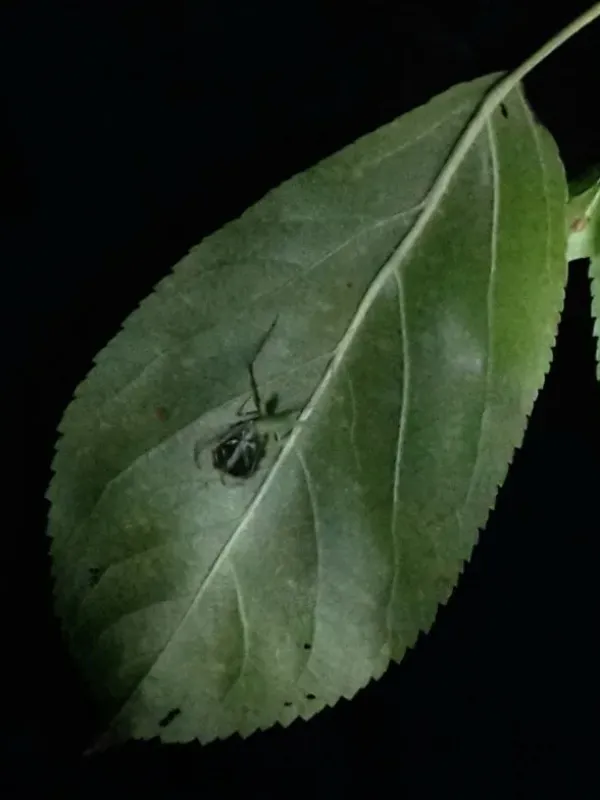
Description
How to identify
The striped tree cricket (Oecanthus fasciatus) belongs to the order Orthoptera and the family Gryllidae. These insects are characterized by a slender, pale green or straw-colored body, measuring about 12–15 mm in length.
They possess exceptionally long, thread-like antennae that are longer than their bodies. Males have broad, transparent wings that are specialized for producing high-pitched stridulating calls.
Females are similar in appearance but can be distinguished by their functional ovipositor, which is used to insert eggs into plant tissues. Their coloration provides excellent camouflage against leaves and stems.
Active primarily during dusk and night, these crickets are more often heard than seen, making them elusive to spot during daylight inspections.
Nymphs resemble smaller, wingless versions of the adults. They undergo several molts before reaching maturity, gradually developing their wings and reproductive capabilities.
What it damages
The primary damage is caused by females during oviposition. They use their ovipositors to drill deep, longitudinal rows of punctures into stems, petioles, or twigs of various plants.
Plants frequently targeted include raspberries, blackberries, roses, and various orchard trees. The structural integrity of the affected shoots is often severely compromised by these deep wounds.
These puncture sites act as entry points for pathogens, including bacteria and fungi, which can lead to localized necrosis, cankers, or even the death of the entire shoot above the puncture line.
In high-density infestations, the weakening of multiple stems can lead to a significant loss of vegetative vigor and reduced harvest quality for berries and fruit crops.
While nymphs and adults may feed on leaves and flower buds, this secondary feeding is usually less damaging than the structural injury caused during the egg-laying process.
When it appears
The striped tree cricket typically has a univoltine life cycle, meaning one generation per year. They overwinter in the egg stage, deposited within plant stems.
Nymphs emerge in late spring or early summer, corresponding with the period of rapid plant growth, which provides them with ample food sources and shelter.
Throughout the summer, nymphs develop through several stages. While they primarily feed on vegetation, they are also known to prey on smaller insects like aphids when available.
Adults reach maturity mid-to-late summer. This is when the characteristic nocturnal chirping begins as males signal to females to initiate the mating process.
As the season nears its end in autumn, adults lay eggs into host plants and eventually succumb to cold weather, effectively resetting the cycle for the following year.
Signs of infestation
The most telltale sign of an infestation is the appearance of distinct, linear rows of puncture holes along the stems of affected woody or semi-woody plants.
You may observe physical scarring or slight swelling around the puncture sites, which indicates the plant's reaction to the mechanical injury caused by the female's ovipositor.
Affected stems often break easily during wind or heavy rain because the internal vascular tissue has been weakened by the series of egg-laying incisions.
Nocturnal chirping is a strong indicator of their presence in the vicinity, particularly during calm, warm summer evenings.
Yellowing or wilting of shoot tips, while the rest of the plant remains healthy, can suggest that crickets have disrupted the nutrient flow by laying eggs in that specific stem.
Control measures
Sanitation is the most effective management strategy. Pruning and destroying infested stems containing egg clutches before spring helps significantly reduce the population.
Managing weed growth around crop fields and gardens is crucial, as many wild host plants act as reservoirs for the cricket population to thrive and spread to crops.
If population levels are high, targeted applications of insecticides during the nymphal stage can provide effective control before damage occurs.
Promoting a healthy environment for natural predators, such as predatory beetles, birds, and spiders, can help keep cricket populations at manageable levels.
- Regular inspection and removal of damaged shoots.
- Eliminating tall grass and weed reservoirs.
- Using light traps for nocturnal monitoring.
- Applying systemic insecticides when threshold levels are exceeded.
- Encouraging the presence of natural entomophagous insects.
Taxonomy
- Latin name
- Oecanthus fasciatus
- Order
- Orthoptera (locusts)
- Family
- Gryllidae
- EPPO code
- OECAFA
Discussion
No discussions yet — be the first.