
Narrow-winged tree cricket
Oecanthus angustipennis
Description
How to identify
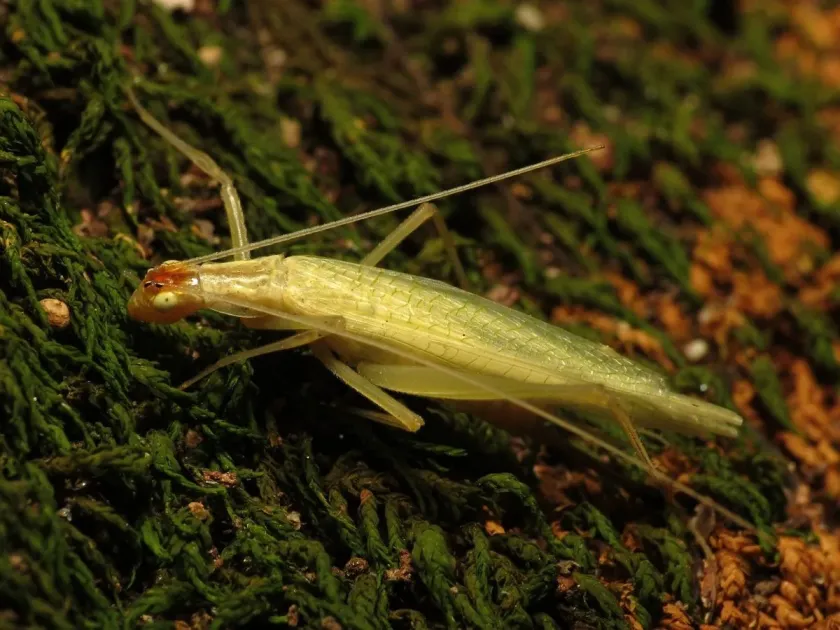
The narrow-winged tree cricket (Oecanthus angustipennis) belongs to the Gryllidae family, order Orthoptera. Adults are slender, pale green or yellowish-brown insects, which provides excellent camouflage among foliage.
A distinctive feature of this species is its narrow, transparent wings. The males possess broader wings with a characteristic veined structure used for stridulation. Their head is small, featuring long filiform antennae that exceed the length of their body.
Their life cycle involves incomplete metamorphosis: egg, nymph, and adult. Adults typically reach 12–15 mm in length and possess strong hind legs adapted for jumping, typical of the cricket family.
These insects are primarily nocturnal, identified by the monotonous chirping sound produced by males. During the day, they remain hidden within dense vegetation, making them difficult to spot without close inspection.
There is one generation per year. The species overwinters primarily in the egg stage, which the females insert into plant tissues, protecting the developing embryo from harsh winter temperatures.
What it damages
The primary damage is caused by females during oviposition. They use their specialized ovipositor to create deep, longitudinal incisions in young shoots of fruit trees, ornamental shrubs, and various herbaceous plants.
Common hosts include apple, peach, plum, and berry crops like raspberries and blackberries. Damage is concentrated on tender, non-woody shoots during their active growth phase in spring and summer.
These incisions disrupt the transport of nutrients and water within the stem. Consequently, the tips of the shoots often wilt, wither, and may snap off at the site of the egg-laying puncture.
In addition to physical trauma, the oviposition sites serve as entry points for fungal pathogens and bacterial infections. This often leads to tissue necrosis and the potential dieback of affected branches.
High population densities can lead to significant yield losses due to the destruction of fruit buds and the general weakening of the plant, as it diverts energy resources to heal the deep wounds.
Signs of infestation
The first visual sign of infestation is the presence of a series of small, linear punctures or slit-like openings along the surface of young shoots. These marks are often arranged in a regular row.
At the oviposition sites, the bark of the shoot may show slight swelling or splitting. Upon closer inspection of the internal stem tissue, elongated yellowish-white eggs can be found clustered within the pith.
During the growing season, a key symptom is the sudden wilting of shoot tips. These tips become limp and gradually dry out, even though there are no obvious signs of leaf-chewing insects present.
At night, the presence of these crickets can be confirmed by the monotonous, steady chirping sound of the males, which can be heard emanating from tree canopies and shrubbery.
If branches are gently shaken in the early evening or at dawn, one can observe active adult crickets leaping or flying to adjacent plants to escape, confirming their presence in the garden.
Control measures
The most effective cultural practice is the timely pruning and destruction of infested shoots. Removing branches containing egg clutches before spring significantly reduces the population for the upcoming season.
Maintaining clean orchard floors by regularly mowing weeds is essential. Tall grass and weeds provide ideal shelter for nymphs during the early stages of their development.
In cases of severe infestation, contact insecticides can be applied during the period when nymphs hatch. It is critical to adhere to label rates and pre-harvest intervals to ensure safety and effectiveness.
Encouraging natural predators, such as insectivorous birds, spiders, and parasitic wasps, helps keep cricket populations below the economic injury level without relying solely on chemicals.
Biological control options, such as using entomopathogenic fungi, are viable alternatives for organic gardens, helping to suppress nymph populations while maintaining an ecologically balanced environment.
Taxonomy
- Latin name
- Oecanthus angustipennis
- Order
- Orthoptera (locusts)
- Family
- Gryllidae
- EPPO code
- OECAAN
Discussion
No discussions yet — be the first.