
Chimney Sweeper
Odezia atrata
Description
How to identify
The Chimney Sweeper (lat. Odezia atrata) belongs to the order Lepidoptera, family Geometridae. This is a small moth with a wingspan of approximately 20–25 mm.
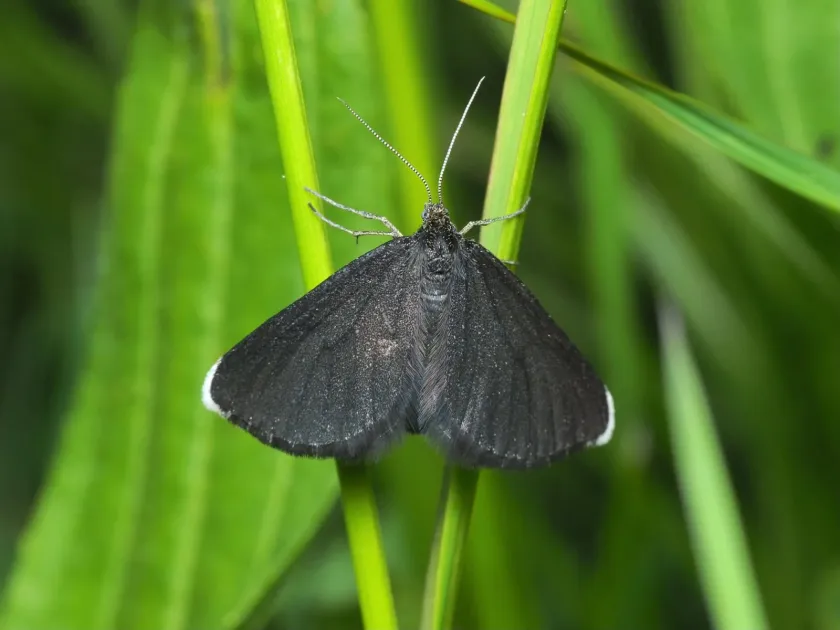
The adult moth has uniform charcoal-black or dark brown wings. A distinctive feature is the narrow white fringe on the edges of the wings, which is visible upon close inspection.
The larvae of this species possess a slender body typical of geometer moths, usually exhibiting a greenish or yellowish-green color, often with dark stripes along the back.
The pupa of the pest is typically found inside a loose cocoon within the surface layer of the soil or among plant debris, providing protection against temperature fluctuations.
This species is a typical inhabitant of forest edges and meadows, but in cases of mass propagation, it poses a threat to various cultivated and wild plant species.
What it damages
The primary food source for the larvae consists of plants from the Apiaceae family, particularly the upright hedge parsley (Chaerophyllum) and other meadow grasses.
In agricultural ecosystems, this pest can damage forage grasses, reducing the overall yield of green biomass in pastures and hay meadows.
The caterpillars consume the leaves, leaving behind only the skeletal veins, which disrupts the photosynthetic process and weakens the entire plant.
The damage caused by the larvae creates entry points for secondary fungal and bacterial infections to penetrate the plant tissues.
Under intensive agricultural conditions, the direct impact on cultivated Apiaceae crops can result in a noticeable reduction in vegetative mass.
When it appears
The developmental cycle of Odezia atrata is highly seasonal. The flight of the moths is observed primarily during daylight hours from June to July.
Females lay eggs on host plants, followed by the emergence of caterpillars, which feed actively throughout the summer period.
Overwintering for this pest occurs at the pupal stage or as a late-instar larva, depending on the climatic conditions of the region.
Peak pest activity occurs during periods of moderately humid weather, which supports the survival rate of eggs and young larvae.
Typically, there is one generation per year, which limits the speed of the pest's spread but necessitates monitoring during peak developmental phases.
Signs of infestation
The primary visual sign of the pest's presence is the occurrence of consumed leaves with a characteristic "skeletonized" appearance on the leaf blades.
The presence of the caterpillars themselves, which move in a distinctive "looping" manner, is a direct confirmation of a current infestation.
Upon inspecting the inflorescences, one may notice larval excrement accumulating at the base of the leaves and on the soil surface beneath the plant.
Stunted growth and yellowing of the leaf rosette in Apiaceae crops signal damage to the crown or the lower foliage.
During the flight period of adults, one can observe the black moths fluttering above the grass on sunny days, which serves as a signal for monitoring efforts.
Control measures
The key method of control is agrotechnical management, which includes the timely mowing of wild Apiaceae plants around the field perimeters.
Deep autumn plowing of the soil allows for the destruction of a significant portion of the pupae overwintering in the soil substrate and plant residues.
In cases of severe infestation in forage lands, the application of biological insecticides based on entomopathogenic bacteria is permissible.
The use of chemical protection agents should be strictly regulated according to the moth's flight period to prevent egg-laying.
- Adherence to crop rotation.
- Elimination of weed reservoirs.
- Regular monitoring of adult population numbers.
- Utilization of natural enemies for biological suppression.
Taxonomy
- Latin name
- Odezia atrata
- Order
- Lepidoptera (butterflies)
- Family
- Geometridae
- EPPO code
- ODEZAT
Discussion
No discussions yet — be the first.