
Obrussa ochrefasciella
Obrussa ochrefasciella
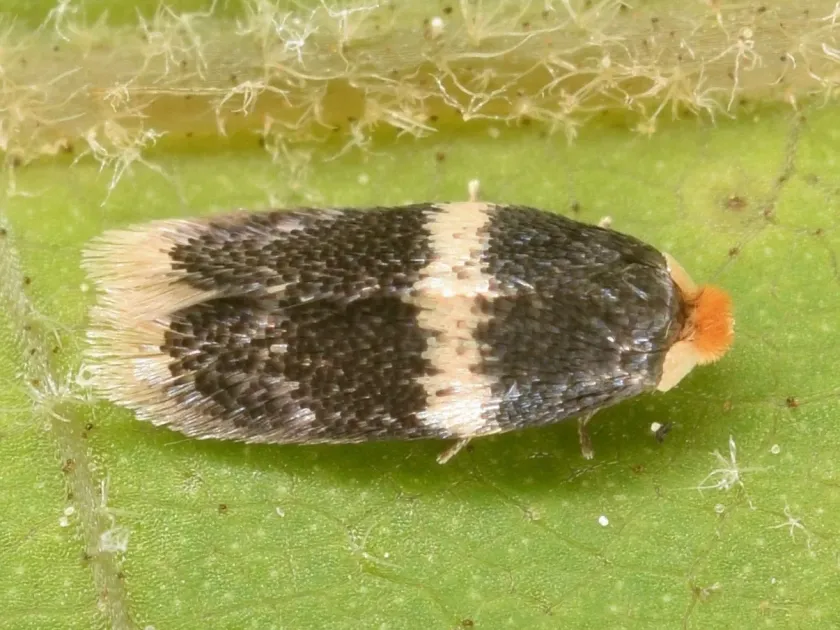
Description
How to identify
Obrussa ochrefasciella is a minute moth belonging to the family Nepticulidae, often referred to as leaf-mining moths.
These insects are extremely small, with adults typically possessing a wingspan of only a few millimeters, making them difficult to detect.
The life cycle involves four distinct stages: egg, larva, pupa, and adult, with larvae being the primary stage responsible for plant damage.
Taxonomically, this species is classified under the order Lepidoptera, sharing characteristics with other complex leaf-mining moths found in temperate regions.
The adults are nocturnal and possess specific wing patterns that allow them to camouflage effectively against tree bark or leaves.
What it damages
This species primarily targets various fruit trees within the Rosaceae family, with a strong preference for apple and pear trees.
Larvae feed exclusively on the inner tissues of the leaves, creating distinct tunnels that disrupt the plant's physiological functions.
Severe infestations can lead to a significant reduction in the leaf area available for photosynthesis, impacting tree vigor and fruit quality.
As the larval stage progresses, the cumulative damage restricts the tree's ability to store energy for the subsequent growing season.
Young trees in nurseries or newly established orchards are particularly vulnerable to the stunted growth caused by persistent leaf miner activity.
Signs of infestation
The most recognizable sign of infestation is the presence of winding, serpentine galleries or mines etched into the surface of the leaves.
These mines often contain a clear central trail of dark frass (larval waste), which distinguishes them from other types of leaf damage.
Over time, these tunnels may expand or converge, leading to visible browning, desiccation, and necrosis of the leaf blade sections.
Affected leaves tend to yellow prematurely and drop early, which is a common indicator that the moth population has reached a high density.
Close inspection of the underside of the leaves or holding them against sunlight reveals the translucent tracks where the larvae have consumed the tissue.
Control measures
Sanitation is a critical control measure, requiring the systematic removal and destruction of fallen leaves where pupae may overwinter.
Cultivation of the soil beneath the canopy helps to disturb the pupation sites, reducing the number of emerging adults in the spring.
Systemic insecticides should be applied during the peak flight of adults or at the onset of egg-hatching to prevent larvae from entering the leaves.
Integrated Pest Management (IPM) practices, including the release of beneficial predatory insects, can help maintain population levels below economic thresholds.
Regular monitoring using pheromone traps is essential for timing chemical interventions, ensuring maximum efficacy while minimizing environmental impact.
Taxonomy
- Latin name
- Obrussa ochrefasciella
- Order
- Lepidoptera (butterflies)
- Family
- Nepticulidae
- EPPO code
- OBRUOC
Discussion
No discussions yet — be the first.