
Rutherglen bug
Nysius vinitor
Description
How to identify
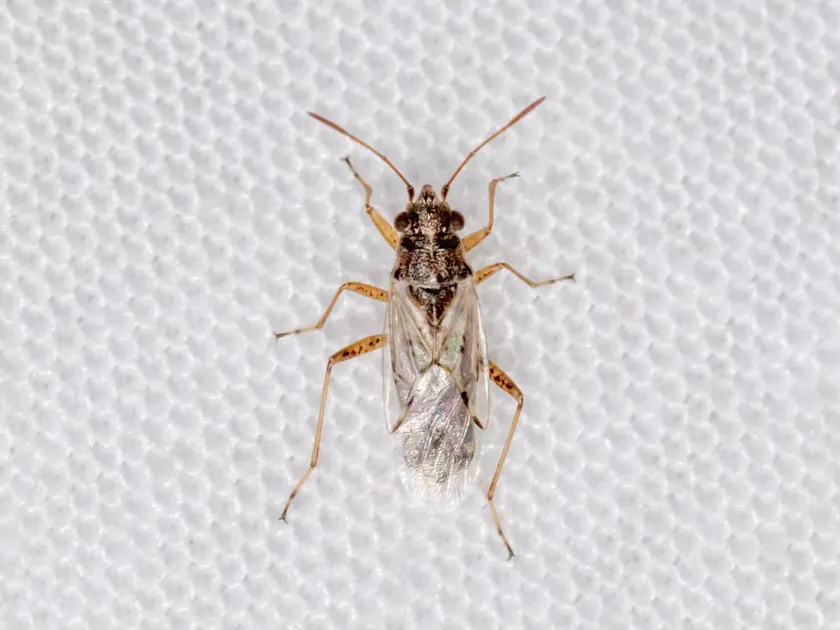
The Rutherglen bug (Nysius vinitor) belongs to the Hemiptera order and the Lygaeidae family. It is a small insect, typically measuring 3–4 mm in length, with a greyish-brown or black body and clear, membranous wings.
Adult bugs feature distinct light and dark patches on their wings, providing effective camouflage against soil and dried plant stems. They possess a wide head with prominent compound eyes and a specialized piercing-sucking mouthpart.
The life cycle consists of egg, five nymphal instars, and adult stages. Nymphs resemble wingless adults but are more vividly coloured, often displaying reddish or orange hues on their abdomen, which helps in identifying them in the field.
These insects are highly mobile and exhibit a strong tendency to swarm and migrate over long distances in search of suitable host plants. This high mobility makes their arrival in agricultural fields sudden and unpredictable for farmers.
They overwinter primarily as adults, hiding in plant debris, tree bark, or soil cracks. This survival strategy ensures a high rate of successful overwintering and allows them to emerge early in the spring as soon as temperatures rise.
What it damages
The Rutherglen bug is a highly polyphagous pest that attacks a wide variety of crops, including cereals, oilseeds like sunflowers and canola, as well as vineyards and various vegetable crops.
They feed on plant sap by piercing soft tissues in leaves, stems, flower heads, and developing fruit. Heavy infestations on a single plant can significantly stunt growth and lead to substantial yield losses.
Feeding damage to reproductive organs is particularly critical. As they feed, they inject saliva containing enzymes that cause necrosis, resulting in fruit deformation and a significant decline in the commercial value of the produce.
In cereal crops, the bug attacks the developing grain, causing it to become shrivelled, which drastically reduces germination rates and seed quality. This impact is particularly damaging for both seed producers and commercial grain growers.
In vineyards, these bugs attack developing bunches and berries, often leading to fruit drop. Furthermore, the micro-wounds caused by their mouthparts can facilitate secondary fungal or bacterial infections, negatively affecting wine quality.
When it appears
The peak activity period of the Rutherglen bug coincides with warm, dry weather, which creates optimal conditions for rapid population growth. Massive migrations typically occur in late spring and throughout the summer months.
Higher temperatures accelerate the insect's development cycle, allowing for multiple generations within a single growing season. This leads to an exponential increase in the population density during the middle of the summer.
Early in the season, these bugs congregate on weeds. As these weeds dry out, the bugs migrate to nearby crops that are in active growth or flowering stages, which aligns with the most vulnerable periods for many agricultural crops.
During the autumn, as temperatures drop, the bugs' activity decreases significantly as they search for suitable overwintering sites. Understanding these migration patterns is essential for planning timely crop protection strategies.
Drought years are particularly dangerous for outbreaks of this species. As natural vegetation dries out, the bugs are forced to move into irrigated fields and orchards, often leading to severe localized damage in high-value production areas.
Signs of infestation
The first sign of infestation is the appearance of localized patches of wilting or yellowing plants in the field. Careful examination often reveals clusters of bugs feeding on the undersides of leaves or near the base of flower heads.
A typical sign of their activity is the presence of tiny necrotic spots on the foliage. Over time, these spots can coalesce, leading to general chlorosis and premature leaf drop, which reduces the plant's overall photosynthetic capacity.
Damage to fruits is visible as small depressions or indentations, particularly on grape berries or vegetable fruits like tomatoes. These damaged areas serve as entry points for pathogens, potentially leading to rotting issues.
When infested plants are disturbed, the bugs often take flight or scatter rapidly. This strong reaction to vibration or disturbance is a reliable visual cue that allows growers to assess the density of the infestation quickly.
A specific, unpleasant odour emitted by the bugs' scent glands is another indirect sign of a high population density. This smell is often detectable in calm, warm weather near fields with large numbers of the pest.
Control measures
The most effective preventive measure is the management of weed populations along field borders. Since weeds serve as the primary reservoir before migration, timely mowing or herbicide treatment can significantly reduce the pest load.
Insecticides with systemic or contact action are highly effective when applied during peak activity. Treatments should be timed for early morning or late evening when the bugs are most active and concentrated on the upper parts of the plants.
Cultural control practices, such as deep autumn ploughing, help destroy overwintering sites and reduce the number of emerging adults in the spring. Consistent crop rotation is also recommended to disrupt the pest's reproductive cycle.
Monitoring using yellow sticky traps is a useful technique to detect early migrations. This allows for targeted, localized control measures, preventing the pest from spreading throughout the entire field and minimizing insecticide use.
In integrated pest management (IPM) programs, it is recommended to use biological controls or selective insecticides that protect beneficial predatory insects, which can naturally help suppress Rutherglen bug populations.
Taxonomy
- Latin name
- Nysius vinitor
- Order
- Hemiptera (bugs, aphids, leafhoppers)
- Family
- Lygaeidae
- EPPO code
- NYSIVI
Discussion
No discussions yet — be the first.