
Nysius turneri
Nysius turneri
Description
How to identify
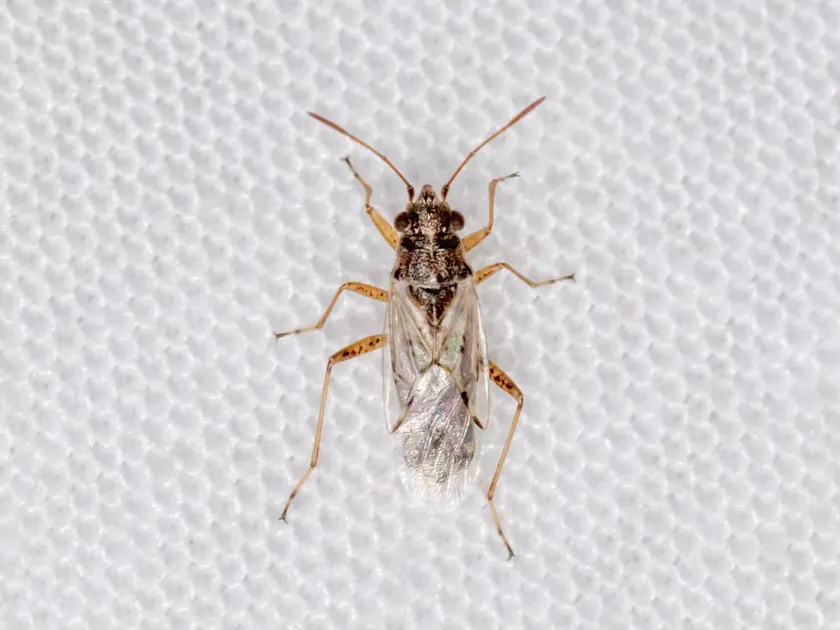
Nysius turneri belongs to the Lygaeidae family within the order Hemiptera. These small insects typically measure 3–5 mm in length and possess a characteristic elongated body with a brownish-grey coloration, which serves as an effective camouflage against soil and organic debris.
Adults are equipped with well-developed wings, enabling them to migrate over long distances to locate suitable host plants. Their mouthparts are of the piercing-sucking type, perfectly adapted for penetrating plant tissues to extract nutrient-rich cell sap.
The eggs are minute and are generally laid in clusters within the top layer of the soil or near the base of host plants. The nymphs resemble miniature versions of the adults but lack functional wings and exhibit lighter coloration during early developmental stages.
The life cycle consists of the egg stage, five nymphal instars, and the adult stage. Depending on regional climatic conditions, the pest is capable of producing multiple generations per growing season, which complicates population management.
Overwintering occurs primarily in the adult stage within plant litter, dry grass, or the upper soil profile. With the arrival of stable spring temperatures, they emerge from diapause and begin migrating toward young crop seedlings or weed hosts.
What it damages
Nysius turneri is a polyphagous pest capable of infesting a wide range of agricultural crops. It causes significant damage to cereals, legumes, sunflowers, oilseed rape, and various vegetable crops, affecting both growth and development.
Both nymphs and adults cause damage by sucking sap from stems, leaves, and reproductive organs. This activity disrupts the plant's metabolism, stunts growth, and leads to a substantial reduction in total yield and crop quality.
The pest is most destructive during the germination and seedling stages. Feeding on the terminal bud or young stems can result in plant death, necessitating costly reseeding efforts and causing uneven crop stands across the field.
Beyond physical tissue damage, the insects introduce salivary enzymes into the plant. This often causes local necrosis, leaf deformation, and a generalized weakening of the plant's physiological condition.
Heavy infestation of reproductive organs negatively impacts seed formation. For technical crops, this results in reduced thousand-kernel weight, decreased oil content, and lower seed viability, which negatively affects the overall economic value of the harvest.
Signs of infestation
Early signs of infestation include the appearance of small, light-colored spots on leaves, which gradually coalesce into necrotic patches. Severe infestations often lead to leaf curling, wilting, and overall stunted plant growth.
In fields, the pest often forms localized hotspots where large groups of insects accumulate. These areas are easily distinguishable by the pale, depressed appearance of the plants compared to healthy sections of the field.
Careful inspection of the plant base and the undersides of leaves usually reveals the presence of adult insects and nymphs. They are highly active and tend to hide quickly or fly away when disturbed, which can make field scouting challenging.
Damage to the terminal growth point may lead to abnormal branching or stunted height, resulting in weakened plants that fail to compete with healthy ones. This uneven development is a clear indicator of pest activity during early growth stages.
The overall field appearance under heavy infestation is characterized by the gradual drying of plant sections or rows, especially during hot and dry weather when the plants' ability to recover from sap-sucking damage is significantly reduced.
Control measures
The foundation of effective control is integrated pest management, starting with strict weed control. Weeds serve as essential reservoirs for the population before they migrate onto primary crops, making field sanitation a critical prevention step.
Cultural practices, such as deep plowing and stubble cultivation immediately after harvest, are highly effective. These methods disrupt the overwintering habitats and significantly decrease the population density for the following season.
Chemical control involves the application of systemic or contact insecticides when population levels exceed the economic injury threshold. Applications are most effective when timed with the early emergence of the crop, providing protection during the most vulnerable life stages.
Choosing the correct timing and alternating between different chemical modes of action is essential to prevent the development of resistance. It is highly recommended to monitor populations using yellow sticky traps to ensure that pesticide applications are justified.
Integrated strategies emphasize regular field monitoring and scouting to detect early outbreaks. By focusing interventions on localized hotspots rather than blanket field spraying, farmers can achieve effective control while minimizing input costs and reducing environmental impact.
Taxonomy
- Latin name
- Nysius turneri
- Order
- Hemiptera (bugs, aphids, leafhoppers)
- Family
- Lygaeidae
- EPPO code
- NYSITU
Discussion
No discussions yet — be the first.