
Grey seed bug
Nysius senecionis
Description
How to identify
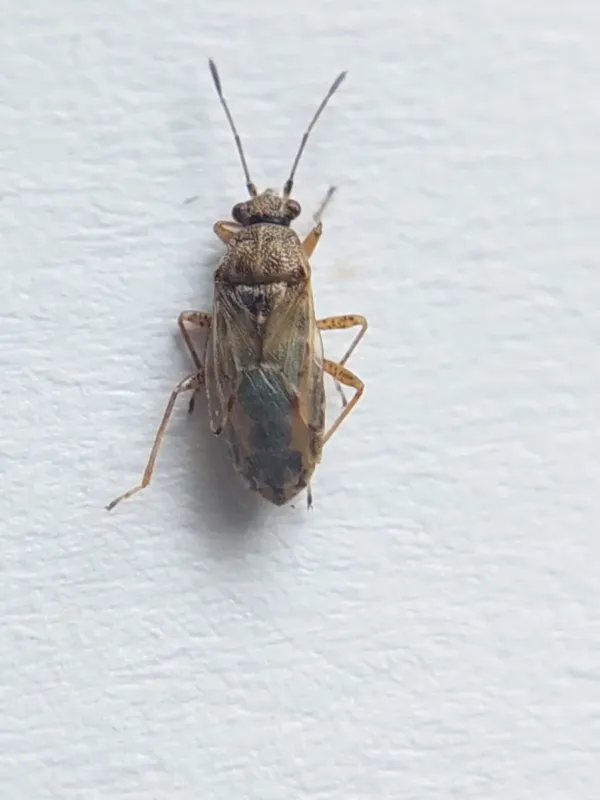
The grey seed bug (Nysius senecionis) is a member of the Lygaeidae family within the order Hemiptera. Adult insects measure approximately 3–4 mm in length and possess a brownish-grey body with a distinctively punctured pronotum.
The body is elongated and somewhat flattened, which facilitates their movement across soil surfaces and between dense crop vegetation. They are highly mobile and capable of flight.
Nymphs resemble smaller versions of the adults but lack functional wings. Their coloring is typically lighter, helping them blend into soil debris or the lower parts of host plants.
This species is well-adapted to various environments, including wild meadows, pastures, and intensively cultivated agricultural fields.
While often found on Asteraceae weeds, they can rapidly colonize nearby crops when natural food sources begin to senesce due to heat or drought.
What it damages
As a polyphagous pest, the grey seed bug feeds on a wide array of crops, including cereals, oilseeds, various vegetables, and fruit bushes, potentially causing widespread economic loss.
High temperatures and drought exacerbate the damage, as these conditions force the bugs to migrate from drying wild grasses into lush, irrigated, or well-maintained crop fields.
Both adults and nymphs use their piercing-sucking mouthparts to extract plant sap, directly compromising the plant's nutrient and water transport systems.
Severe infestations often result in stunted growth, leaf chlorosis, and in cases of young seedlings, complete plant mortality, leading to significant gaps in the field stand.
The damage to reproductive structures, such as flowers and developing grains, often leads to malformed fruit and significantly reduced yields during harvest.
When it appears
Grey seed bugs overwinter as adults, finding shelter beneath plant litter, in upper soil layers, or within protective hedges and forest borders.
Activity resumes in early spring, triggered by rising temperatures. The first generation typically completes its development on wild host plants.
Peak population densities usually occur during mid-summer, when several generations can develop rapidly if weather conditions remain warm and dry.
The duration of each life stage is highly temperature-dependent; heat waves can accelerate the reproductive cycle, leading to explosive population growth.
As temperatures decline in autumn, the insects relocate to their overwintering sites, where they enter a state of diapause to survive the winter months.
Signs of infestation
Early symptoms of an infestation include the appearance of tiny yellow spots on the foliage, which may eventually coalesce into necrotic patches as the tissue dies.
Close inspection of the underside of leaves, stems, or flower heads often reveals clusters of bugs, which will scatter quickly if the plant is disturbed.
Affected plants often show signs of general weakness, including leaf curling, wilting of the growing tips, and overall sluggish growth.
Deformation of flowers and seeds is a critical sign of a mature infestation, indicating that the bugs have been feeding on the plant's reproductive organs.
Observation of frass (insect excrement) or discarded nymphal skins at the base of the plant is a strong indicator of an active and established pest colony.
Control measures
Cultural control is the most sustainable approach; it focuses on managing weeds in and around fields to remove the primary breeding grounds of the bug.
Deep autumn plowing or soil cultivation can disrupt the overwintering sites, significantly reducing the survival rate of the pest population.
Crop rotation and maintaining a clear distance between cultivated fields and known weed-dense habitats are essential strategies for mitigating migration risk.
- Application of systemic insecticides once economic threshold levels are reached.
- Targeted border or perimeter sprays to stop migrating swarms from entering the main field area.
- Continuous field scouting using yellow sticky traps to monitor population shifts and timing for interventions.
Integrated Pest Management (IPM) practices, including the use of biological control agents where applicable, help maintain pest populations below harmful levels.
Taxonomy
- Latin name
- Nysius senecionis
- Order
- Hemiptera (bugs, aphids, leafhoppers)
- Family
- Lygaeidae
- EPPO code
- NYSISE
Discussion
No discussions yet — be the first.