
False chinch bug
Nysius raphanus
Description
How to identify
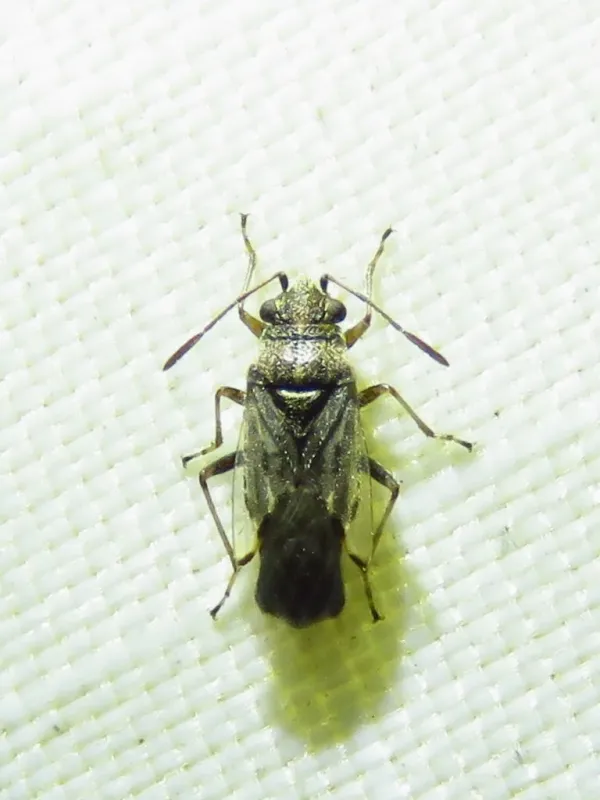
The false chinch bug (Nysius raphanus) is a small insect belonging to the family Lygaeidae. Adults typically measure about 3 to 4 millimeters in length and possess a greyish-brown, mottled appearance that provides excellent camouflage against soil and plant debris.
Key morphological features include a head that is wider than the pronotum and four-segmented antennae. These insects are highly mobile and possess fully developed wings, allowing them to travel long distances in search of suitable host plants during favorable weather conditions.
Nymphs of the false chinch bug resemble adults but lack wings and often exhibit a reddish-brown or orange coloration depending on the developmental stage. They typically reside in the lower parts of the plant canopy or on the ground, feeding on plant sap.
The life cycle is temperature-dependent, allowing for multiple generations per year in warm climates. Eggs are typically laid in the soil or on plant debris, and the transition from egg to adult occurs rapidly, facilitating explosive population growth during hot, dry spells.
Adults overwinter in protected areas such as crop residues, leaf litter, or crevices in the soil. As temperatures rise in spring, they emerge to feed on wild hosts before migrating to emerging crop seedlings, which poses a significant threat to early-season development.
What it damages
Although the false chinch bug is a generalist feeder, it is particularly destructive to cruciferous crops, including canola, mustard, and cabbage. It also targets sunflower, sugar beet, and various small grain crops, causing localized but often severe damage.
Both adults and nymphs feed by piercing plant tissues with their needle-like mouthparts and extracting sap. This feeding process results in wilting, leaf chlorosis, and the formation of necrotic spots, which significantly hinder the plant's metabolic processes.
The most critical stage of attack occurs during the seedling phase. A high density of bugs on young plants can lead to total crop failure, as the insects target the growing points, causing the plants to collapse and die within a short period of time.
As crops reach the reproductive stage, the pests attack flowers, buds, and developing pods. This leads to flower abortion and seed deformation, which drastically reduces both the overall yield quantity and the quality of the harvested produce.
Furthermore, the feeding punctures caused by these insects can introduce various pathogens into the plant tissue. This increases the susceptibility of the crop to opportunistic infections, which can further exacerbate the damage caused by the insect infestation itself.
Signs of infestation
The initial signs of infestation are often characterized by scattered necrotic spots on leaves, which gradually turn yellow and brittle. Infested areas of the field often show stunted growth compared to healthy regions, indicating an underlying stress factor.
Upon closer inspection, large clusters of bugs can often be seen on the stems or the undersides of leaves. Because they are gregarious, they frequently move in groups, leading to visible patches of damage that expand as the insects migrate across the field.
Wilting of the terminal growth and distorted stems are classic symptoms of heavy infestation. In some cases, the presence of black fecal spots on the leaves can also be an indicator of a substantial insect population density within the canopy.
Sudden patches of "scorched" or dying plants, especially along the edges of the field, are a major warning sign. This usually indicates that the population has migrated from adjacent uncultivated land or road verges into the crop rows.
Checking the ground level and the base of the stems during the hottest part of the day often reveals the presence of the bugs, as they retreat to the soil or shaded debris to avoid direct sunlight and dehydration.
Control measures
Effective weed management is the primary preventative strategy. By eliminating cruciferous weeds in and around fields, growers can significantly reduce the overwintering and breeding sites available for the false chinch bug before crops emerge.
Chemical control using insecticides is recommended when population numbers exceed economic thresholds. Systemic insecticides are often preferred as they provide residual protection and are effective at targeting insects that feed in protected parts of the plant canopy.
Crop rotation and selecting appropriate planting dates can help mitigate risks. Early planting, while beneficial for some crops, should be balanced with regular monitoring to ensure seedlings do not face the peak period of insect migration from nearby wild hosts.
Continuous monitoring using sweep nets or yellow sticky traps along field borders is essential. Early detection allows for spot treatments, which can prevent the spread of the infestation to the rest of the field and minimize the need for blanket spraying.
Promoting vigorous plant growth through balanced fertilization and appropriate irrigation helps the crop withstand light feeding pressure. A healthy, rapidly developing plant is better equipped to compensate for tissue damage and recover from minor infestations.
Taxonomy
- Latin name
- Nysius raphanus
- Order
- Hemiptera (bugs, aphids, leafhoppers)
- Family
- Lygaeidae
- EPPO code
- NYSIRA
Discussion
No discussions yet — be the first.