
Nysius plebeius
Nysius plebeius
Description
How to identify
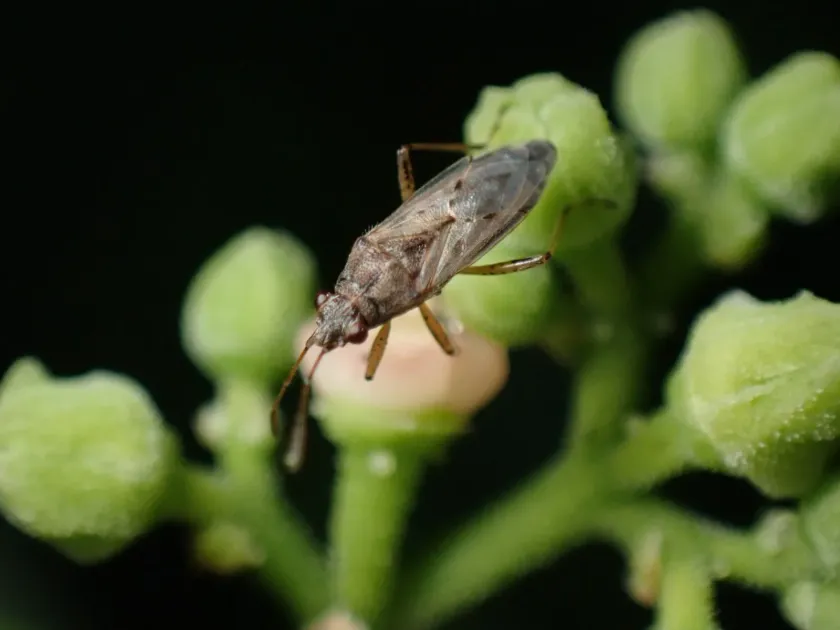
Nysius plebeius is a species of true bug belonging to the family Lygaeidae. These insects are relatively small, with adult specimens typically measuring between 3 to 4 millimeters in length.
The body is characterized by a dark, grayish-brown to black coloration, often covered with fine hairs, which gives them a dull, matte appearance under close inspection.
They possess a well-developed head with distinct compound eyes and a piercing-sucking mouthpart designed for extracting fluids from the tissues of host plants.
The nymphal stages are smaller versions of the adults and lack fully formed wings, undergoing five developmental molts before reaching maturity.
As a species adapted to various environments, they overwinter primarily as adults, seeking refuge in plant debris, under fallen leaves, or in the upper soil horizons.
What it damages
Nysius plebeius is a polyphagous insect that causes economic losses across a wide array of crops, including cereals, oilseeds, and various vegetable species.
Sunflowers are frequently targeted, with bugs feeding on stems, leaves, and developing seed heads, which leads to reduced yields and lower seed quality.
Legumes and solanaceous crops are also susceptible, as the feeding activity drains vital nutrients from the plants during critical stages of their growth.
Weed populations in and around agricultural lands serve as a crucial reservoir for these pests, allowing their numbers to increase before moving into crop fields.
Beyond direct physical damage from feeding, these bugs can introduce toxins into plant tissues or act as vectors for various plant pathogens.
When it appears
The activity cycle begins in early spring as temperatures rise, signaling the emergence of overwintering adults looking for the first available green host plants.
Multiple generations can occur throughout a single growing season, depending heavily on the local climate, moisture levels, and the abundance of suitable weeds.
Peak population numbers are usually reached during the hottest and driest parts of the summer, as these conditions often coincide with crop vulnerability.
Adults exhibit migratory behavior, moving from field edges or infested weed patches into the main crop plantings as the season progresses.
As temperatures drop in autumn, the insects begin to retreat into sheltered areas, entering a state of diapause to survive the winter months.
Signs of infestation
Initial signs of infestation appear as small, chlorotic spots on leaves, which gradually coalesce into larger patches of necrosis as the feeding damage worsens.
Stunted growth, twisting of stems, and curling of leaves are common symptoms, indicating that the plant is under stress from nutrient loss.
Upon closer examination, growers can often spot the insects themselves or their shed skins (exuviae) clustered on the undersides of leaves or within floral parts.
Premature wilting of the plant canopy, despite adequate irrigation, can also signal a high infestation density in the root or stem area.
- Whitish or yellow spots on leaves
- Deformed shoots and stunted growth
- Premature wilting of crops
- Visible presence of nymphs on foliage
- Reduced seed production in sunflowers
Control measures
Effective management begins with robust agronomic practices, such as deep plowing after harvest to bury and eliminate the debris where adults overwinter.
Weed control is essential, both within the fields and along the field margins, to remove the primary breeding sites that sustain the population early in the season.
When infestation levels exceed economic thresholds, the application of registered contact or systemic insecticides is necessary to suppress the population.
Regular monitoring using sweep nets helps in detecting the arrival of these pests, allowing for targeted and timely intervention before significant damage occurs.
Integrated Pest Management (IPM) strategies, including the use of beneficial insects and biological control agents, can help maintain lower population densities in organic settings.
Taxonomy
- Latin name
- Nysius plebeius
- Order
- Hemiptera (bugs, aphids, leafhoppers)
- Family
- Lygaeidae
- EPPO code
- NYSIPL
Discussion
No discussions yet — be the first.