
Nysius bug
Nysius nubilus
Description
How to identify
The Nysius bug (Nysius nubilus) is a small insect belonging to the order Hemiptera and the family Lygaeidae, known for its significant impact on agriculture.
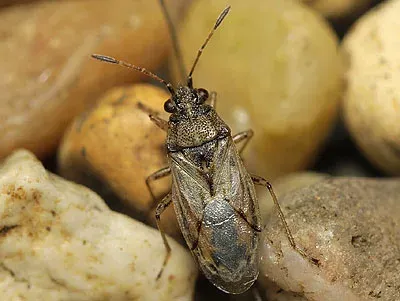
Adult insects typically measure between 3 and 5 millimeters in length, possessing an elongated body shape that is perfectly adapted for hiding.
The coloration of the bug is usually greyish-brown to dark brown, which helps it blend in seamlessly with dry soil surfaces and agricultural debris.
Their mouthparts are of the piercing-sucking type, allowing them to extract plant sap efficiently, which causes physiological stress to the host plants.
Nymphs resemble adults in structure but are smaller and wingless, often displaying brighter colors and a more mobile nature when disturbed.
What it damages
Nysius nubilus is a polyphagous pest, meaning it feeds on a wide range of botanical species including both wild plants and major field crops.
It is particularly damaging to sunflower, sugar beet, and various cereal crops, where it attacks both vegetative parts and developing seeds.
Vegetable crops, including potatoes and tomatoes, can also suffer significant damage during the active growing season, leading to decreased yields.
The pests cause damage by sucking sap from stems, leaves, and reproductive organs, which leads to wilting, stunted growth, and tissue necrosis.
High populations of this bug can cause severe thinning of stands, often forcing farmers to perform reseeding or intensive remedial treatments.
When it appears
Nysius bugs overwinter as adults, finding shelter in the top layer of soil, under plant residues, or along the edges of fields and forest strips.
Activity begins in early spring as temperatures rise, with the bugs initially colonizing weeds and other alternative hosts before moving to crops.
The peak period of damage often coincides with hot, dry weather conditions, which trigger migrations from drying weeds into succulent crop fields.
Multiple generations can occur throughout the growing season, depending on the climatic conditions of the specific region and moisture availability.
As autumn approaches and days become shorter, the bugs gradually seek out suitable microhabitats to initiate their winter diapause.
Signs of infestation
Early detection of the infestation is crucial but challenging due to the bug's cryptic behavior and small size within the plant canopy.
Visual symptoms often manifest as localized patches of stunted, wilting plants, which are particularly noticeable in fields with high moisture stress.
Small white or yellow spots appear on the leaves where the bugs have pierced the tissue to feed, often followed by tissue death and deformation.
If the feeding occurs at the terminal bud, growth distortion and the loss of apical dominance are common indicators of a heavy infestation.
- Chlorotic spots on leaves.
- General wilting of seedlings.
- Deformed growth of young shoots.
- Presence of bugs near the soil line.
Control measures
Integrated Pest Management (IPM) is essential, starting with rigorous weed control to eliminate the primary habitats and food sources of the bug.
Deep autumn plowing is a recommended cultural practice to disrupt overwintering sites and expose the insects to adverse environmental factors.
Optimizing planting dates allows crops to reach a more robust physiological stage, which increases their tolerance to potential bug damage.
When the economic threshold is reached, chemical control using systemic or contact insecticides is necessary to suppress high populations.
Regular field scouting is vital to determine the correct timing for interventions, ensuring the highest efficacy of the applied crop protection products.
Taxonomy
- Latin name
- Nysius nubilus
- Order
- Hemiptera (bugs, aphids, leafhoppers)
- Family
- Lygaeidae
- EPPO code
- NYSINU
Discussion
No discussions yet — be the first.