
Nysius niger
Nysius niger
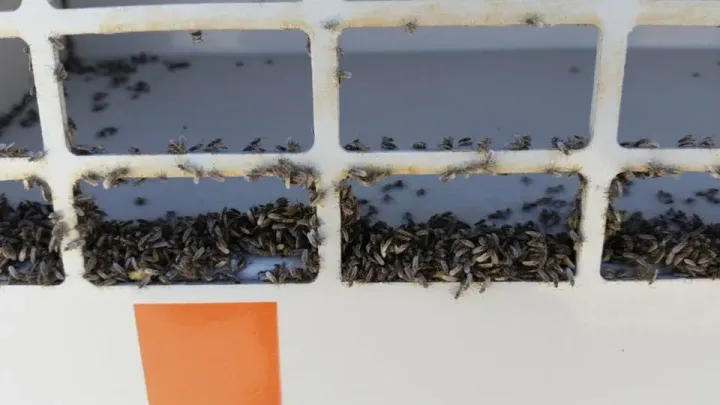
Description
How to identify
Nysius niger is a species of true bug belonging to the family Lygaeidae within the order Hemiptera. These insects are small, typically measuring between 3 and 4 mm in length.
The adult body color ranges from dark grey to intense black. A key identification feature is the dense punctation found on the head and the pronotum.
Nymphs share a similar morphology with adults but are significantly smaller and lack fully developed wings. They often exhibit a lighter coloration with distinct dark abdominal segments.
Like other members of its order, Nysius niger possesses a piercing-sucking mouthpart, which is specifically adapted to feed on plant cell sap.
These bugs are highly mobile and exhibit strong dispersal capabilities, often flying in large numbers to locate suitable host plants for feeding or egg-laying.
What it damages
Nysius niger is a polyphagous pest capable of infesting a wide range of agricultural crops, with sunflowers, sugar beets, and various vegetables being particularly susceptible.
The pest often thrives on weed species, especially those belonging to the Asteraceae and Chenopodiaceae families, using them as breeding grounds before migrating to crops.
While cereal crops are less frequently targeted, high-density infestations can lead to significant damage in wheat and barley during the grain-filling stage.
The insects predominantly attack young shoots and leaves. By extracting plant sap, they inhibit the overall development of the crop, leading to stunted growth.
In severe cases, large populations of Nysius niger can cause the complete destruction of crop seedlings, forcing farmers to reseed affected areas.
When it appears
The insect overwinters as an adult, finding shelter in crop residues, leaf litter, and the upper layers of the soil where temperatures remain relatively stable.
Emergence from hibernation typically begins in early spring as soon as average daily temperatures consistently rise above 10–12 degrees Celsius.
Population peaks are generally observed in mid-to-late summer, driven by the rapid development of multiple successive generations.
Hot and dry climatic conditions provide an ideal environment for the pest, significantly accelerating the nymphal development cycle and increasing reproductive rates.
As autumn approaches, the bugs migrate towards late-season weeds or agricultural waste, preparing for the upcoming dormancy period.
Signs of infestation
The first indicator of an infestation is often the wilting of plants in patches, where a close inspection usually reveals dense aggregations of bugs.
Leaves show distinct small, light-colored spots caused by piercing, which eventually develop into necrotic lesions as the plant tissue dies.
Deformation of the plant apex and leaf curling are common physiological responses to the toxic saliva injected by the bugs during feeding.
Damage to the reproductive organs, such as sunflower heads, often results in poor seed set and yield reduction due to the drain on plant resources.
Severe infestations cause yellowing and necrosis of the entire plant, leading to significant thinning of the stand and gaps in the field rows.
Control measures
Good agricultural practices, such as rigorous weed control, are essential to eliminate alternative host plants and reduce the pest population density.
Deep autumn plowing is an effective mechanical method to disrupt overwintering sites and kill adults hidden in the topsoil.
Chemical control involving systemic or contact-action insecticides is recommended when population densities cross the economic injury threshold.
Field margins and adjacent waste lands should be monitored regularly, as they frequently serve as the initial point of entry for migrating populations.
Maintaining crop rotation and spatial isolation from perennial weed reservoirs are critical components of an integrated pest management strategy.
Taxonomy
- Latin name
- Nysius niger
- Order
- Hemiptera (bugs, aphids, leafhoppers)
- Family
- Lygaeidae
- EPPO code
- NYSINI
Discussion
No discussions yet — be the first.