
Wheat bug
Nysius huttoni
Description
How to identify
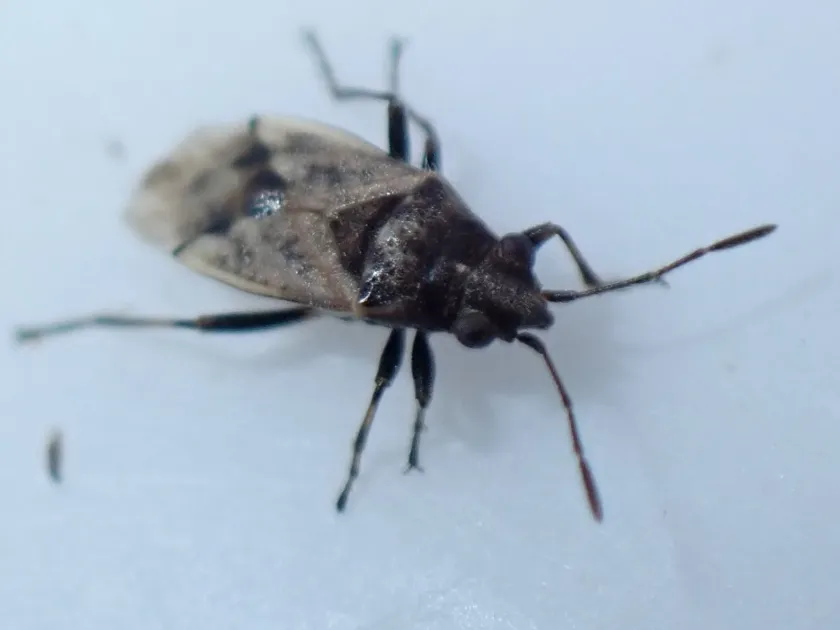
The wheat bug (Nysius huttoni) belongs to the Hemiptera order and the Lygaeidae family. These insects are small, typically measuring between 3 and 4 millimeters in length.
Adults exhibit a greyish-brown or black coloration with distinctive markings on the hemelytra. Their body is flat and oval, well-adapted for movement within dense vegetation and plant debris.
Nymphs undergo five developmental instars, gradually darkening as they mature. They are highly active, especially during warm and dry weather conditions, which aids in their rapid dispersal.
This species is known for its high ecological plasticity, allowing it to thrive in diverse environments and quickly colonize new areas where cereal crops are cultivated.
Identification in the field is best achieved through close inspection of the lower plant layers or by using an entomological sweep net during the peak activity hours.
What it damages
The primary hosts of the wheat bug are cereals, specifically wheat, barley, and oats. The pest also utilizes various wild grasses as alternative food sources throughout the season.
Equipped with piercing-sucking mouthparts, the bugs feed on the plant sap. The most significant damage occurs when they target developing grains, resulting in shriveled kernels and reduced yields.
Beyond the grain, the bugs feed on stems and leaves, which weakens the plant's physiological condition and inhibits its overall growth and development.
Mass infestations lead to substantial economic losses, significantly lowering both the quantity and the quality of the harvest, making it unsuitable for commercial processing.
Feeding punctures act as entry points for various pathogens, including fungi and bacteria, which can cause secondary infections and further degrade the crop's health.
When it appears
The life cycle of the wheat bug is highly dependent on temperature, with warm and dry summers providing the most favorable conditions for rapid population growth.
Overwintering occurs as adults in protected environments such as leaf litter, plant debris, under tree bark, or in the top layer of the soil until temperatures rise in spring.
Population peaks typically coincide with the grain-filling stage of cereal crops, when the bugs migrate to the spikes to engage in intensive feeding activities.
Multiple generations can occur within a single growing season, depending on the accumulated heat units. This high reproductive rate makes them a persistent threat to cereal production.
During droughts, these bugs often migrate from drying weed populations into irrigated or greener crop fields, where they concentrate and cause localized, severe damage.
Signs of infestation
A primary indicator of infestation is the presence of shriveled, empty, or underdeveloped grains within the ear, which often show poor germination potential.
Visual signs on plants include small, dark puncture marks on stems, tillering nodes, and glumes, often surrounded by minor necrotic tissue reactions caused by the bug's saliva.
Heavy infestations lead to overall plant stress, characterized by premature yellowing of the leaves, stunted growth, and a noticeable reduction in the total crop biomass.
The insects can be located by inspecting the base of the plants, particularly during the early morning or late evening when the bugs are more stationary.
Sweep net sampling is the most efficient method to assess population levels and determine if the economic threshold has been reached, necessitating control measures.
Control measures
Effective management begins with robust crop rotation and diligent weed control, as wild grasses serve as vital reservoirs for the pest during the off-season.
Agricultural practices, including thorough incorporation of crop residues and deep autumn plowing, are highly effective in destroying the overwintering sites of the bugs.
- Monitoring field margins for early detection of migrating populations.
- Applying systemic insecticides during the stem elongation or heading stages.
- Early harvesting to shorten the duration of time the bugs have to feed on the crop.
Biological control, by preserving natural predators, offers a sustainable approach to maintaining pest populations below the economic injury level in integrated systems.
Chemical intervention should be based on economic thresholds, utilizing registered insecticides that effectively target sucking pests while adhering to pre-harvest intervals.
Taxonomy
- Latin name
- Nysius huttoni
- Order
- Hemiptera (bugs, aphids, leafhoppers)
- Family
- Lygaeidae
- EPPO code
- NYSIHU
Discussion
No discussions yet — be the first.