
Grass chinch bug
Nysius graminicola
Description
How to identify
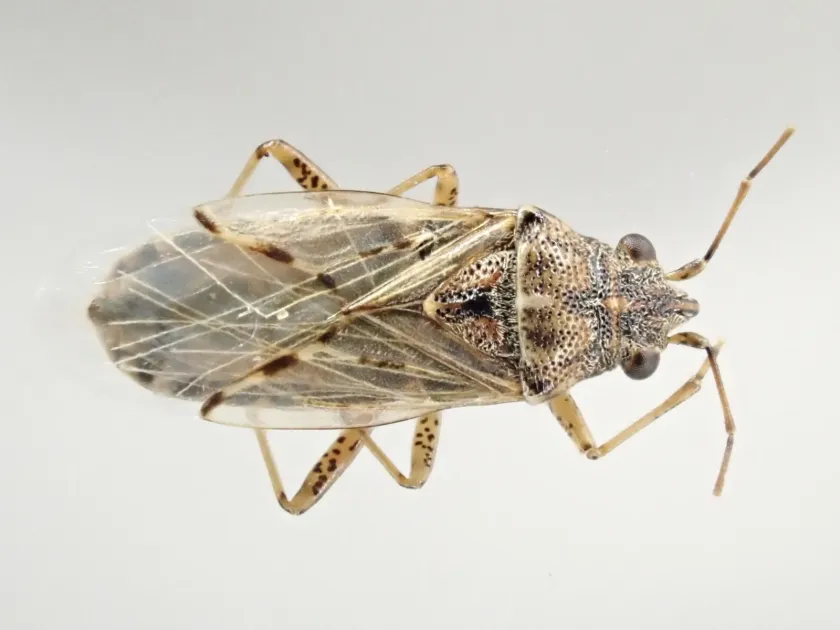
The grass chinch bug (Nysius graminicola) belongs to the order Hemiptera and the family Lygaeidae. These small insects typically measure 3–4 mm in length and possess a greyish-brown or brownish coloration, which provides excellent camouflage against soil and plant debris.
The adult insect has a sturdy body with fully developed wings, typical for many members of the Lygaeidae family. Its head is relatively large with prominent compound eyes, allowing for efficient navigation and the quick identification of suitable host plants in the field.
Nymphs resemble adults in shape but are smaller and lack fully formed wings. They often exhibit more vibrant patterns or spots, sometimes showing reddish or dark patches, which helps them blend into the micro-environment of the plant's base or canopy.
Equipped with piercing-sucking mouthparts, these bugs are highly adapted to feeding on plant sap. This specialized feeding mechanism allows them to extract nutrients directly from the xylem and phloem, significantly stressing the infested vegetation.
The biology of Nysius graminicola is strongly linked to dry and arid conditions. Unlike many other pests, this bug tends to thrive when moisture levels are low, often migrating from desiccated wild grasses to irrigated or healthy crop fields.
What it damages
This species is a generalist feeder (polyphage), making it a versatile and dangerous pest. It frequently attacks cereal crops such as wheat, barley, and rye, clustering on stems and developing heads during the crucial grain-filling stages.
Vegetable crops are also vulnerable, including cabbage, potatoes, and various root vegetables. Infestations on young seedlings often result in stunted growth, leaf wilting, or complete plant death, leading to significant gaps in the crop stand.
Oilseed crops, particularly sunflower and rapeseed, suffer heavily during their flowering and seed-development stages. By feeding on developing seeds, the bugs reduce seed weight, oil quality, and overall germination potential, directly impacting yields.
The severity of the damage increases during heatwaves and droughts. As native weeds dry up, these bugs are forced to move onto cultivated crops, forming dense colonies capable of destroying large portions of a field in a very short period.
Furthermore, the saliva injected by the bugs during feeding contains enzymes that cause tissue necrosis. This local damage disrupts the plant's vascular system, hindering the transport of water and nutrients, which leaves the crop weak and susceptible to secondary infections.
When it appears
Adults overwinter in the upper soil layers, under plant litter, or within dense grass clumps. With the arrival of stable spring warmth, they emerge from diapause and begin feeding on early-season weeds.
The first generation typically develops on wild grasses. As these wild hosts dry out in early summer, the bugs begin mass migration toward commercial crops. This period is the most critical for agricultural management as it coincides with plant reproductive stages.
The number of annual generations depends on weather conditions. High summer temperatures accelerate the developmental rate of nymphs, leading to a rapid population explosion that can peak in mid-to-late summer.
The bugs remain active until late autumn. After harvest, they persist on crop stubble or late-emerging weeds before gradually retreating to their overwintering sites as temperatures drop significantly below the seasonal average.
The life cycle encompasses an egg stage, five nymphal instars, and the adult stage. Females lay eggs in the soil or on the undersides of leaves, making early detection extremely difficult without regular and thorough scouting of the fields.
Signs of infestation
The primary sign of an infestation is the appearance of small, light-colored spots on leaves, which eventually merge into yellowed areas. This is the direct result of sap extraction, which degrades chlorophyll and impairs photosynthesis.
- Wilting and deformation of young leaves and apical shoots.
- Development of shriveled, empty, or undersized grains in wheat spikes.
- Massive presence of bugs on the undersides of leaves or within floral structures.
- Sudden wilting of plants not explained by moisture or disease.
- Necrotic spots on sunflower heads, often serving as entry points for pathogens.
In cereals, a tell-tale sign is "whiteheads," where the ear turns white prematurely, resembling damage from other pests; however, close inspection will reveal the presence of bugs at the base of the glumes.
On sunflower fields, the spots left by the bugs on the flower heads can become localized necrotic tissues. These damaged areas often facilitate the colonization of fungi and bacteria, which may lead to head rot under humid conditions.
Concentrated infestations are frequently observed at the edges of fields bordering uncultivated land. From these points, the pest radiates inwards, expanding its footprint across the field as the crop approaches maturity.
Control measures
Managing the grass chinch bug requires an integrated strategy centered on cultural practices. Effective weed control on and around fields is paramount, as wild grasses serve as the primary reservoir for the pest population.
Deep autumn plowing (tillage) is a highly effective method to disrupt the overwintering process. By turning the soil, growers can expose the bugs to harsh winter conditions and bury plant residues, depriving them of shelter and food sources.
Crop rotation and optimized planting dates help crops pass through their most vulnerable developmental stages before the bug populations reach their seasonal peak. This timing mismatch can significantly reduce the impact on the final harvest.
When the economic threshold is reached, insecticide application becomes necessary. Systemic or contact-based insecticides, particularly those containing pyrethroids or organophosphates, have proven effective in reducing bug numbers if applied correctly.
Applications should be timed for morning or evening hours when bugs are more active and accessible on the plant surface. Precise timing and coverage are essential to achieving the best results and preventing further population growth across the treated acreage.
Taxonomy
- Latin name
- Nysius graminicola
- Order
- Hemiptera (bugs, aphids, leafhoppers)
- Family
- Lygaeidae
- EPPO code
- NYSIGR
Discussion
No discussions yet — be the first.