
Cleveland strawberry bug
Nysius clevelandensis
Description
How to identify
The Cleveland strawberry bug (Nysius clevelandensis) belongs to the Lygaeidae family. It is a small, opportunistic pest that thrives in various habitats, often migrating to agricultural lands during the growing season.
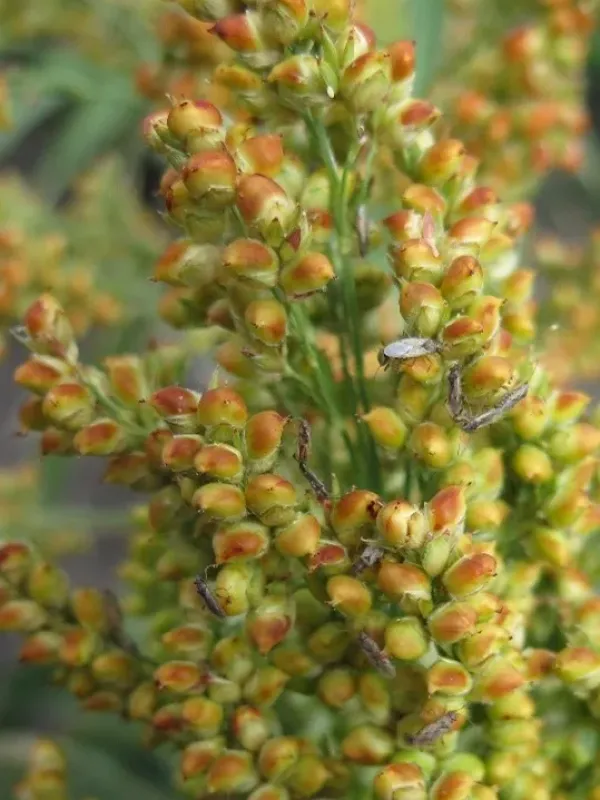
Adults typically exhibit a grayish-brown or mottled color pattern, which provides excellent camouflage against soil and plant debris. Their body shape is elongated, typical for many seed bug species, allowing them to crawl into tight crevices.
Nymphs of this species are wingless and often display brighter, reddish, or orange hues in their early developmental stages. They tend to congregate in shaded areas near the base of host plants.
Given their small size and cryptic appearance, they are frequently overlooked until the damage to crops becomes significant. Identification often requires a close inspection of the plant canopy during the early morning hours.
Entomologists distinguish this species from other Nysius bugs by specific morphological features of their antennae and scutellum, although farmers can rely on general trapping methods for detection.
What it damages
This pest feeds by piercing plant tissues with its stylet and sucking out sap. This feeding behavior drains the plant of essential nutrients and moisture, leading to systemic stress.
Host plants include a wide variety of berries, particularly strawberries, as well as vegetables and several ornamental plants. They are known to attack both vegetative growth and reproductive structures.
Damage to berries often results in malformed, woody fruit that is unmarketable. On leafy plants, feeding causes chlorotic spots that eventually turn necrotic as the plant tissue dies.
The severity of damage is often correlated with the size of the insect population. In high densities, the bugs can cause rapid wilting of young shoots and prevent proper fruit development entirely.
Beyond direct feeding damage, their punctures provide entry points for secondary pathogens, such as fungi or bacteria, which can exacerbate the decline of the infected plant.
When it appears
The life cycle of the Cleveland strawberry bug is heavily influenced by the regional climate, with warmer temperatures accelerating their developmental rate significantly.
Adults overwinter in protected areas, including plant litter, under mulch, or within soil crevices. They emerge as soon as the ground warms up and early vegetation becomes available.
The most active period for this pest usually occurs from late spring through mid-summer. During this time, multiple generations may be produced if environmental conditions remain optimal.
Populations tend to peak in mid-summer when dry conditions encourage them to seek out moisture-rich tissues in garden crops, often leading to mass migration from surrounding weeds.
As the season shifts towards autumn and temperatures decline, the activity level drops, and the bugs begin seeking suitable overwintering sites to survive the cold months.
Signs of infestation
Early warning signs of an infestation include the appearance of tiny, light-colored flecks or stippling on the leaves, which are the direct result of the bugs' feeding punctures.
As the infestation progresses, leaves may begin to curl or pucker, and the overall plant growth becomes stunted, giving it a sickly appearance despite adequate watering.
- Chlorotic stippling on leaf surfaces.
- Wilting of new growth and terminal buds.
- Premature flower or fruit drop in strawberries.
- Malformed, hardened, or discolored berries.
- Presence of small, active bugs at the base of the plant.
Control measures
Cultural control is the first line of defense. Keeping fields free of weeds that serve as alternative hosts is critical to preventing large-scale infestations from building up nearby.
Regular cultivation and weeding during the spring help disrupt the life cycle by destroying egg-laying sites and limiting the availability of food for the early nymphal stages.
For chemical control, targeted use of insecticides is recommended only when population thresholds are exceeded, with preference given to products that have a short residual effect.
Monitoring using yellow sticky traps is an effective way to keep track of the population density and determine the best timing for any necessary pesticide applications.
Integrated Pest Management (IPM) practices, including the preservation of natural predators like spiders and predatory bugs, can help keep the populations at manageable levels naturally.
Taxonomy
- Latin name
- Nysius clevelandensis
- Order
- Hemiptera (bugs, aphids, leafhoppers)
- Family
- Lygaeidae
- EPPO code
- NYSICL
Discussion
No discussions yet — be the first.