
Nysius caledoniae
Nysius caledoniae
Description
How to identify
Nysius caledoniae is a species of true bug belonging to the family Lygaeidae. It is a small, brownish-grey insect, typically measuring 3–4 mm in length.
The adult body is elongated with a distinct pattern on the pronotum. The head features prominent compound eyes and well-developed antennae composed of four segments.
Nymphs are similar to adults but lack fully developed wings and are often lighter in color. They undergo incomplete metamorphosis during their life cycle.
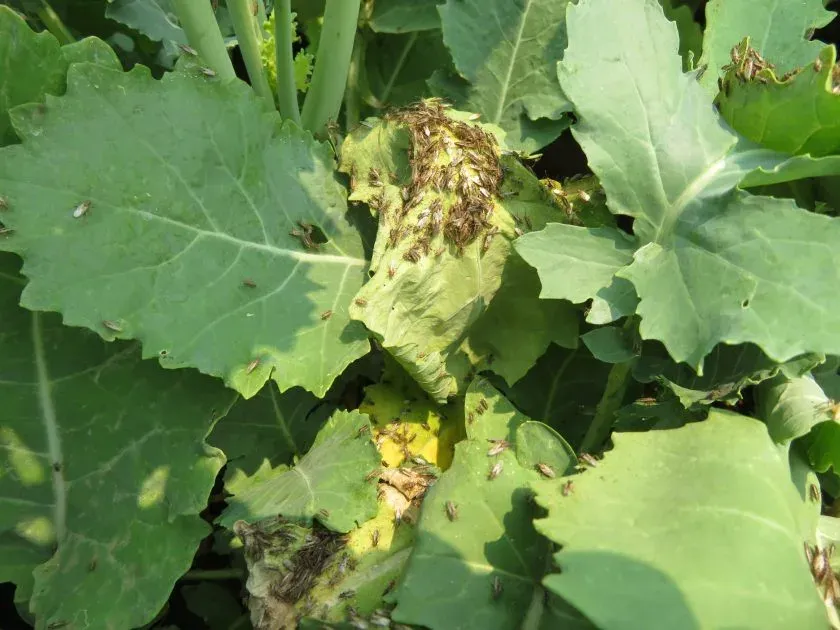
These bugs are known for their high mobility and often aggregate in large numbers on host plants, which makes them highly noticeable when populations peak.
They overwinter as adults, finding shelter in crop residues, leaf litter, or the topsoil layer, which allows them to survive cold winters effectively.
What it damages
This bug is a polyphagous pest, capable of feeding on a wide variety of plants including sunflowers, crucifers, and various vegetable crops.
Both adults and nymphs feed by piercing plant tissues with their proboscis and sucking out cell sap, which leads to immediate physiological stress for the plant.
Severe infestations on young crops can cause wilting, stunted growth, and in many cases, total plant death, necessitating replanting efforts.
Damage to generative organs, such as flower buds or developing seeds, significantly reduces both the yield quantity and the quality of the harvest.
The punctures left by the insects can also serve as entry points for pathogens, facilitating the spread of viral or fungal infections throughout the field.
When it appears
Activity typically begins in early spring as temperatures rise, prompting the adults to emerge from their overwintering sites in search of food.
Multiple generations can occur throughout the growing season, with population spikes often correlating with dry and hot weather conditions.
During the summer months, the bugs often migrate from drying weed hosts to succulent agricultural crops, leading to sudden surges in pest pressure.
The most critical period for crops is during the early vegetative and flowering stages, where the impact of sap-sucking is most detrimental to development.
By autumn, as temperatures drop, the insects begin seeking suitable protected locations to undergo diapause and survive the winter season.
Signs of infestation
Early symptoms of infestation include the appearance of tiny chlorotic spots on leaves, which gradually coalesce, leading to yellowing and leaf curling.
Plants often exhibit signs of physiological drought, such as wilting and drooping, despite adequate irrigation, due to the direct removal of fluids.
Inspection of the undersides of leaves and leaf axils usually reveals clusters of nymphs or adults that move rapidly when disturbed.
Flower buds or developing seed heads may show signs of deformity or shriveling, indicating that the bugs are feeding on the most nutrient-rich parts of the plant.
Fine, dark specks of insect excrement found on the surface of plant parts are a common indicator of a large and active pest population.
Control measures
Effective management begins with strict field hygiene, which includes the removal of weeds and crop residues that serve as breeding grounds for the bugs.
Deep autumn plowing is a recommended cultural practice to disrupt overwintering sites and reduce the number of bugs emerging the following spring.
Chemical control involving systemic insecticides is necessary when monitoring indicates that population density has crossed the economic injury threshold.
Applications should be timed to coincide with the early nymphal stages, as these are generally more susceptible to insecticide treatments than adults.
- Rigorous weed control.
- Crop rotation practices.
- Monitoring field edges and borders.
- Targeted insecticide applications.
Taxonomy
- Latin name
- Nysius caledoniae
- Order
- Hemiptera (bugs, aphids, leafhoppers)
- Family
- Lygaeidae
- EPPO code
- NYSICA
Discussion
No discussions yet — be the first.