
Nysius bug
Nysius
Description
How to identify
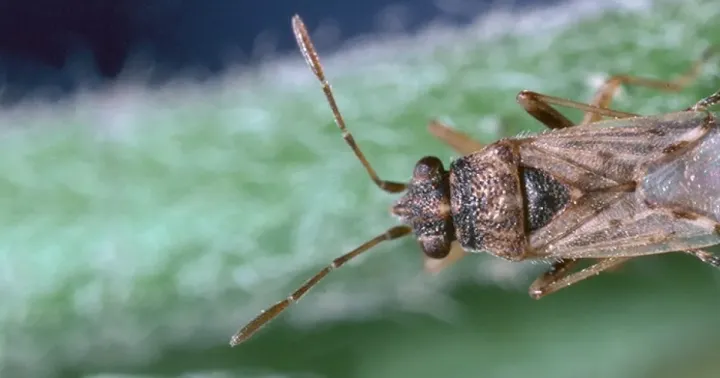
The genus Nysius belongs to the family Lygaeidae (seed bugs) within the order Hemiptera. These insects are generally small, measuring between 3 to 5 mm in length, and possess an elongated body shape.
The coloration of these bugs is typically greyish-brown or brownish, which provides effective camouflage against soil and plant debris. They have a relatively large head with prominent compound eyes.
Nymphs of the Nysius bug resemble the adults in structure but lack fully developed wings. Their coloration may vary, often appearing lighter or slightly reddish compared to the mature adults.
These insects are highly active and alert. When disturbed, they tend to scatter rapidly or take flight, moving to adjacent plants, which makes them difficult to observe closely in the field.
Eggs are typically laid in small clusters within the soil, beneath plant debris, or directly on host plants, depending on the specific environmental conditions and the species within the genus.
What it damages
Nysius bugs are polyphagous, meaning they feed on a wide variety of plants, including many agricultural crops and wild weeds. They are notorious for their ability to thrive in various environments.
Key agricultural crops targeted by these pests include cereals like wheat and barley, as well as oilseed crops such as canola and sunflowers. They can feed on various parts of the plant, including stems and leaves.
In addition to feeding on vegetative parts, Nysius bugs often attack reproductive organs. In crops like sunflowers, they pierce the seed heads, causing shriveled or empty seeds and significant yield losses.
The bugs utilize their piercing-sucking mouthparts to extract plant sap. This process disrupts the plant's metabolic functions, leading to wilting, yellowing of leaves, and reduced overall plant vigor.
During severe infestations, the cumulative feeding damage can lead to the total collapse of seedlings or severely stunted growth, making the plants unable to reach maturity or produce a harvestable yield.
When it appears
The life cycle and activity of Nysius bugs are highly sensitive to climatic conditions. They typically emerge from overwintering sites during the early spring as temperatures begin to rise consistently.
Hot and dry weather conditions are particularly favorable for their development. During these periods, the insect's reproductive rate increases, and nymphs develop more rapidly, leading to population explosions.
Multiple generations can occur throughout the growing season, which means that crops are under a continuous threat from early spring until harvest time, depending on the region and the specific crop rotation.
Mid-summer is often the period of peak abundance. As wild grasses and weeds dry up in the heat, the Nysius population tends to migrate into irrigated or more succulent agricultural fields in search of food.
As autumn approaches and temperatures drop, adults seek out sheltered areas such as dense crop residue, field edges, or soil crevices to enter a state of diapause and survive the winter months.
Signs of infestation
The initial signs of a Nysius infestation appear as patches of wilted or stunted plants in the field. Even with adequate moisture, these plants may appear dry, yellow, and stressed.
Close inspection of stems and leaves reveals minute puncture marks. These sites often become discolored or necrotic as the bugs inject saliva containing enzymes to facilitate the extraction of plant sap.
On grain and seed crops, the presence of the pest is often confirmed by observing reduced seed fill or deformed plant parts. The bugs themselves can often be found congregated on the undersides of leaves or within plant crevices.
The visual evidence of damage is often mistaken for drought stress. However, if the pattern of damage is patchy and linked to the proximity of weed reservoirs, a pest infestation is highly likely.
When disturbed or crushed, these insects emit a characteristic odor, which serves as a subtle but reliable diagnostic sign for farmers and agronomists scouting fields for pest activity.
Control measures
Effective management begins with strict weed control. Since Nysius bugs utilize various weeds as primary hosts, keeping field margins and fallow areas clean significantly reduces the initial population pressure.
Cultural practices, such as deep tillage after harvest, are crucial for disrupting the pest's overwintering sites, exposing them to environmental extremes and natural predators.
Proper crop rotation can help mitigate the risk of infestation, as it forces the insects to relocate and prevents the buildup of localized populations over successive planting seasons.
- Application of contact or systemic insecticides when monitoring confirms the economic threshold has been reached.
- Use of yellow sticky traps or sweep netting for early detection of pest migration into the fields.
- Promoting healthy plant growth through balanced fertilization to help crops withstand moderate feeding pressure.
When chemical interventions are necessary, choosing selective insecticides that minimize harm to beneficial insects can help maintain biological control within the agroecosystem.
Taxonomy
- Latin name
- Nysius
- Order
- Hemiptera (bugs, aphids, leafhoppers)
- Family
- Lygaeidae
- EPPO code
- NYSISP
Discussion
No discussions yet — be the first.