
California tortoiseshell
Nymphalis californica
Description
How to identify
The California tortoiseshell (Nymphalis californica) is a butterfly belonging to the Nymphalidae family. Adults typically have a wingspan of about 5 to 6 centimeters.
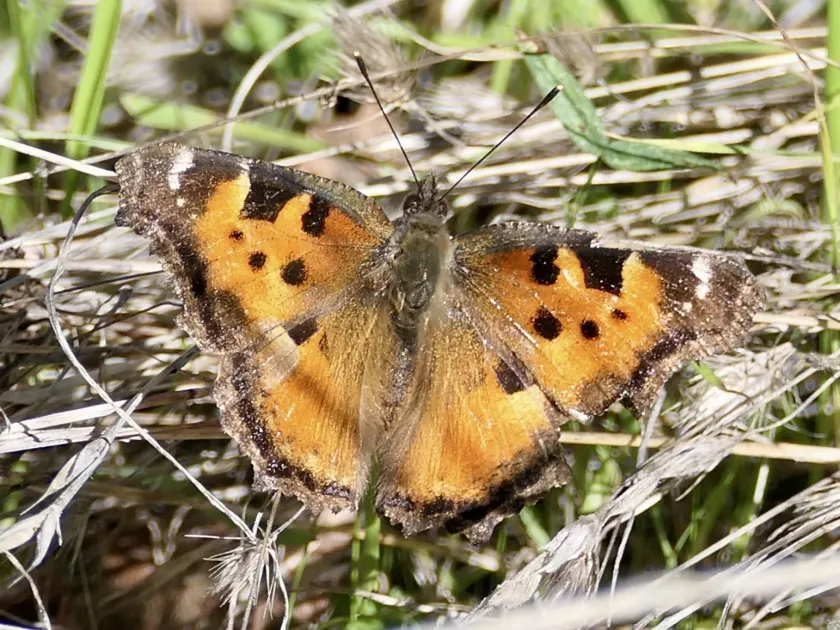
The dorsal side of the wings is a vibrant orange-brown with distinct black markings, while the ventral side mimics the appearance of a dried leaf for camouflage.
Larvae, or caterpillars, undergo several developmental stages, turning dark with white speckles and protective branched spines as they mature into later instars.
The pupae are angular and textured, specifically evolved to resemble twigs or dead foliage, which significantly aids in avoiding visual detection by avian predators.
This species is native to western North America and is well-known for occasional population explosions that can result in significant defoliation of its host plants.
What it damages
The primary hosts for the larvae are plants within the Ceanothus genus, but in cases of high population density, they readily infest various fruit and ornamental trees.
Feeding larvae skeletonize the foliage, consuming the leaf tissue while leaving the veins, which creates a noticeable thinning of the plant canopy.
Repeated or severe defoliation weakens the host plant, making it more susceptible to environmental stress, drought, and secondary infestations of other pathogens.
For young trees, this damage can lead to stunted growth and potentially death if the foliage is removed multiple times during a single growing season.
Adult butterflies feed on nectar and tree sap and do not contribute to the physical damage of the garden plants, focusing their energy solely on reproduction.
When it appears
The life cycle typically begins with eggs laid in clusters on the undersides of leaves or twigs during the late spring as temperatures begin to rise.
Larvae hatch and feed in gregarious colonies, which makes them highly efficient at consuming foliage during their peak growth phase in the early summer.
After reaching full maturity, the caterpillars pupate, eventually emerging as adult butterflies that may migrate over long distances to find new breeding grounds.
Unlike some pests that spend the winter in the egg or larval stage, the California tortoiseshell survives the winter as an adult in sheltered locations.
This adult overwintering strategy allows them to be among the first butterflies to emerge during the first warm days of the following spring season.
Signs of infestation
The most prominent sign of an infestation is the presence of large clusters of caterpillars feeding together on the branches of susceptible shrubs or trees.
Significant accumulation of larval frass (droppings) on the ground or under the tree canopy is a clear indicator that a large population is feeding above.
Visual observation of skeletonized leaves, where only the leaf midribs and veins remain, confirms the activity of the California tortoiseshell larvae.
Rapid canopy thinning, especially when occurring in a short period, is an unmistakable symptom of the feeding habits of these gregarious larvae.
Observing high numbers of orange-brown butterflies congregating at damp spots or around flowering plants can signal an upcoming high-pressure pest season.
Control measures
Manual removal of egg clusters and early-stage larval colonies is an effective, environmentally friendly method for small garden infestations.
Application of biological insecticides containing Bacillus thuringiensis is highly recommended as it targets the caterpillars while sparing beneficial insect species.
When populations reach outbreak levels, targeted chemical intervention may be necessary; however, this should be done with care to minimize impact on pollinators.
Promoting a healthy environment for natural predators like insectivorous birds and parasitic wasps helps keep the butterfly population in natural balance.
Providing adequate irrigation and proper nutrient management for trees helps the plant recover its photosynthetic capacity after minor defoliation events.
Taxonomy
- Latin name
- Nymphalis californica
- Order
- Lepidoptera (butterflies)
- Family
- Nymphalidae
- EPPO code
- NYPLCA
Discussion
No discussions yet — be the first.