
Alder moth
Nothocasis sertata
Description
How to identify
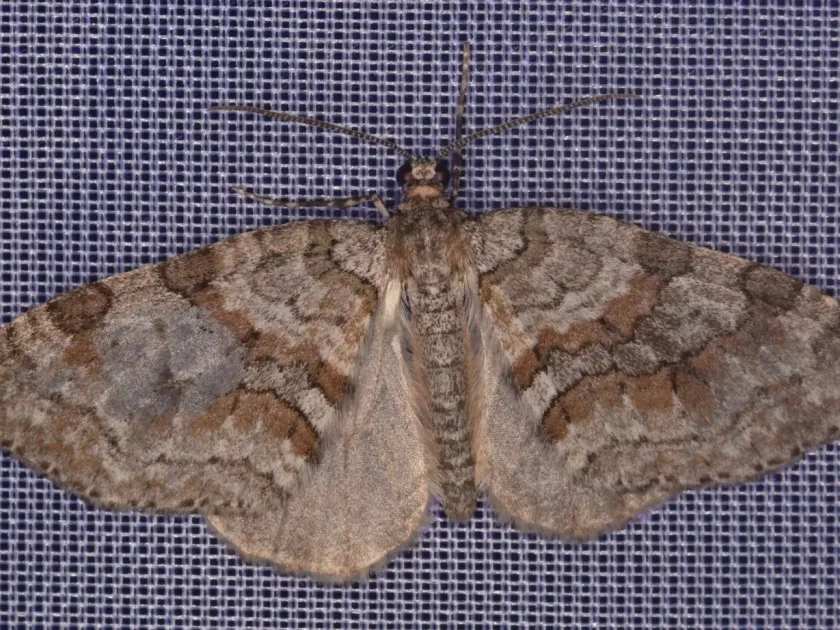
The Alder moth (Nothocasis sertata) belongs to the Geometridae family, order Lepidoptera. This species is a specialized feeder known for its remarkable ability to blend in with its surroundings.
Adult moths have a wingspan ranging from 25 to 35 mm. The forewings display a complex pattern of brown, grey, and ochre wavy lines, effectively mimicking the texture and color of tree bark.
The larvae are typical inchworms, exhibiting the characteristic looping movement of the Geometrid family. They have a slender, cylindrical body that is well-adapted for feeding on tree leaves.
The coloration of the caterpillar is usually green, often with lighter longitudinal lines, allowing it to remain perfectly concealed among the foliage of its host plant.
Pupation occurs in the soil or leaf litter beneath the host tree. The pupa serves as the overwintering stage, protecting the insect from harsh winter conditions.
What it damages
The primary host plants for this species are members of the genus Alnus, specifically the common alder and grey alder. They are frequently found in moist woodlands and riparian zones.
The larvae feed on the leaves of the alder trees. In cases of high population density, they can cause significant defoliation, which severely taxes the tree's energy reserves.
Repeated feeding damage can lead to weakened trees, making them more susceptible to secondary pests, such as wood-boring beetles, and various fungal pathogens.
The loss of foliage directly impacts the tree's photosynthetic capacity, which leads to reduced annual growth increments and may negatively affect the overall health of the forest stand.
In ornamental settings or commercial timber plantations, the aesthetic and economic impact of such defoliation can be substantial, requiring management interventions.
When it appears
Adults are typically active from late summer through the autumn months. They are nocturnal insects that prefer cooler temperatures for mating and egg-laying.
Eggs are deposited on the bark of the host trees, where they remain throughout the winter period. This timing ensures that larvae emerge just as the new leaves of the alder begin to unfold.
The larval stage is active during the spring, usually spanning from April through June. During this time, they feed voraciously on the new growth and leaves.
By mid-summer, the caterpillars descend from the branches to pupate in the ground. The pupal stage lasts until the following late summer when the cycle begins anew.
The species produces one generation per year, making it a univoltine insect. Its population dynamics are closely synchronized with the phenology of the alder tree.
Signs of infestation
The first signs of infestation are ragged leaf edges and holes appearing in the canopy. Larvae often start by skeletonizing the leaf tissue before consuming it more thoroughly.
Finding the larvae is difficult because they remain motionless during the day, holding onto branches in a way that makes them look like small twigs or buds.
Accumulated frass (larval droppings) on the leaves or beneath the tree crown is a strong indicator of an active caterpillar population feeding above.
Visual inspection of the canopy might reveal thinning foliage or partial defoliation of specific branches, which is characteristic of localized larval feeding clusters.
Light traps deployed during the autumn flight period can be used by foresters to monitor the adult population and determine if preventive measures are needed for the next year.
Control measures
Biological control is the preferred approach for forestry management. Applications of Bacillus thuringiensis are effective against early-stage larvae without harming beneficial insects.
In cases where infestations threaten valuable specimen trees, systemic or contact insecticides may be used, provided they are applied according to local environmental regulations.
Good silvicultural practices, such as maintaining healthy tree diversity and clearing heavy leaf litter near vulnerable specimens, can disrupt the pupation and overwintering sites.
Encouraging local populations of predatory birds, wasps, and parasitic flies helps keep the moth population in check, maintaining the natural ecological balance.
Regular monitoring of tree health during the spring is crucial for the early detection of outbreaks, allowing for timely and localized management actions.
Taxonomy
- Latin name
- Nothocasis sertata
- Order
- Lepidoptera (butterflies)
- Family
- Geometridae
- EPPO code
- NOTSSE
Discussion
No discussions yet — be the first.