
Tiger snake
Notechis
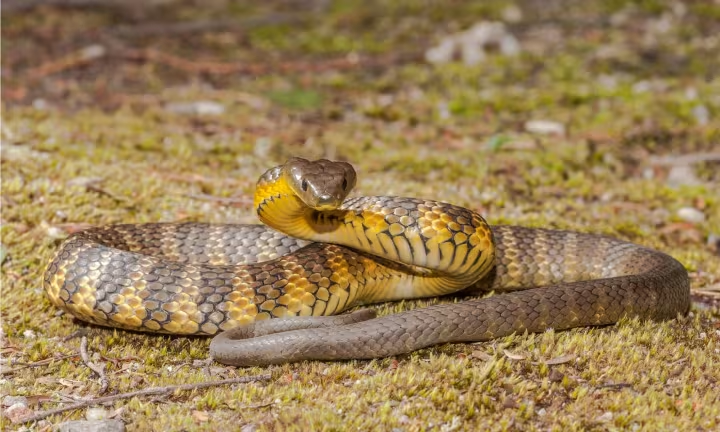
Description
How to identify
The tiger snake (lat. Notechis) is a highly venomous species of snake belonging to the Elapidae family. It is native to southern Australia and is easily identified by its distinctive olive to black color with vivid, tiger-like yellowish or cream-colored crossbands.
Adult tiger snakes typically measure between 1 and 1.5 meters in length. They have a robust build and a broad, distinct head, which allows them to navigate effectively through dense vegetation and agricultural crops.
These snakes favor moist habitats such as riverbanks, wetlands, and irrigated croplands, where they find both shelter and prey. They are generally shy and avoid humans, but will defensive strike if threatened.
Systematically, this species belongs to the order Squamata. While they are not considered agricultural pests in the sense of destroying crops, their presence is a significant safety consideration for farm operations.
Understanding their morphology and behavior is crucial for anyone managing farmland in regions where Notechis species are common.
What it damages
The tiger snake does not feed on plant tissues, nor does it cause any direct mechanical damage to crop roots, stems, or leaves. It is not classified as an agricultural pest.
The economic impact of the tiger snake is indirect but significant, as it creates safety hazards that can hinder manual field operations, such as harvesting, pruning, and irrigation maintenance.
The presence of venomous snakes in high-value vegetable or berry plantations can force the suspension of manual labor, leading to delays in production cycles and increased labor costs.
While some argue that snakes help manage rodent populations, the inherent risks associated with tiger snake venom make them incompatible with safe agricultural working environments.
Management strategies therefore focus exclusively on risk mitigation rather than pest control, prioritizing the safety of the agricultural workforce.
When it appears
Tiger snake activity is heavily dictated by ambient temperature. As ectothermic animals, they become more active as the soil warms up during the spring season.
The peak of their activity occurs during the summer months, when they are frequently seen basking in open areas to regulate their body temperature, often coinciding with peak field operation times.
In cooler weather or during heavy rain, tiger snakes tend to be less active and seek refuge in burrows or dense vegetation, which makes them harder to detect during routine field checks.
The breeding cycle, typically occurring during the warmer months, can make individuals more defensive and protective of their nesting sites, increasing the risk of unexpected encounters.
Agricultural planning should account for these seasonal variations to minimize the risk of human-snake contact during intensive farming tasks.
Signs of infestation
One of the primary signs of a tiger snake’s presence is the observation of characteristic slithering tracks on moist soil or soft ground, which differ from those of non-venomous species.
Shed skins, or sloughs, are often found near irrigation pipes, compost heaps, or piles of plant debris, serving as a clear indicator of a snake's frequent use of the area.
Audible hissing or rustling sounds in tall grass or dense foliage near field edges often precede a direct sighting and should be treated as an immediate warning.
The behavioral changes of local fauna, such as birds or farm dogs exhibiting signs of alarm or avoidance, can also indicate the presence of a snake nearby.
Discovery of nesting areas under plastic mulch or in agricultural waste requires immediate caution and the suspension of activities in that specific zone.
Control measures
Effective management focuses on creating an environment that is less attractive to snakes, primarily through rigorous field hygiene and land maintenance.
- Maintain short grass around field perimeters and irrigation systems to eliminate hiding spots.
- Ensure all workers wear appropriate personal protective equipment, especially heavy-duty boots.
- Clear away debris, woodpiles, and unnecessary plant waste from work areas.
- Keep irrigation channels clean to discourage snakes from using them as corridors.
- Provide comprehensive safety training and first-aid kits for all staff working in fields.
Physical barriers, such as specialized snake-proof fencing, can be installed around the perimeters of high-risk plots to prevent access from adjacent wildlands.
It is strictly prohibited for untrained staff to attempt to capture or relocate these snakes, as the risk of a fatal bite is extremely high during any such interaction.
The safest approach is to maintain a professional distance and utilize professional wildlife relocation services if a snake becomes a persistent threat to operations.
Taxonomy
- Latin name
- Notechis
- Family
- Elapidae
- EPPO code
- NTCESP
Discussion
No discussions yet — be the first.