
Eastern coral snake
Micrurus fulvius
Description
How to identify
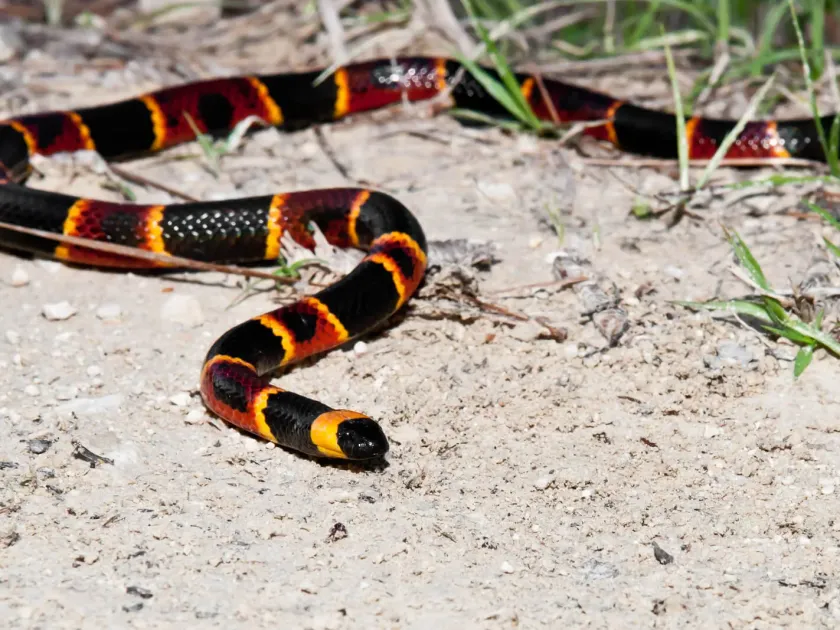
The Eastern coral snake is a highly venomous species within the Elapidae family. It is distinct due to its vibrant pattern of red, yellow, and black rings that encircle its body.
Typically, adults grow to about 20 to 30 inches in length. They possess a blunt, rounded head that is not clearly distinct from the neck, which is a classic feature for this snake species.
This species is secretive and predominantly nocturnal or crepuscular. They are often found in leaf litter, sandy soils, or under rotting logs, preferring humid and shaded environments.
It is important to emphasize that the Eastern coral snake is not an agricultural pest. It does not possess the biology or feeding habits that would allow it to cause damage to crops.
The snake is dangerous to humans due to its neurotoxic venom; therefore, caution and distance should always be maintained if one is encountered in the field.
What it damages
The Eastern coral snake poses no threat to agricultural crops. As a specialized predator, its diet is restricted to other smaller animals, such as lizards, snakes, and frogs.
There is no record of this species damaging root systems, foliage, fruits, or stems of any cultivated plants. It has zero impact on agricultural yield or product quality.
Unlike insects or rodents, coral snakes do not cause structural or physiological damage to agricultural fields. They are strictly non-phytophagous in their nature.
Their existence in the ecosystem serves to maintain a balance of local small vertebrate populations. They do not compete with farmers for resources or space.
Therefore, farmers should not consider this snake as an object for pest control measures, as it does not disrupt farming operations or damage the plants.
Control measures
No pest control or extermination measures are required or recommended for the Eastern coral snake in agricultural settings, as they do not constitute a threat to crops.
To avoid accidental encounters, it is advised to keep field edges clear of heavy brush, debris, and refuse, which provide potential shelter for snakes and their prey.
Agricultural personnel should wear protective gear, such as high-quality leather boots, when working in overgrown or wooded areas to minimize the risk of a potential bite.
The best practice when encountering this snake is to observe it from a safe distance and allow it to move away naturally, as they are not aggressive and prefer retreat over confrontation.
In case of sighting, ensure that workers are informed and keep a safe work area, but do not initiate any harmful actions toward the animal, respecting the local wildlife.
Taxonomy
- Latin name
- Micrurus fulvius
- Family
- Elapidae
- EPPO code
- MKRRFU
Discussion
No discussions yet — be the first.